
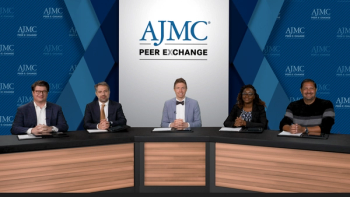
Nihar Desai, MD, MPH, introduces the panel of medical professionals and moderates a discussion on disparities in cardiovascular care among minority populations.
Nihar Desai, MD, MPH, introduces the panel of medical professionals and moderates a discussion on disparities in cardiovascular care among minority populations.
The panel highlights the quality of life and emotional challenges faced by patients diagnosed with Philadelphia chromosome–positive acute lymphoblastic leukemia (Ph+ ALL).
Vivian Tambe Ebot-Tar, PharmD, MBA, guides a discussion on the incidence of Philadelphia chromosome-positive acute lymphoblastic leukemia (Ph+ ALL) and how payers can have the most impact through early treatment coverage.

Experts discuss oral SERDs in the pipeline, clinical pathways for treatment of breast cancer, and strategies to help ensure patients have access to treatment. The participants also describe diverse agents in development, including their toxicity profiles.

Gain insights into valuable educational resources for patients coping with desmoid tumors, such as global consensus papers and advocacy group websites, and the significance of seeking multiple expert opinions for informed decision-making.
Delve into the impact of observing desmoid tumors and strategies for maintaining patient well-being during treatment, and learn about the importance of education, shared decision-making, and balancing conservative vs aggressive treatment.
Aaron Gerds, MD, MS, reviews the National Comprehensive Cancer Network (NCCN) guidelines for monitoring myelofibrosis treatment response and delves into crucial aspects like patient impressions, physical examinations, and symptoms.
Delve into the psychosocial aspects and pain management challenges for patients with desmoid tumors as experts address anxiety, depression, and effective pain control strategies for improved quality of life.
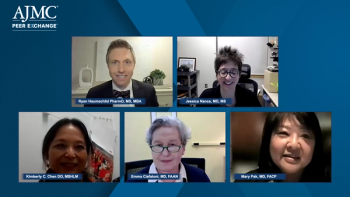
Emma Ciafaloni, MD, FAAN, explores the groundbreaking approval of onasemnogene abeparvovec-xioi for spinal muscular atrophy and its impact on the treatment paradigm for this rare disease.
Ryan Haumschild, PharmD, MS, MBA, and Mary Pak, MD, FACP, consider FDA-approved gene therapies for hemophilia, spinal muscular atrophy, and Duchenne muscular dystrophy, exploring their genetic foundations, the FDA approval process, and considerations for therapeutic value and cost.

Ronald D. Alvarez, MD, MBA, discusses challenges in implementing updated NCCN guidelines, such as coverage limitations imposed by payers.
Experts discuss the impact of elacestrant on patient well-being, including potential cardiovascular and gastrointestinal toxicities, quality of life, and patient feedback regarding access to treatment.
Explore effective approaches in handling fatigue, insomnia, and financial difficulties of patients with desmoid tumors as experts highlight psychosocial support and treatment considerations for quality care.
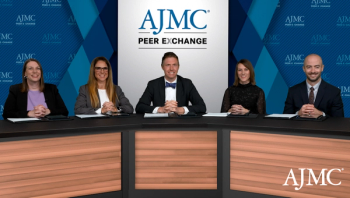
Medical experts provide their final thoughts regarding key treatment considerations for CLL and SLL.
The panelists provide perspectives on critical aspects of the CLL and SLL treatment landscape.

Eric D. Donnenfeld, MD; underscores the significance of an FDA approved treatment for Demodex blepharitis as well as past alternative treatments.
Aaron Gerds, MD, MS, explores the FDA approval of momelotinib and its swift integration into National Comprehensive Cancer Network (NCCN) guidelines. He reviews different JAK inhibitors based on adverse effects and treatment goals, addressing potential treatment-related anemia in myelofibrosis.
Explore the multifaceted impact of desmoid tumors on patients’ physical, functional, and psychosocial well-being as experts emphasize effective symptom management and quality-of-life enhancements.
Kimberly C. Chen, DO, MSHLM, dives into the role of genetic testing in identifying patients eligible for gene therapy and explores coverage criteria, clinical validity, and utility considerations crucial for payers and managed care executives.
Emma Ciafaloni, MD, FAAN, describes the key differences among viral vectors used in gene therapy, highlighting their applications and strengths in targeting specific diseases.
Experts explore treatment considerations when treating patients with metastatic breast cancer with elacestrant, including dosing, patient selection, adherence, and treatment duration. Participants also discuss dose modifications, adherence concerns, and how they determine treatment failure.
An expert provides insights into the cost of misdiagnosed Demodex blepharitis and payer considerations for a potential cost-effective treatment.
Explore the facilitation of novel therapy access for desmoid tumors and discover emerging treatments reshaping the landscape.
The criticality of patient education in BTKi use and its impact on treatment adherence is discussed.
Aaron Gerds, MD, MS, reviews the National Comprehensive Cancer Network (NCCN) guideline categories, including evidence, and recommendations for symptomatic high-risk myelofibrosis. He discusses considerations for selecting JAK inhibitors and the threshold for switching treatments based on responses.
Discover how medical institutions provide education on desmoid tumors, ensuring patient referrals and expanding access to innovative therapies.
Eric D. Donnenfeld, MD; discusses the importance of understanding the pathogenesis of Demodex blepharitis to reach a proper diagnosis.
Experts evaluate the financial impact experience by patients receiving BTK inhibitor therapy.
Jessica Nance, MD, MS, discusses maximizing gene therapy efficiency by selecting vectors for gene size, tissue targeting, and low exposure, and focusing on precise promoters for expression.
Experts delve into the fundamentals of gene therapy, covering in vivo and ex vivo methods, and explore cellular function targets for effective treatment of a disease.

259 Prospect Plains Rd, Bldg H
Cranbury, NJ 08512
© 2025 MJH Life Sciences®
All rights reserved.