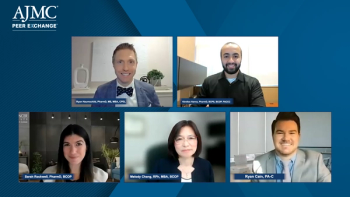
Key opinion leaders explore the necessary synergy between payors and providers for optimizing bispecific therapy.
Key opinion leaders explore the necessary synergy between payors and providers for optimizing bispecific therapy.
Financial considerations in bispecific therapy are discussed.

The critical impact of respiratory and physical therapists in the management of bronchiectasis is emphasized.

Amy Nguyen Howell, MD, MBA, outlines vital initiatives and resources to address health disparities in diabetic macular edema care, emphasizing unconscious bias training, CDC resources, academic courses, and collaborative advocacy efforts for promoting health equity.
Experts discuss findings from real-world studies comparing DRd with VRD, emphasizing the importance of individualized dosing and supportive care, and navigate challenges in incorporating real-world data.
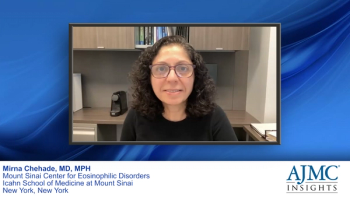
Mirna Chehade, MD, MPH, discusses the impact of adverse events on influencing treatment decisions for eosinophilic esophagitis (EoE) in pediatric patients, and considerations for the use of biologics.
Renowned multiple myeloma specialists discuss challenges in treatment decisions, exploring real-world data's role, assessing risks in diverse populations, and interpreting cross-trial comparisons.

Experts discuss how they determine whether a patient with metastatic breast cancer is a candidate for treatment with elacestrant based on FDA approved indication, NCCN guidelines, and the results of ESR1 mutation and resistance marker testing. Participants also discuss how they determine treatment failure or resistance.
A panel of experts discuss leveraging real-world data in multiple myeloma treatment decisions and explore the significance, limitations, and evolving role of real-world data, shedding light on patient experiences, access to care, and treatment outcomes beyond clinical trials.

Richard Adler, MD, FACS, provides perspective on AAO 2023 data suggesting dual mechanism treatment targeting aqueous deficiency and meibomian gland dysfunction may improve dry eye symptoms more significantly and faster than singular therapies, benefiting patient compliance and disease management.
Richard Adler, MD, FACS, provides insights on data presented at AA0 2023, from a study comparing results of the ARMOR procedure versus treatment with cyclosporine ophthalmic emulsion 0.05% in patients with dry eye disease.
Richard Adler, MD, FACS, discusses corneal fluorescein staining data presented at AAO 2023 from the pooled analysis of 2 phase 3 studies.
Richard Adler, MD, FACS, leads a discussion on real-world signs, symptoms and patient reactions associated with the treatment for DED.

Deborah Stephens, DO, shares unmet needs in the current treatment landscape of CLL and SLL.
A panel of experts explore current treatment strategies in CLL and SLL management.
Clinical manifestations and impact on patient quality of life amid diagnosis and management of CLL and SLL are discussed.
Richard Adler, MD, FACS, discusses the Switch trial which compared OTX-101 (cyclosporine ophthalmic solution 0.09%) vs cyclosporine ophthalmic emulsion 0.05% (Restasis) in patients with dry eye disease (DED).
The panel provides closing thoughts on the future of the CSCC and BCC treatment landscape.
Exploring recent trials and updates in nonmelanoma skin cancer treatment.
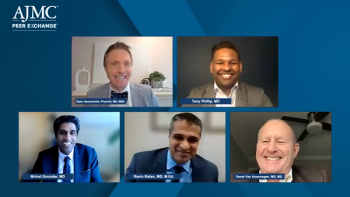
Experts discuss advancements in imaging techniques and risk factors associated with desmoid tumors, emphasizing the importance of accurate evaluation and management decisions.
Experts provide insights on recent ICD-10 code availability for desmoid tumors, its implications on diagnosis, treatment, and coverage decisions, as well as the significance for research, patient care, and health care management strategies.
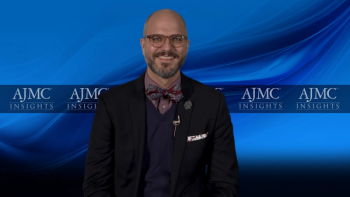
Aaron Gerds, MD, MS, compares myelofibrosis with other myeloproliferative neoplasms, explores its prevalence in the US, and reviews the diverse clinical presentations and the impact on patients’ quality of life.
Key considerations for transitioning patients receiving bispecific therapy between care settings are highlighted.
The panelists discuss 24/7 bispecific care protocols for urgent healthcare needs.

An overview of the current landscape of available treatment options for Demodex blepharitis is analyzed.
Dr Metersky provides an overview of current treatment strategies for managing patients diagnosed with bronchiectasis.
Amy Nguyen Howell, MD, MBA, delves into strategies for health care systems to ensure equitable access and treatments for marginalized individuals with diabetic macular edema.
Health care professionals delve into discussions on using quadruplets in multiple myeloma treatment, addressing challenges, and considerations for high-risk patients.
Mirna Chehade, MD, MPH, emphasizes the value of proton pump inhibitors, swallowed corticosteroids, and dietary restrictions as therapeutic options for pediatric patients with eosinophilic esophagitis (EoE), while underscoring the importance of shared decision-making to maintain adherence and achieve better outcomes.
Experts discuss challenges in induction regimens for transplant-ineligible myeloma patients, and evolving approaches, quad regimens, dynamic frailty, and upcoming trials shaping future treatment options.

259 Prospect Plains Rd, Bldg H
Cranbury, NJ 08512
© 2025 MJH Life Sciences®
All rights reserved.