Dr. Bijal Shah shares insights on anticipated updates to NCCN guidelines for Ph+ ALL, emphasizing key areas of focus to address gaps and advance patient care.
Dr. Bijal Shah shares insights on anticipated updates to NCCN guidelines for Ph+ ALL, emphasizing key areas of focus to address gaps and advance patient care.
Robert M. Rifkin, MD, FACP, discusses how the MagnetisMM-3 update at the 66th American Society of Hematology Annual Meeting and Exposition sheds light on elranatamab’s role in relapsed/refractory multiple myeloma while panelists discuss how emerging data on bispecific antibodies and combination strategies could shape treatment timing and improve outcomes, especially in heavily pretreated patients.
Panelist discusses how recurrent Clostridioides difficile infection results from persistent microbiome disruption, where antibiotic-induced dysbiosis enables bacterial overgrowth and toxin production. Characterized by repeated episodes of colitis, it predominantly affects older, hospitalized patients with compromised immune systems, presenting significant clinical challenges through inflammatory complications and potential systemic spread.
The panelist discusses how early detection of recurrent Clostridioides difficile infections is critical in clinical practice because these infections can rapidly escalate patient morbidity and mortality. Recurrent C difficile infections are associated with significantly increased mortality rates, with studies showing that patients experiencing multiple infection episodes have a higher risk of complications, prolonged hospital stays, and increased health care costs. Early identification allows for prompt intervention, which can help prevent disease progression, reduce transmission risks, and implement targeted treatment strategies.
A panelist discusses how comprehensive care coordination between specialists, proactive adverse effect management, and innovative care models can optimize treatment outcomes for Lambert-Eaton myasthenic syndrome (LEMS) patients, particularly those with dual diagnoses like small cell lung cancer (SCLC), while ensuring both clinical effectiveness and cost-efficiency through managed care strategies.
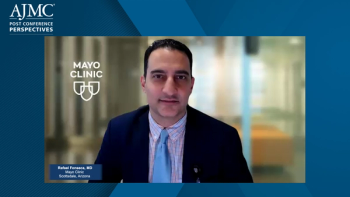
Sikander Ailawadhi, MD, discusses how the 2024 ASH Annual Meeting’s “Prospective Patient Preference Study for BTKi Treatment Attributes in CLL and SLL” explored the factors influencing patient decision-making, revealing key treatment preferences and highlighting the importance of incorporating these insights into clinical practice when selecting BTK inhibitors for patients with CLL or SLL.
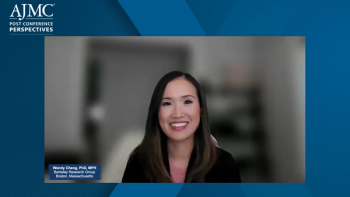
Wendy Cheng, PhD, MPH, discusses how the study on the efficacy of gepotidacin vs nitrofurantoin in a nitrofurantoin-resistant population (a pooled analysis of the EAGLE-2 and EAGLE-3 trials) aimed to evaluate the effectiveness of gepotidacin as a first-in-class oral therapy for uncomplicated urinary tract infections (uUTIs), showing promising results in overcoming antimicrobial resistance and potentially filling critical gaps in current UTI treatments.
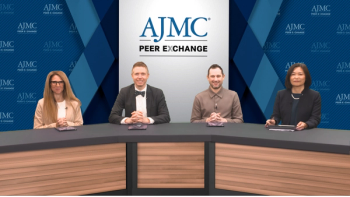
Panelists discuss how emerging data on odronextamab in diffuse large B-cell lymphoma suggest its potential to play a significant role in therapy, with promising results that may position it alongside or as a superior option compared with currently approved bispecifics.
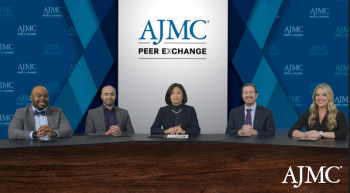
Panelists discuss how iron deficiency anemia significantly impacts patients’ quality of life through symptoms like chronic fatigue, shortness of breath, and cognitive dysfunction, while also creating substantial psychosocial burdens including depression, reduced work productivity, and social isolation, particularly affecting vulnerable populations who may face barriers to diagnosis and treatment.
Saad Z. Usmani, MD, MBA, FACP, discusses how the MajesTEC-5 study, presented at ASH 2024, demonstrates the potential of teclistamab in combination with standard therapy in the frontline setting, highlighting its safety profile and 100% minimal residual disease (MRD) negativity after cycle 3, and explores how using bispecific antibodies like teclistamab earlier in treatment could influence future options for relapsed/refractory multiple myeloma.
Panelists discuss how the clinical implications of emerging Bruton tyrosine kinase inhibitor (BTKi) trials in chronic lymphocytic leukemia (CLL) are addressing unmet needs by offering new treatment options that target treatment-naive patients, potentially improving outcomes and filling gaps in the current therapeutic landscape.
Panelists discuss how pirtobrutinib demonstrated superior progression-free survival compared with standard Bruton tyrosine kinase (BTK) inhibitors in previously treated chronic lymphocytic leukemia (CLL) patients as shown in the BRUIN CLL-321 trial results.
Panelist discusses how the misalignment between Hurley stages and patient burden in hidradenitis suppurativa (HS) creates diagnostic and treatment challenges. Current Hurley staging inadequately captures the full patient experience, potentially leading to suboptimal treatment approaches. Standardized clinical training and assessment tools that incorporate both objective staging and subjective patient-reported outcomes could help bridge this gap, enabling more personalized and comprehensive HS management.
Dr. Bijal Shah explores the recent advancements and shifts in treatment strategies for Ph+ ALL, driven by innovations in targeted therapies and evolving clinical practices
A panelist discusses how enhanced screening protocols combined with predictive analytics can accelerate Lambert-Eaton myasthenic syndrome (LEMS) detection in high-risk populations like patients with small cell lung cancer (SCLC) while also exploring the potential of telemedicine to improve early diagnosis in underserved communities.
A panelist discusses how uncomplicated urinary tract infections (UTIs) typically affect otherwise healthy individuals and can be treated with short-course antibiotics by primary care physicians, while complicated UTIs involve underlying conditions or anatomical abnormalities requiring specialized care from urologists, infectious disease specialists, and other healthcare providers working collaboratively to optimize treatment outcomes through coordinated multidisciplinary management.
Panelists discuss how a diagnosis of diffuse large B-cell lymphoma or follicular lymphoma affects patients physically and emotionally and how these challenges shape their treatment journey and overall care.
Dr. Bijal Shah highlights the critical role of evidence-based guidelines, including NCCN recommendations, in standardizing care and enhancing outcomes for patients with Ph+ ALL.
Sergio A. Giralt, MD, discusses how the pathophysiology of chronic graft-vs-host disease involves complex immune dysregulation, with CSF1R playing a crucial role in driving the differentiation of monocytes into macrophages, contributing to inflammation and fibrosis in the disease.
Sergio A. Giralt, MD, discusses how the mechanism of action of axatilimab, recently approved by the FDA for chronic graft-vs-host disease (cGVHD), involves targeting CSF1R to disrupt macrophage differentiation and reduce inflammation, and how the AGAVE-201 trial demonstrated strong efficacy and safety, which will influence clinical decision-making and potentially change the GVHD treatment landscape by offering a novel therapeutic option.
A panelist discusses how clinicians are navigating the evolving landscape of multiple myeloma treatment, from considering early intervention in high-risk smoldering cases to personalizing initial therapy choices between triplet and quadruplet regimens.
A panelist discusses how biosimilar adoption faces multiple barriers despite proven cost benefits, exploring strategies for improving uptake, best practices for interchangeability, experiences with adalimumab switching, and future optimization opportunities in healthcare systems.
Robert M. Rifkin, MD, FACP, discusses how findings from real-world studies on teclistamab and talquetamab presented at the 66th American Society of Hematology Annual Meeting and Exposition reinforce their efficacy and impact on patient outcomes in relapsed/refractory multiple myeloma while panelists discuss how clinicians should prioritize factors such as patient characteristics and treatment history when selecting the most appropriate bispecific therapy for these patients.
Panelist discusses how hidradenitis suppurativa’s early detection is challenging due to misdiagnosis, patient stigma, and limited awareness. Improved physician education, proactive screening, and strategic use of claims data can help identify undiagnosed cases earlier, enabling more timely intervention and management.
Panelists discuss how fixed-duration options like venetoclax plus obinutuzumab show promise in treating chronic lymphocytic leukemia (CLL) by offering defined treatment periods rather than indefinite therapy.
Sikander Ailawadhi, MD, discusses how emerging trends in targeted therapies, immunotherapies, and precision medicine presented at ASH 2024 are addressing unmet needs in the management of hematologic cancers and shaping future treatment strategies.
Panelists discuss how exciting new data from ASH 2024 on bispecific therapies for B-cell lymphomas, including epcoritamab in diffuse large B-cell lymphoma, mosunetuzumab in follicular lymphoma, and odronextamab are shaping treatment algorithms by providing long-term follow-up data that could influence therapeutic strategies and patient management.

259 Prospect Plains Rd, Bldg H
Cranbury, NJ 08512
© 2025 MJH Life Sciences®
All rights reserved.