Video Series

Sikander Ailawadhi, MD, discusses how the 2024 ASH Annual Meeting’'s study on “"Hematologists’' Approach to Discussing Older Patients’ Values in the Context of Allogeneic Hematopoietic Cell Transplantation”" explored the methodologies hematologists use to engage older patients in treatment decisions, highlighting key findings related to patient values and the importance of incorporating these factors into transplant decision-making for improved patient-centered care.

Panelists discuss how the clinical implications of emerging Bruton tyrosine kinase inhibitor (BTKi)trials in mantle cell lymphoma (MCL) are addressing unmet needs by providing novel therapeutic options, and explore how the integration of these therapies into current chronic lymphocytic leukemia (CLL) and MCL treatment guidelines could reshape management strategies, with consideration given to factors such as efficacy, safety, and patient access.

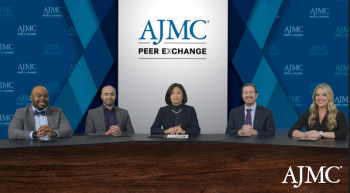
5 experts are featured in this series.

Panelists discuss how diagnosing iron deficiency anemia requires comprehensive laboratory testing of iron parameters alongside clinical assessment, emphasizing early detection to prevent complications in patients with common comorbidities like chronic kidney disease, heart failure, and inflammatory bowel disease, where coordinated treatment approaches must balance managing both IDA and the underlying condition.

1 expert is featured in this series.

A panelist discusses how strategic managed care partnerships can streamline care transitions between treatment settings to ensure uninterrupted support and monitoring for patients with Lambert-Eaton myasthenic syndrome.

1 expert is featured in this series.

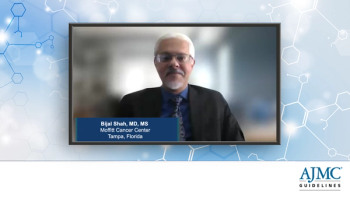
Dr. Bijal Shah offers forward-looking perspectives on the future of Ph+ ALL treatment, highlighting potential advancements, emerging challenges, and opportunities for improving patient care in 2025 and beyond.

Amrita Krishnan, MD, discusses how an ASH 2024 abstract from Sylvester Comprehensive Cancer Center suggests the potential of tocilizumab prophylaxis to mitigate cytokine release syndrome (CRS) in patients treated with bispecific therapies for multiple myeloma, and shares her approach to managing unique toxicities such as nail changes, skin reactions, and oral complications in patients receiving talquetamab.

Amrita Krishnan, MD, discusses how data from ASH 2024 highlight the critical role of intravenous immunoglobulin (IVIG) treatment in preventing infections in patients receiving teclistamab, shares her approach to incorporating IVIG into clinical practice, and outlines additional strategies for reducing infection risk and managing cytokine release syndrome (CRS) in patients on bispecific antibody therapies for multiple myeloma.

Sergio A. Giralt, MD, discusses how he uses cyclophosphamide to treat patients with chronic graft-vs-host disease (cGVHD), particularly in specific cases where other therapies may not be effective. He reviews the study design and methods of recent research investigating cyclophosphamide in cGVHD management, emphasizing its importance in optimizing treatment strategies.

Sergio A. Giralt, MD, discusses how he selects patients with chronic graft-vs-host disease (cGVHD) for treatment with ruxolitinib, often in combination with corticosteroids, and reviews the study design and methods of recent research on ruxolitinib in cGVHD management, highlighting key efficacy and safety results and how these findings align with his clinical practice.

Sergio A. Giralt, MD, discusses how rituximab plays a key role in treating chronic graft-vs-host disease. It is often used in combination with ibrutinib to enhance therapeutic outcomes. He reviews the study design and efficacy and safety data from recent trials and discusses how these results will influence his clinical practice moving forward.

The panelist discusses how recurrent Clostridioides difficile infections involve complex differential diagnosis, including persistent infection, reinfection, and other gastrointestinal conditions. Definitive diagnosis requires molecular and immunological testing of stool samples to detect toxin genes and active toxin production.

Sikander Ailawadhi, MD, discusses how the 2024 ASH Annual Meeting’s “Survivorship Burden and Patient Preferences Affecting Treatment Choices Among Multiple Myeloma Patients” study examined real-world factors influencing treatment decisions, highlighting the significant role of survivorship burden and patient preferences, and emphasizing how these findings should shape the management strategies for patients with multiple myeloma.

Panelists discuss how emerging Bruton tyrosine kinase inhibitor (BTKi) treatment regimens for treatment-naive patients with mantle cell lymphoma (MCL), including acalabrutinib + bendamustine + rituximab (ECHO), acalabrutinib + lenalidomide + rituximab (ALR), acalabrutinib + umbralisib + ublituximab (AU2), ibrutinib + rituximab (ENRICH), and zanubrutinib + rituximab (CHESS), are exploring novel combinations to improve treatment outcomes and address unmet clinical needs in MCL therapy.

Saad Z. Usmani, MD, MBA, FACP, discusses how the definition of the transplant-ineligible population for multiple myeloma is evolving while also addressing the challenges of standardizing minimal residual disease (MRD) as a biomarker across various treatment settings and clinical trials to ensure consistent and reliable use in treatment decision-making.

Saad Z. Usmani, MD, MBA, FACP, discusses how the CEPHEUS study, presented at ASH 2024, along with its expanded analysis of minimal residual disease (MRD) outcomes, provides valuable insights into the role of MRD as a biomarker in multiple myeloma treatment, highlighting its potential to guide therapy decisions and improve patient outcomes.

5 experts are featured in this series.

Panelists discuss how iron deficiency anemia manifests through debilitating symptoms, including severe fatigue, weakness, shortness of breath, headaches, and difficulty concentrating, which can profoundly impact patients’ daily functioning, work performance, and overall quality of life.

Brand Logo

259 Prospect Plains Rd, Bldg H
Cranbury, NJ 08512

609-716-7777

© 2025 MJH Life Sciences®

All rights reserved.

Secondary Brand Logo
Alt TextAlt Text