Ryan Haumschild, PharmD, MS, MBA
Articles by Ryan Haumschild, PharmD, MS, MBA

Navigating Access and Coverage Hurdles: Step Therapy in Hidradenitis Suppurativa
ByRyan Haumschild, PharmD, MS, MBA,Hadar Lev-Tov, MD,Mark Makhinson, PharmD ,Marry Vuong, PharmD, BCPPS Panelists discuss the challenges and evolving landscape of step therapy protocols in hidradenitis suppurativa treatment, emphasizing the impact on patient adherence, the potential benefits of earlier biologic use, and the need for advocacy to improve access and outcomes.
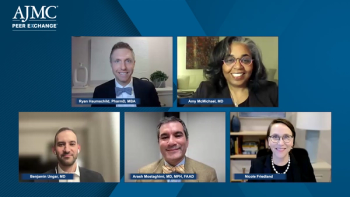
Choosing an Initial Therapy for Alopecia Areata
ByRyan Haumschild, PharmD, MS, MBA,Amy McMichael, MD ,Benjamin Ungar, MD ,Arash Mostaghimi, MD, MPH, FAAD ,Nicole Friedland Panelists discuss how key factors such as disease severity, patient preference, and payer requirements influence the choice of initial therapy for alopecia areata (AA), highlighting which drug classes have the highest and lowest success rates.
Deciding When to Treat Patients With Alopecia Areata
ByRyan Haumschild, PharmD, MS, MBA,Amy McMichael, MD ,Benjamin Ungar, MD ,Arash Mostaghimi, MD, MPH, FAAD ,Nicole Friedland Panelists discuss how the decision to treat vs observe alopecia areata (AA) depends on factors such as disease severity, patient symptoms, and the use of scoring systems to guide treatment decisions.

Emerging Multiple Myeloma Data and Future Outlook From ASCO 2025
ByZahra Mahmoudjafari, PharmD, MBA, BCOP, FHOPA ,Ryan Haumschild, PharmD, MS, MBA,Faith Davies, MD,Shachar Peles, MD,Sagar Lonial MD, FACP Panelists discuss how upcoming ASCO presentations will focus on long-term CAR T-cell therapy outcomes showing potential cure plateaus, minimal residual disease (MRD)–guided treatment escalation/de-escalation strategies, tri-specific antibodies, and the economic value of using MRD negativity to guide maintenance therapy discontinuation decisions.
A Personalized Approach: Considerations for Appropriate Biologic Selection in Hidradenitis Suppurativa
ByRyan Haumschild, PharmD, MS, MBA,Hadar Lev-Tov, MD,Mark Makhinson, PharmD ,Marry Vuong, PharmD, BCPPS Panelists discuss key factors influencing biologic selection for hidradenitis suppurativa, including efficacy, safety, comorbidities, and insurance challenges, highlighting the importance of a holistic, multidisciplinary approach to optimize treatment and navigate practical barriers.
The Role of Biologics for Treatment of Hidradenitis Suppurativa
ByRyan Haumschild, PharmD, MS, MBA,Hadar Lev-Tov, MD,Mark Makhinson, PharmD ,Marry Vuong, PharmD, BCPPS Panelists discuss the timely initiation of biologic therapy in moderate to severe hidradenitis suppurativa, emphasizing individualized treatment decisions based on disease impact and quality of life, alongside the potential for improved outcomes and cost-effectiveness through early, aggressive management.
Multimodal Care for Patients With Alopecia Areata
ByRyan Haumschild, PharmD, MS, MBA,Amy McMichael, MD ,Benjamin Ungar, MD ,Arash Mostaghimi, MD, MPH, FAAD ,Nicole Friedland Panelists discuss how managing alopecia areata (AA) involves multiple health care specialties, including dermatology and mental health, and how multidisciplinary care can be optimized, while also addressing strategies to alleviate financial barriers that patients may face in accessing treatment.
Diagnosis of Alopecia Areata
ByRyan Haumschild, PharmD, MS, MBA,Amy McMichael, MD ,Benjamin Ungar, MD ,Arash Mostaghimi, MD, MPH, FAAD ,Nicole Friedland Panelists discuss how alopecia areata (AA) is included in the differential diagnosis for hair loss conditions and how a definitive diagnosis is made through clinical evaluation and, when necessary, additional diagnostic tests.
Advancing First-Line Therapy for Multiple Myeloma: Updates From IsKia and IMROZ Trials
ByZahra Mahmoudjafari, PharmD, MBA, BCOP, FHOPA ,Ryan Haumschild, PharmD, MS, MBA,Faith Davies, MD,Shachar Peles, MD,Sagar Lonial MD, FACP Panelists discuss how recent updates from the phase 3 IsKia trial demonstrate that isatuximab combined with carfilzomib, lenalidomide, and dexamethasone improves minimal residual disease negativity rates by approximately 10% at both the 10–5 and 10–6 levels, particularly benefiting high-risk patients.
PERSEUS and ADVANCE Updates: Evolving Approaches to MRD-Driven Myeloma Care
ByZahra Mahmoudjafari, PharmD, MBA, BCOP, FHOPA ,Ryan Haumschild, PharmD, MS, MBA,Faith Davies, MD,Shachar Peles, MD,Sagar Lonial MD, FACP Panelists discuss how the PERSEUS trial’s subgroup analysis reinforced that sustained minimal residual disease negativity predicts better long-term outcomes and demonstrated the potential for treatment de-escalation at the 2-year mark, while other trials like Advance showed dramatic increases in MRD negativity rates with quadruplet therapy.
Building Hidradenitis Suppurativa Treatment Plan: Evaluating Standard of Care Pharmacotherapies
ByRyan Haumschild, PharmD, MS, MBA,Hadar Lev-Tov, MD,Mark Makhinson, PharmD ,Marry Vuong, PharmD, BCPPS Panelists discuss the importance of coordinated, personalized treatment strategies for hidradenitis suppurativa, highlighting early use of pharmacologic therapies—including biologics—and ongoing assessment to balance clinical effectiveness, patient quality of life, and financial considerations.

Exploring The Future of NF1-PN Management
ByRyan Haumschild, PharmD, MS, MBA,Mina Lobbous, MD, MSPH ,Lionel Chow, MD, PhD ,Maciej M. Mrugala, MD, PhD Panelists discuss the future of NF1-associated plexiform neurofibromas management, highlighting the potential for advances in targeted therapies, gene therapies, and personalized medicine to offer more effective, tailored treatments, while emphasizing early detection, improved imaging, and a greater focus on quality of life through psychosocial support, pain management, and functional rehabilitation.
Proactive Hidradenitis Suppurativa Management: From Watchful Waiting to Active Intervention
ByRyan Haumschild, PharmD, MS, MBA,Hadar Lev-Tov, MD,Mark Makhinson, PharmD ,Marry Vuong, PharmD, BCPPS Panelists discuss optimizing hidradenitis suppurativa management through early intervention, personalized treatment based on disease severity, and multidisciplinary coordination led by dermatologists to improve patient outcomes and reduce disease burden.
Psychosocial Impact of Alopecia Areata
ByRyan Haumschild, PharmD, MS, MBA,Amy McMichael, MD ,Benjamin Ungar, MD ,Arash Mostaghimi, MD, MPH, FAAD ,Nicole Friedland Panelists discuss how ongoing or recurrent hair loss in patients with alopecia areata (AA) leads to significant psychological effects, impacting their mental health, and how different forms of AA may be harder for some patients to cope with, with strategies for managing these psychological challenges in clinical practice.
Hallmark Symptoms Seen With Alopecia Areata
ByRyan Haumschild, PharmD, MS, MBA,Amy McMichael, MD ,Benjamin Ungar, MD ,Arash Mostaghimi, MD, MPH, FAAD ,Nicole Friedland Panelists discuss how alopecia areata (AA) presents with hallmark symptoms such as sudden hair loss, and how the condition fluctuates over time, making it a relapsing or remitting inflammatory disease.
Key Takeaways From CEPHEUS: Subgroup Analysis
ByZahra Mahmoudjafari, PharmD, MBA, BCOP, FHOPA ,Ryan Haumschild, PharmD, MS, MBA,Faith Davies, MD,Shachar Peles, MD,Sagar Lonial MD, FACP Panelists discuss how emerging evidence from first-line therapy trials continues to demonstrate the superiority of quadruplet over triplet regimens, with the CEPHEUS subgroup analysis confirming that even higher-risk and less-fit patients can benefit from 4-drug combinations while maintaining acceptable safety profiles.
Expert Perspectives on Balancing QOL, Convenience, and Depth of Treatment Response
ByZahra Mahmoudjafari, PharmD, MBA, BCOP, FHOPA ,Ryan Haumschild, PharmD, MS, MBA,Faith Davies, MD,Shachar Peles, MD,Sagar Lonial MD, FACP Panelists discuss how quality of life (QOL) and treatment convenience should be balanced with maximal depth of response through personalized therapy approaches, emphasizing the importance of multidisciplinary care teams and the flexibility to adapt treatment regimens based on individual patient preferences and circumstances.
Health Equity in Hidradenitis Suppurativa: Addressing Care Disparities
ByRyan Haumschild, PharmD, MS, MBA,Hadar Lev-Tov, MD,Mark Makhinson, PharmD ,Marry Vuong, PharmD, BCPPS Panelists discuss the significant disparities in hidradenitis suppurativa diagnosis and care, emphasizing the impact of race, gender, geography, and socioeconomic status, and highlighting the need for culturally competent education, expanded access, and community engagement to promote earlier intervention and equitable outcomes.
Potential of Gene Therapy for NF1-PN
ByRyan Haumschild, PharmD, MS, MBA,Mina Lobbous, MD, MSPH ,Lionel Chow, MD, PhD ,Maciej M. Mrugala, MD, PhD Panelists discuss the mechanisms of action of gene therapy for NF1-associated plexiform neurofibromas, focusing on restoring functional neurofibromin to regulate the RAS/MAPK pathway and prevent tumor formation, while highlighting promising early clinical trial results showing reduced tumor volume and improved symptoms, alongside the need for further studies to assess long-term safety and efficacy.
The Pharmacist Advantage: Bridging Gaps in Hidradenitis Suppurativa Care
ByRyan Haumschild, PharmD, MS, MBA,Hadar Lev-Tov, MD,Mark Makhinson, PharmD ,Marry Vuong, PharmD, BCPPS Panelists discuss the vital role of multidisciplinary collaboration, provider education, and technology integration in improving early diagnosis and comprehensive management of hidradenitis suppurativa, highlighting how coordinated efforts across specialties—including pharmacists—can reduce delays, enhance equity, and optimize patient outcomes.
Epidemiology Associated With Alopecia Areata
ByRyan Haumschild, PharmD, MS, MBA,Amy McMichael, MD ,Benjamin Ungar, MD ,Arash Mostaghimi, MD, MPH, FAAD ,Nicole Friedland Panelists discuss how the epidemiology of alopecia areata (AA) varies across different patient populations, with certain forms of the disease being more prevalent in specific groups.
Therapy Selection and Management Strategies for Transplant-Ineligible Older Patients
ByZahra Mahmoudjafari, PharmD, MBA, BCOP, FHOPA ,Ryan Haumschild, PharmD, MS, MBA,Faith Davies, MD,Shachar Peles, MD,Sagar Lonial MD, FACP Panelists discuss how newer immune-based therapies and bispecific antibodies may enable fixed-duration treatment approaches that could eliminate the need for stem cell transplant in older but fit patients, potentially allowing for treatment-free intervals after achieving deep responses.
Balancing Deeper Response and MRD Negativity With Toxicity Risks in Clinical Decision-Making
ByZahra Mahmoudjafari, PharmD, MBA, BCOP, FHOPA ,Ryan Haumschild, PharmD, MS, MBA,Faith Davies, MD,Shachar Peles, MD,Sagar Lonial MD, FACP Panelists discuss how to balance achieving deeper MRD-negative responses against increased toxicity risks in transplant-ineligible patients by personalizing therapy through dose modifications, weekly vs twice-weekly dosing schedules, and careful monitoring while maintaining treatment intensity similar to clinical trials.
Common Comorbidities Associated With Alopecia Areata
ByRyan Haumschild, PharmD, MS, MBA,Amy McMichael, MD ,Benjamin Ungar, MD ,Arash Mostaghimi, MD, MPH, FAAD ,Nicole Friedland Panelists discuss how concurrent comorbidities, such as thyroid disorders and other autoimmune conditions, are commonly seen in patients with alopecia areata (AA) and how they complicate disease management and increase the overall burden on patients.
Hidden in Plain Sight: Strategies to Improve Early Identification of Hidradenitis Suppurativa
ByRyan Haumschild, PharmD, MS, MBA,Hadar Lev-Tov, MD,Mark Makhinson, PharmD ,Marry Vuong, PharmD, BCPPS Panelists discuss the drivers and consequences of delayed diagnosis in hidradenitis suppurativa, emphasizing the need for provider education, clinical decision support, and multidisciplinary collaboration to promote earlier recognition and more effective, coordinated care.
Recognizing Hidradenitis Suppurativa: From First Signs to an Accurate Diagnosis
ByRyan Haumschild, PharmD, MS, MBA,Hadar Lev-Tov, MD,Mark Makhinson, PharmD ,Marry Vuong, PharmD, BCPPS Panelists discuss the challenges of timely diagnosis and comprehensive management of hidradenitis suppurativa, emphasizing the need for early recognition, multidisciplinary care, and empathy-centered approaches to address the physical, emotional, and social burden of the disease.
Guideline Recommendations for Newer NF1-PN Therapies
ByRyan Haumschild, PharmD, MS, MBA,Mina Lobbous, MD, MSPH ,Lionel Chow, MD, PhD ,Maciej M. Mrugala, MD, PhD Panelists discuss current guidelines recommending mirdametinib for pediatric patients (2 years and older) with progressive, symptomatic NF1-associated plexiform neurofibromas that are inoperable or difficult to manage surgically, and emphasize the importance of early initiation, regular monitoring, and a multidisciplinary approach to optimize treatment outcomes.
Navigating First-Line Therapy Guidelines and Treatment Considerations in High-Risk Cytogenetics
ByZahra Mahmoudjafari, PharmD, MBA, BCOP, FHOPA ,Ryan Haumschild, PharmD, MS, MBA,Faith Davies, MD,Shachar Peles, MD,Sagar Lonial MD, FACP Panelists discuss how NCCN guidelines are expected to incorporate quadruplet-based regimens as reasonable treatment approaches for transplant-ineligible patients, while emphasizing the need for personalized treatment strategies that consider individual patient frailty and high-risk genetics rather than applying uniform approaches across all older patients.
Evolving Treatment Strategies in Transplant-Ineligible NDMM: Expert Insights From CEPHEUS, IMROZ and BENEFIT
ByZahra Mahmoudjafari, PharmD, MBA, BCOP, FHOPA ,Ryan Haumschild, PharmD, MS, MBA,Faith Davies, MD,Shachar Peles, MD,Sagar Lonial MD, FACP Panelists discuss how the CEPHEUS trial demonstrated that quadruplet therapy (daratumumab, bortezomib, lenalidomide, and dexamethasone) significantly improved minimal residual disease negativity rates compared to triplet therapy in transplant-ineligible multiple myeloma patients, achieving approximately 60% vs 47% 10–5 responses while maintaining manageable safety profiles.
The Role of Biomarkers in NF1-PN Care
ByRyan Haumschild, PharmD, MS, MBA,Mina Lobbous, MD, MSPH ,Lionel Chow, MD, PhD ,Maciej M. Mrugala, MD, PhD Panelists discuss how biomarkers, including genetic testing and tumor profiling, can help identify patients with RAS/MEK/ERK pathway activation or specific NF1 mutations, enabling more personalized and effective treatment with therapies like mirdametinib or gene therapies for progressive, symptomatic NF1-associated plexiform neurofibromas.