Defining treatment failure depends on disease burden and biology, while circulating tumor DNA offers real but still limited practical value in guiding second-line therapy selection for metastatic colorectal cancer.
Defining treatment failure depends on disease burden and biology, while circulating tumor DNA offers real but still limited practical value in guiding second-line therapy selection for metastatic colorectal cancer.
KEYNOTE-177 and CheckMate-8HW established immunotherapy as the frontline standard for MSI-high and deficient mismatch repair colorectal cancer, though managing the smaller subset of patients who progress remains genuinely complex.
Choosing between FOLFOX and FOLFIRI, and deciding when to shift to maintenance therapy, requires balancing prior treatment exposure, patient lifestyle, and the limited pool of active agents in colorectal cancer.
Comprehensive upfront biomarker testing, including RAS, BRAF, HER2, and MSI status, now anchors first-line treatment selection in metastatic colorectal cancer, though reflexive testing adoption still varies across practice settings nationwide.
Discussion of patient selection criteria, logistical challenges, toxicity management, and when to favor each immunotherapy approach.
Examination of how combination therapy and next-generation immunotherapies are poised to redefine RRMM treatment over the next 5 years.
Experts discuss the unmet needs in desmoid tumor management, emphasizing personalized treatment, quality of life, and the importance of specialized care.
Experts discuss the challenges of diagnosing rare diseases and the potential role of AI in improving patient management and treatment outcomes.
Explore the integration of Desmoid Tumor Working Group recommendations with NCCN guidelines and the importance of shared decision-making in patient care.
Exploration of pivotal data leading to the approvals of elranatamab and linvoseltamab, their efficacy, durability of response, and key safety considerations.
Andrew Yee, MD, introduces the discussion by reviewing treatment challenges, patient education, and decision-making in relapsed/refractory multiple myeloma.
Experts discuss dose reduction strategies and emerging therapies for desmoid tumors, emphasizing patient monitoring and quality of life improvements.
Experts discuss dose reduction strategies and emerging therapies for desmoid tumors, emphasizing patient monitoring and quality of life improvements.
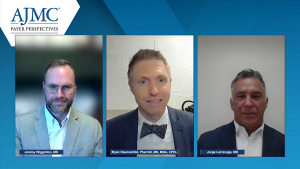
Ryan Haumschild, PharmD, MS, MBA, introduces the faculty and sets the agenda to explore disease background, novel therapies, and operational considerations in relapsed/refractory multiple myeloma.
Ryan Haumschild, PharmD, MS, MBA, introduces the faculty and sets the agenda to explore disease background, novel therapies, and operational considerations in relapsed/refractory multiple myeloma.
FDA approval of Nirogacistat for desmoid tumors highlights improved survival rates, quality of life, and manageable side effects for patients.
Explore the evolving landscape of desmoid tumor treatments, including chemotherapy, tyrosine kinase inhibitors, and emerging clinical trials.
Ryan Haumschild, PharmD, MS, MBA, introduces the faculty and sets the agenda to explore disease background, novel therapies, and operational considerations in relapsed/refractory multiple myeloma.
Ryan Haumschild, PharmD, MS, MBA, introduces the faculty and sets the agenda to explore disease background, novel therapies, and operational considerations in relapsed/refractory multiple myeloma.
Explore the evolving landscape of desmoid tumor treatments, highlighting surgery, cryotherapy, and radiotherapy for effective patient care.
Experts discuss the complexities of observing desmoid tumors, weighing the benefits of active surveillance against the need for immediate treatment.
The group describes the clinical gaps that prompted development of bispecifics and summarizes the currently available agents for relapsed/refractory disease.
Ryan Haumschild, PharmD, MS, MBA, introduces the faculty and sets the agenda to explore disease background, novel therapies, and operational considerations in relapsed/refractory multiple myeloma.
Ryan Haumschild, PharmD, discusses overcoming barriers to cancer care access, emphasizing the role of pharmacy in improving access and affordability.
Ryan Haumschild, PharmD, MS, MBA, discusses key considerations for pharmacists to ensure access to cutting-edge therapies for patients with cancer.
Experts discuss the clinical and economic burden of idiopathic pulmonary fibrosis (IPF), emerging clinical data, and strategies to improve patient outcomes.
Patients with desmoid tumors face significant clinical and economic burdens, impacting their quality of life and leading to ongoing treatment challenges.
Explore the critical role of biomarkers in diagnosing desmoid tumors and the importance of early detection for patient quality of life.
Ryan Haumschild, PharmD, MS, MBA, introduces the faculty and sets the agenda to explore disease background, novel therapies, and operational considerations in relapsed/refractory multiple myeloma.
Ryan Haumschild, PharmD, MS, MBA, introduces the faculty and sets the agenda to explore disease background, novel therapies, and operational considerations in relapsed/refractory multiple myeloma.
September 27th 2024

November 1st 2021
February 22nd 2022