
Opinion|Videos|October 4, 2024
Introducing Bispecifics for Extensive-Stage SCLC
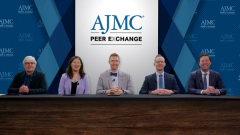
Panelists discuss how tarlatamab, a bispecific T-cell engager therapy, received accelerated approval for extensive-stage small cell lung cancer (SCLC) in May 2024, examining its mechanism of action, pivotal clinical data, management of adverse events, practical considerations for administration, and its position within the SCLC treatment algorithm.
Advertisement
Episodes in this series
Tarlatamab was given accelerated approval in May 2024 for extensive-stage small cell lung cancer (SCLC). How does this therapy work, and what was the important data the led to its approval?
- What are the main adverse events to watch for, and do you manage them?
- Are there any other clinical considerations, such as inpatient or outpatient dosing, when using a bispecific T-cell engager like tarlatamab?
- Where does this therapy fit into your treatment algorithm for patients with SCLC?
Advertisement
Related to this article

Accelerated approvals, surrogate end points, and high drug costs are reshaping cancer center formulary decisions, explained panelists at PCOC.

Most community oncology practices now administer bispecific antibodies in-office, but reimbursement gaps remain a top barrier, a survey finds.
Tammy Lundstrom, MD, JD, discusses the new childhood vaccine order, single-dose MMR access concerns, and the measles resurgence.

Switching MS patients to subcutaneous ocrelizumab cut chair time 82.8% and delivered $514,544 in 3-year value, a UVA analysis finds.

Topical ruxolitinib prescribing in Medicare Part D surged through 2024, but its cost per day runs 16 times higher than generic tacrolimus.

Baseline biopsies separated 16 patients who later developed hepatocellular carcinoma from 32 matched controls a median 6.1 years ahead.

A narrative review finds specialty pharmacies lack a patient-reported outcome measure built for their workflow, despite frequent contact with patients with MS.

Patients with colorectal or ovarian cancer enrolled in a clinical trial have lower pharmacy and medical costs during the 9 months after trial initiation.
Advertisement
Advertisement
Trending on AJMC
1
COVID-19 or Flu? Symptoms Alone Can't Tell: Tammy Lundstrom, MD, JD
2
Nearly a Decade After CAR T, Medicare’s Cell and Gene Therapy Payment Gap Persists
3
Perceptions About CGMs Among Primary Care Physicians and Endocrinologists
4
Contributor: Congress Can Bring Mental Health Care to the 21st Century
5