
Therapy strategies in the management of heart failure are discussed.
Therapy strategies in the management of heart failure are discussed.
The role of the primary care physician (PCP) in heart failure management is explored.
Panelists discuss reference biologic and biosimilar concentrations as well as the importance of citrate-free, less frequent injectable medications.
Experts compare approaches to prescribing biosimilars over reference drugs.
The panelists discuss breakthrough technologies that are revolutionizing mCRC diagnosis.
Medical experts discuss precision medicine and targeted therapies driving the management of metastatic colorectal cancer treatment.

Joseph M. Coney, MD, FACS, explores strategies to address treatment obstacles among vulnerable patients and examines the effects of step therapy and prior authorization within a complex health care landscape.
Experts discuss the current standard treatment options for patients diagnosed with metastatic NSCLC (mNSCLC).
Specialists review specific prognostic factors and biomarkers that help guide treatment selection for patients with metastatic NSCLC (mNSCLC) and discuss if these biomarkers differ from those observed in early-stage NSCLC.
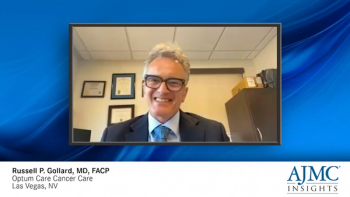
Russell P. Gollard, MD, FACP, discusses coverage decisions for expensive treatments in hemophilia, including total cost of care, drug availability, and real-world evidence.
Key opinion leaders hold a discussion highlighting significant factors in heart failure staging.
A panel of medical experts discuss various categories of heart failure and their clinical implications.
Providers speak to the importance of being knowledgeable of efficacy and safety data before prescribing biosimilars to patients.
Clinical and social challenges associated with biosimilars are discussed by key opinion leaders.
An overview of the HIMALAYA study and IMbrave150 trial are provided.
Medical experts discuss patient considerations when utilizing clinical pathways in HCC treatment.
David Fenstermacher, PhD, provides insights regarding key advancements and pipeline treatments for metastatic colorectal cancer.
The panelists examine a recent FDA approval that provides new opportunities for effective combination strategies in mCRC treatment.
Joseph M. Coney, MD, FACS, reviews best practices for improving adherence to treatment among patients with diabetic macular edema through comprehensive education on the disease and available therapies.
Experts discuss changes they foresee in the perioperative approach landscape for patients with NSCLC.
A panel deliberates post-neoadjuvant strategies and data requirements for optimizing immune checkpoint inhibitors in NSCLC neoadjuvant therapy.

Panelists share their final thoughts on staying updated with the latest advancements in the field.

Experts emphasize the crucial role of swift diagnostic testing, especially through liquid biopsies.
Specialists delve into strategies for monitoring treatment response and the importance of assessing symptoms during the initial three treatment cycles.
Russell P. Gollard, MD, FACP, discusses hemophilia patients in their plan, identifying these patients, and treatment with newer monoclonal factor products.
Financial and geographic disparities contributing to elevated risk for heart disease are explored.
Robert Groves, MD, leads a panel discussion surrounding risk factors related to heart disease.
Panelists explore opportunities for biosimilars to manage inflammatory conditions.
Experts explore current and future use of biosimilars in dermatology, gastroenterology, and rheumatology.
Benefits of clinical pathway implementation in HCC management are examined.

259 Prospect Plains Rd, Bldg H
Cranbury, NJ 08512
© 2025 MJH Life Sciences®
All rights reserved.