


Technology
Latest News


At ASCO, Testing and AI Rival Drugs for Attention, but Reimbursement Remains a Barrier
By Mary Caffrey

AI-Based Electrocardiogram Interpretation Detects LVSD in Muscular Dystrophy
By Rose McNulty
Advertisement
Finding the Best Path Forward for Adoption of Prescription Digital Therapeutics
Delve into the current state of prescription digital therapeutics (PDTs) adoption and uncover strategies for increasing payer approval and achieving widespread coverage of PDTs.

Latest Videos





CME Content


Advertisement
More News

Delivering value-based cancer care requires overcoming hurdles to access care and tailoring care that prioritizes the quality-of-life metrics the patient values, explained Coral Omene, MD, PhD.

Remote care reduced readmissions and improved functional outcomes in COPD in a recent study.

Merrill H. Stewart, MD, Ochsner Health, outlines the financial, logistical, and reimbursement barriers slowing the adoption of cardiac stress testing, but growing recognition of its long-term value could drive wider use.


Sessions and posters at the 2025 European Hematology Association Congress evaluated the potential and real-world practices of using artificial intelligence (AI) to predict and improve outcomes for patients with hematological diseases.

The role that artificial intelligence (AI) and other technology can play in care delivery is growing, said Coral Omene, MD, PhD, of Rutgers Cancer Institute and RWJBarnabas Health.

Abstracts presented during the plenary session of the 2025 European Hematology Association (EHA) Congress spanned from novel drug regimens for myeloma and lymphoma to investigation of leukemias on the molecular and genetic levels.

An artificial intelligence (AI)-driven machine learning model was refined and validated internationally to accurately classify acute leukemia subtypes from routine laboratory data, according to Merlin Engelke, MS, offering a potential tool for improving diagnosis worldwide.

A new genomic testing algorithm enhances turnaround times for acute myeloid leukemia diagnostics, improving treatment decisions and patient care quality.

Artificial intelligence (AI) provides a major tool in the evolution of thoracic care, as clinicians work to catch lung cancer earlier to provide better prognosis.

Specialty televisits remain common in the Veterans Health Administration following the COVID-19 pandemic, suggesting they will remain an important ongoing care modality for many patients.
With potential lung cancer nodules sometimes slipping through the cracks, educating stakeholders about artificial intelligence (AI) that can catch nodules early could be helpful in cancer treatment.

The FDA introduced Elsa, an artificial intelligence (AI) tool intended to enhance efficiency in clinical reviews and scientific evaluations.
Developments in artificial intelligence (AI) can help clinicians to diagnose thoracic conditions that may be miss on first glance.

Jill Feldman, cofounder and president, EGFR Resisters, shares the importance of being proactive in managing dermatologic toxicities in epidermal growth factor receptor (EGFR)–positive lung cancer.

To mark the 30th anniversary of The American Journal of Managed Care (AJMC), each issue in 2025 includes a special feature: reflections from a thought leader on what has changed—and what has not—over the past 3 decades and what’s next for managed care. The June issue features a conversation with Melinda B. Buntin, PhD, a health economist and a Bloomberg Distinguished Professor at the Johns Hopkins Bloomberg School of Public Health and Carey Business School.

A novel machine learning model enhances colorectal cancer (CRC) prognosis and immunotherapy response prediction by integrating clinical data and immune gene expression.

Artificial intelligence (AI) can enhance insulin dosing accuracy for hospitalized patients with type 2 diabetes (T2D), improving glycemic control and streamlining physician workflows.

Lindsey Leininger, PhD, and Allister Chang, MPA, highlight the potential of laundromats as accessible, community-based settings to support Medicaid outreach, foster trust, and connect families with essential health and social services.

While multiple machine learning (ML) algorithms offered similar predictive performance, the cost-effective analysis revealed stark differences in the costs associated with their use.

People living with HIV who have taken highly active antiretroviral therapy can have hyperlipidemia predicted in advance by machine learning.

Cathy Eng, MD, FACP, FASCO, Vanderbilt-Ingram Cancer Center, speaks about the clinical and operational priorities that academic medical centers make front-and-center when caring for underserved populations receiving treatment for cancer.

Minimally invasive glaucoma surgery offers alternatives for patients looking for methods of treating glaucoma without affecting quality of life.
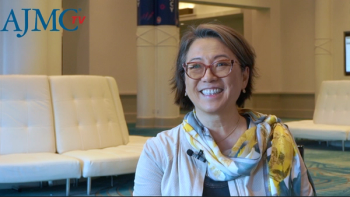
While artificial intelligence (AI) is transforming community oncology, Nini Wu, MD, of Navista, emphasizes that success depends on patient access and infrastructure.

The ALPHA3 trial is exploring cemacabtagene ansegedleucel's (cema-cel) potential to enhance outcomes in patients who have relapsed/refractory large B-cell lymphoma, particularly those positive for minimal residual disease.
Advertisement
Advertisement
Trending on AJMC
1
TrumpRx Launch Brings Savings—and Uncertainty
2
As Cencora Closes With OneOncology, Patton Says Terms Show “Trust”
3
Exploring Identity, Appearance Experiences Among Patients With Alopecia
4
Asundexian Reduces Risk of Stroke Recurrence in Phase 3 OCEANIC-STROKE Trial
5