


Clinical
Latest News
Advertisement
Video Series
Latest Videos







Podcasts


Advertisement
More News

Last week, OpenAI launched AI tools for health care organizations, including ChatGPT for Healthcare, designed to improve care and streamline administrative tasks.

Risk-based vaccination strategies and clinical pathway integration could improve coverage and strengthen future influenza preparedness, according to Marco del Riccio, MD.

Amivantamab-vmjw combined with FOLFOX/FOLFIRI delivers encouraging response rates, durable benefit, and manageable safety.

Panelists discuss how emerging therapies targeting new pathways may revolutionize schizophrenia management.
Panelists discuss how optimizing safety and cost-efficiency are central to improving adherence and overall health care value.

Yara Abdou, MD, emphasizes that addressing fertility, survivorship, and quality of life is key to improving outcomes for young patients with breast cancer.

Although influenza vaccine uptake remains low, improving access, recommendations, and trust may help close coverage gaps.

Zanidatamab shows promise in extending survival for patients with HER2-positive biliary tract cancer, marking a significant breakthrough in treatment options.

Reduced doses and shorter durations of venetoclax can enhance treatment outcomes and reduce adverse events in acute myeloid leukemia (AML).

Patients with unresectable stage III non–small cell lung cancer (NSCLC) had previously received neoadjuvant chemoimmunotherapy.

Circulating tumor DNA shows promise in detecting esophageal cancer recurrence earlier than traditional methods, enhancing posttreatment surveillance.

Asian women with breast cancer receiving chemotherapy had the highest persistent chemotherapy-induced alopecia (PCIA) incidence and alopecia-related distress vs their White, Black, and Hispanic or Latino peers.

Experts discuss the critical unmet needs in HER2-mutant non-small cell lung cancer, highlighting disparities in testing and treatment access.
Experts explore HER2 mutations and the critical role of comprehensive molecular profiling in optimizing treatment for non-small cell lung cancer patients.
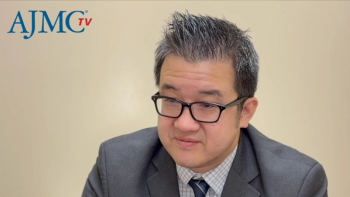
Multidisciplinary care helps manage cardiac risks in breast cancer, allowing patients to continue treatment safely, says Eric H. Yang, MD.

EHR penicillin allergy flags do not often match allergist assessments, highlighting the need for improved evaluation processes.

Explore the evolution of IgA nephropathy treatment, highlighting new guidelines and targeted therapies that improve patient outcomes.

Higher levels of CD4-positive naïve T cells in patients receiving CAR T-cell therapy for multiple myeloma are associated with longer PFS, suggesting T-cell composition may serve as a biomarker to guide patient selection.
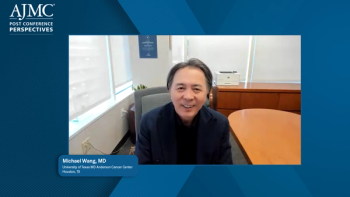
Michael Wang, MD, reviews ASH 2025 data showing durable safety with long-term BTK inhibition, promising next-generation targeted agents, sustained CAR T-cell efficacy, and evidence favoring upfront combination therapy over sequential treatment in mantle cell lymphoma.

While multi-indication bispecific therapies are likely to expand in lymphoma, their use must remain driven by efficacy, with operational efficiency and cost savings serving as added benefits rather than decision drivers.
Data presented at ASH 2025 suggest earlier-line use of cilta-cel leads to better outcomes in multiple myeloma because patients have fitter immune systems and less exhausted T cells, improving CAR T feasibility, expansion, and durability compared with later-line treatment.
Explore the evolution of IgA nephropathy treatment, highlighting new guidelines and targeted therapies that improve patient outcomes.
Consolidating treatment to a single bispecific antibody for DLBCL and follicular lymphoma can improve operational efficiency and generate cost savings for oncology practices without affecting efficacy or safety.
Early ASH 2025 data suggest sonrotoclax is a promising therapy in MCL, supporting a broader shift toward chemo-free, combination-based strategies—particularly for patients with BTK inhibitor–refractory disease.
Flu vaccination in older adults may prevent hospitalizations and cardiovascular events, saving lives and reducing health care costs, according to Marco del Riccio, MD.
Advertisement
Advertisement
Trending on AJMC
1
TrumpRx Launch Brings Savings—and Uncertainty
2
As Cencora Closes With OneOncology, Patton Says Terms Show “Trust”
3
Benefits, Tradeoffs of Medically Integrated Dispensing in Oncology Care: Katherine Tobon, PharmD, BCOP
4
Exploring Identity, Appearance Experiences Among Patients With Alopecia
5