


Clinical
Latest News
Advertisement
Latest Videos


CME Content


Advertisement
More News

Real-world studies evaluating the safety and efficacy of switching to adalimumab biosimilars from the originator product confirmed the safety and efficacy of the biosimilars ABP 501 and SB5.

A new study found that patients with e-cigarette or vaping–associated lung injury had a higher risk of developing respiratory disability, cognitive impairment, symptoms of depression, anxiety, and posttraumatic stress within 1 year of their injury.

A new model may be able to better identify which patients will respond to immunotherapy.

The FDA this week expanded the use of dupilumab for children aged 6 months to 5 years with moderate-to-severe atopic dermatitis (AD) whose disease is not controlled with topical prescription therapies or when those treatments can't be used.
The study, based on 33 years of data, also explored auto-antibody production in the rare patient group.
The 2022 European Hematology Association (EHA) Congress will be the group’s first hybrid meeting, in which investigators will convene both virtually and in Vienna, Austria, from June 9-12, 2022, to present cutting-edge findings in the realm of oncology and hematology.

Identifying patients with spinal muscular atrophy (SMA) early and before the onset of symptoms can yield financial savings and improve quality of life (QOL) for these individuals and their families.

The results involve a pair of DNA medicines combined with cemiplimab, which is approved as Libtayo to treat other solid tumors. In this study, the regimen is designed to prime a T-cell response before a patient receives radiation.
Dr Jonathan L. Kaufman discusses the role immunomodulatory drugs (IMiDs) play within triplet regimens for patients with RRMM.
Joshua Richter, MD, and Jonathan L. Kaufman, MD, define and provide a basic understanding of relapsed/refractory multiple myeloma (RRMM).

Daniel Culver, DO, and Paul Noble, MD, highlight the types of physicians who manage patients with different forms of ILD, from diagnosis to treatment, as well as the process of referrals.
Daniel Culver, DO, and Paul Noble, MD, talk about incidence and prevalence typically seen with patients with ILD.

In a new study, poor sleep was linked to an increased risk of life-threatening flare-ups in people with chronic obstructive pulmonary disease (COPD).

Kim A. Reiss, MD, assistant program director of the Hematology/Oncology Fellowship Program and assistant professor of medicine at the Hospital of the University of Pennsylvania, discusses pancreatic cancer research she presented at the 2022 American Society of Clinical Oncology Annual Meeting.

A novel prognostic model based on N 6-methyladenosine-associated long non-coding RNAs demonstrated accuracy in determining high- and low-risk disease, suggesting the associated risk value may have potential as a novel biomarker.
Joel W. Neal, MD, PhD, associate professor, Division of Oncology, Stanford Cancer Institute, is lead investigator on the COSMIC-021 trial, which is investigating cabozantinib plus atezolizumab vs cabozantinib alone in patients with advanced non–small cell lung cancer (NSCLC) as a possible second-line treatment beyond chemotherapy.

Thanos Zomas, MD, global medical lead, Lymphoma and Leukemia, and global medical lead, Adcetris Program, at Takeda Oncology discusses updated results from the ECHELON-1 study.

Levels of the 2 markers appeared to indicate both the presence of SLE and disease activity levels.
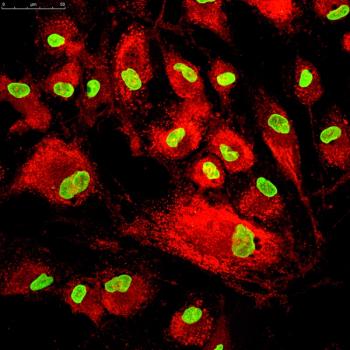
Preventing graft-versus-host disease (GVHD) after allogeneic stem cell transplant is a key aspect of patient management, but current cyclosporine concentration guidelines may not be sufficient, according to a recent study.

The researchers underscored the importance of the patient voice in the field, as some aspects of treatment can only be assessed through the patient.

Data presented at ASCO show that after 6 years, patients with advanced Hodgkin lymphoma who were treated with a combination of brentuximab vedotin and chemotherapy had a sharply reduced risk of death and a reduced risk of a secondary cancer.


Little data exist on the effectiveness of dupilumab in Black and Hispanic children, even though severe asthma disproportionately affects these populations.

Undifferentiated connective tissue disease (UCTD) is challenging to define but is a distinct clinical entity from connective tissue diseases (CTD).

Sacubitril/valsartan reduced mean pulmonary artery pressure (mPAP) and improved lung congestion, functional capacity, and quality of life in a subset of patients with heart failure with preserved ejection fraction and pulmonary hypertension (HFpEF-PH) using a remote monitoring platform.
Advertisement
Advertisement
Trending on AJMC
1
TrumpRx Launch Brings Savings—and Uncertainty
2
5 Things to Know About the Oral GLP-1 Era
3
Exploring Identity, Appearance Experiences Among Patients With Alopecia
4
Stroke Subtype Does Not Affect Efficacy of Asundexian for Second Stroke Prevention
5