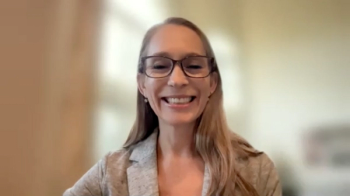
Nancy Reau, MD, section chief of hepatology at Rush University Medical Center, elaborates on how to improve provider knowledge on liver disease guidelines.
Nancy Reau, MD, section chief of hepatology at Rush University Medical Center, elaborates on how to improve provider knowledge on liver disease guidelines.
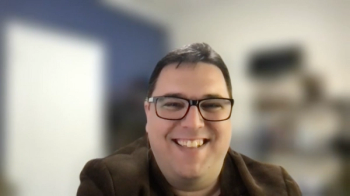
Updating the Type 1 Diabetes (T1D) Index each year with the latest data and literature and implementing feedback is important for at least the first few years, said Tom Robinson, vice president of global access at JDRF.
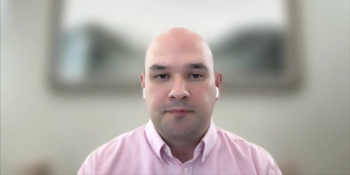
Jason Ezra Hawkes, MD, MS, FAAD, board-certified dermatologist and associate professor of dermatology at the University of California Davis in Sacramento, spoke on how clinical studies in atopic dermatitis (AD) are increasingly investigating topics that remain unknown for disease management, including primary vs secondary failures and AD pathophysiology across different ethnic groups.
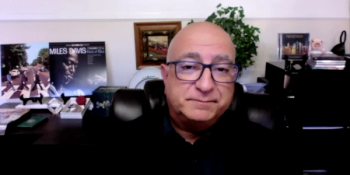
Joseph Alvarnas, MD, vice president of government affairs at City of Hope and chief clinical adviser of AccessHope in Duarte, California, spoke on the influence that the California Cancer Care Equity Act is having on legislative efforts in other states, as well as future steps to promote accessible, affordable, and effective cancer care for patients nationwide.
Tam C. Phan, PharmD, AAHIVP, assistant professor of clinical pharmacy, USC School of Pharmacy, talks about how HIV pre-exposure prophylaxis (PrEP) therapies in the pipeline address disparities in patient access and adherence.

In an interview at this year’s American Heart Association Scientific Sessions meeting in Chicago, Tochi M. Okwuosa, DO, cardiologist and director of cardio-oncology at Rush University Medical Center, discussed the importance of addressing cardiovascular disease (CVD) prevention in patients with cancer who are undergoing treatment.
As patients come into clinic and receive appropriate follow-up, we can hopefully find ways to mitigate the increase in alcoholic hepatitis, said Nancy Reau, MD, section chief of hepatology at Rush University Medical Center.
Get type 1 diabetes (T1D) communities involved in solving the problem and implementing T1D interventions in your country, said Tom Robinson, vice president of global access at JDRF.
There is a major role for telehealth in oncology care, not only for its convenience but also for giving clinicians the ability to scale nononcologic visits, explained Emeline Aviki, MD, MBA, FACOG, assistant attending gynecologic cancer surgeon at Memorial Sloan Kettering Cancer Center (MSKCC) in New York City and lead of the MSKCC Affordability Working Group.
Jason Ezra Hawkes, MD, MS, FAAD, board-certified dermatologist and associate professor of dermatology at the University of California Davis in Sacramento, discussed why it is important for dermatologists to educate patients on atopic dermatitis (AD) and keep an open mind on variations in disease presentation by skin color.
Liz Lightstone, MBBS, PhD, FRCP, professor of renal medicine for the Faculty of Medicine, Imperial College London, spoke on issues regarding the current standard of care for lupus nephritis, including steroid overuse, pregnancy, and dose-related toxicity.

Vineet Arora, MD, MAPP, dean for medical education at UChicago Medicine, discusses the qualities that led her to nominate Ishani Ganguli, MD, MPH, to receive the Seema S. Sonnad Emerging Leader in Managed Care Research Award. The American Journal of Managed Care® presented the 2022 award to Dr Ganguli at the 2022 Patient-Centered Oncology Care® meeting.
A combination of possible factors could be contributing to a recent uptick in hospitalizations for alcoholic cirrhosis of the liver, said Nancy Reau, MD, section chief of hepatology at Rush University Medical Center.
While each country has a different priority when it comes to type 1 diabetes (T1D) diagnosis and treatment, there is a fairly consistent outcomes checklist across nations, said Tom Robinson, vice president of global access at JDRF.
Jana K. Dickter, MD, associate clinical professor, Division of Infectious Diseases, City of Hope, discusses a patient's experience being the oldest person to successfully undergo a stem cell transplant while living with HIV and leukemia.
Stephen M. Schleicher, MD, MBA, chief medical officer at Tennessee Oncology, addresses the “huge problem” of financial toxicity among patients with cancer, which can be attributed in part to both the high price of targeted treatments and even from ordering only necessary testing.
The disease groups that make up the OneOncology clinical pathways program cover 90% of patients with cancer and develop best practices for treating cancer in the majority of patients, said Edward “Ted” Arrowsmith, MD, MPH, managing partner and director of research, East Tennessee Division, Tennessee Oncology.
With multiple biosimilars approved for a reference product and different payers preferring particular products, communication between the clinical pharmacy team and the managed care team is crucial, said Timothy Murphy, MD, FACP, medical oncologist/hematologist with Rocky Mountain Cancer Centers.
Currently, there is no treatment approved for resectable cutaneous squamous cell carcinoma (cSCC), nor do we have biomarkers to predict treatment response, noted Neil D. Gross, MD, FACS, head and neck surgeon and director of clinical research in the Department of Head and Neck Surgery at The University of Texas MD Anderson Cancer Center
Joseph Alvarnas, MD, vice president of government affairs at City of Hope and chief clinical adviser of AccessHope in Duarte, California, spoke on how the California Cancer Care Equity Act will allow oncologists to escalate the care of patients with advanced cancers toward established centers that can better meet their needs, as well as implications from the decision to exclude genomic testing coverage in the bill.
The OneOncology Annual Conference is being held November 11-13 in Nashville, Tennessee, and brings together practice leaders, physicians, and advanced practice providers to discuss the business of oncology and scientific advancements, explained Davey Daniel, MD, chief medical officer of OneOncology.

Melissa O'Connor, PhD, MBA, RN, FGSA, FAAN, endowed professor in community and home health nursing, M. Louise Fitzpatrick School of Nursing, Villanova University, and director, Gerontology Interest Group, spoke on the early use of technology in assessing older adults in the home setting and what research is required to improve best practices for their use.
Disease symptomatology may be the same, but the presentation of heart failure (HF) and heart attacks differ between women and men, explained Amresh Raina, MD, of the Allegheny Health Network in Pittsburgh, Pennsylvania.
Liz Lightstone, MBBS, PhD, FRCP, professor of renal medicine for the faculty of medicine, Imperial College London, discussed recently approved therapeutic options for patients with lupus nephritis and what unmet needs persist in the management of the disease.
For the US health care system to be appropriately patient-centered, clinical trials need to be reflective of the country's diversity, said Joseph Alvarnas, MD, vice president of government affairs and senior medical director for employer strategy at City of Hope.
Debra Patt, MD, PhD, MBA, executive vice president of public policy and strategic initiatives at Texas Oncology, expands on her keynote address at the 2022 meeting of Patient-Centered Oncology Care®, which focused on DESTINY-Breast04 study findings and their applicability to managed care.
Representatives across 12 disease groups make up a council that sets clinical recommendations for oncology care and those decisions are being pushed out in the electronic medical record for decision support at the point of care, said Jeffrey Patton, MD, CEO, OneOncology, and executive chairman of the board, Tennessee Oncology. Patton will lead off OneOncology's Physician Leadership Conference, which runs November 11-13 in Nashville.
Ishani Ganguli, MD, MPH, assistant professor of medicine at Harvard Medical School, physician at Brigham and Women’s Hospital, reacts to receiving the 2022 Seema S. Sonnad Emerging Leader in Managed Care Research Award.
Population health brings an important lens to both oncology practice and research, said Neil Iyengar, MD, associate attending physician, breast medical service, Memorial Sloan Kettering Cancer Center.
Nancy Reau, MD, section chief of hepatology at Rush University Medical Center, elaborates on survey results showing providers have varying awareness and understanding on guidelines for chronic liver disease.

259 Prospect Plains Rd, Bldg H
Cranbury, NJ 08512
© 2025 MJH Life Sciences®
All rights reserved.