
Michael Petrosky, MD, of Allegheny Health Network, spoke about the difference between vaccines and monoclonal antibodies and how they can affect treatment in respiratory syncytial virus (RSV).
Michael Petrosky, MD, of Allegheny Health Network, spoke about the difference between vaccines and monoclonal antibodies and how they can affect treatment in respiratory syncytial virus (RSV).

Ryan Haumschild, PharmD, MS, MBA, director of pharmacy at Emory Winship Cancer Institute, discusses treatment options available to patients with rare diseases, as well as the challenges these patients and their pharmacists face in accessing these treatments.
Carmen Solórzano, MD, FACS, of Vanderbilt University Medical Center (VUMC), discusss how VUMC uses technology to advance cancer treatments and her current research.
Specialty pharmacy is a big area of growth, with opportunity for patients, and specialty pharmacists can help payers and insurers ensure that patients get the full value of oncology medications, noted Andre Harvin, PharmD, MS, MBA, chief pharmacy officer, Oncology Services, Cone Health Cancer Centers.
Nathan Walcker, CEO at Florida Cancer Specialists & Research Institute (FCS), highlights some of the recent partnerships and initiatives at FCS to improve community-based oncology care from a value-based perspective.
The consortium involved in the newborn genomic sequencing initiative consists of a diverse and growing selection of stakeholders.

Care quality is high in both the United States and Canada, but there are commonalities in regard to drug access and cost issues, particularly with advanced medications, noted G. B. John Mancini, MD, University of British Columbia.

Erin Gillaspie, MD, MPH, FACS, a faculty member of Vanderbilt University Medical Center’s Department of Thoracic Surgery, discussed improvements in lung cancer outcomes due to new screenings and therapies.

In hemophilia cases where there is uncertainty, especially when your factor level is near the 50% cutoff, genetic testing becomes important, Ragni says.
A patient-centered approach on top of a multifactorial approach will help patients adhere to lifestyle modifications, said Nikolaus Marx, MD, professor of medicine/cardiology and head of the Department of Internal Medicine, University Hospital Aachen, Germany.
After 16 weeks on placebo, patients in the control group were invited to start mavacamten alongside the treatment group, explained Milind Desai, MD, MBA, director of the Hypertrophic Cardiomyopathy Center and vice chair of education at the Heart, Vascular & Thoracic Institute, Cleveland Clinic.
Jordan Berlin, MD, FASCO, of Vanderbilt University Medical Center, explained how patient preferences and new treatments are considered, as well as what he is currently working on and his biggest takeaway from The American Journal of Managed Care®’s Institute for Value-Based Medicine® held in Nashville, TN on August 17, 2023.
Curing cancer is something we all want to do, but logistical issues remain around translating that into practice, explained Sigrun Hallmeyer, MD, medical oncologist with Advocate Health.

Biosimilars can improve access to treatment for patients who might not have been able to access biologics previously, explained Laura Wingate, executive vice president, Education, Support, & Advocacy, Crohn's & Colitis Foundation.
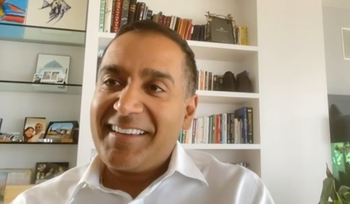
Sachin Jain, MD, MBA, president and CEO at SCAN Group and SCAN Health Plan, discussed the growing roles of middlemen between physicians and their patients in an increasingly complex system.

Jennifer Choe, MD, PhD, a head and neck medical oncologist at Vanderbilt University Medical Center, discussed head and neck cancer relapse post-radiation therapy, new treatment trials, and any promising responses from them.

The American Psychiatric Association (APA) Foundation has launched an initiative to prioritize mental health care.
Kiana Mehring, MBA, director of strategic partnerships, managed care at Florida Cancer Specialists & Research Institute (FCS), discusses her role working in managed care and some of the new strategic partnership initiatives at FCS.
"We won't be content until this is indeed performed in 98% of babies," Stephen Kingsmore, MD, DSc, explains.
At this year’s American Society for Preventive Cardiology Congress on CVD Prevention, Emelia J. Benjamin, MD, ScM, delivered the Honorary Fellow Award Lecture, “The Imperative to Focus on the Prevention of Atrial Fibrillation,” as the recipient of this year’s Honorary Fellow of the American Society for Preventive Cardiology award.

Joseph Aracri, DO, from Allegheny Health Network discussed how parents can help treat their child should they get respiratory syncytial virus (RSV) and how severe this season will be.

According to new CDC research, 20% of mothers reported mistreatment while receiving maternity care for their youngest child.
Carmen Solórzano, MD, FACS, of Vanderbilt University Medical Center, discusses how Vanderbilt-Ingram Cancer Center (VICC) conducts tumor boards and explains how patient preferences are considered during them.
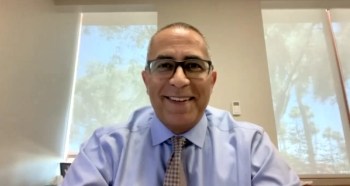
Joseph Mikhael, MD, MEd, FRCPC, FACP, chief medical officer of the International Myeloma Foundation, highlights several potential strategies to address the historic lack of diversity in multiple myeloma clinical trial populations.
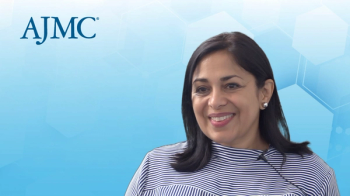
There seems to be an institutional ignorance toward social determinants of health and actually making changes to improve outcomes for patients of color, said Shrilla Banerjee, MD, FRCP, consultant cardiologist, Surrey and Sussex Healthcare NHS Trust.

The EMPEROR trial showed that within 30 days of stopping empagliflozin, patients had a 70% higher risk of heart failure events, explained Milton Packer, MD, Baylor University Medical Center.
Nikolaus Marx, MD, professor of medicine/cardiology and head of the Department of Internal Medicine, University Hospital Aachen, Germany, explains the new guidelines on screening for patients with type 2 diabetes and comorbid cardiovascular disease (CVD).
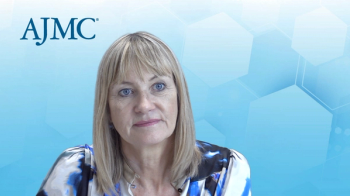
When determining the success of cardiology therapies, trials should focus more on softer end points like quality of life and psychological well-being, said Donna Fitzsimons, PhD, FESC, professor of nursing at the School of Nursing and Midwifery, Queen's University Belfast.
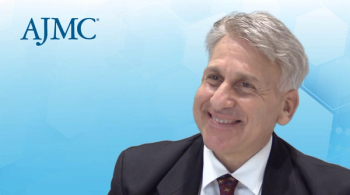
There is a lot of drug switching that's happening, whether it's for medical or nonmedical reasons, said Steven Deitelzweig, MD, system chairman of hospital medicine at Ochsner Clinical School, professor of medicine at the University of Queensland.
With nearly a third of patients post-myocardial infarction (MI) developing heart failure, prevention is very important, said Javed Butler, MD, MPH, MBA, professor of medicine at University of Mississippi, president of the Baylor Scott & White Research Institute.

259 Prospect Plains Rd, Bldg H
Cranbury, NJ 08512
© 2025 MJH Life Sciences®
All rights reserved.