






COVID-19
Latest Content
Advertisement
Latest Videos
Advertisement
More News
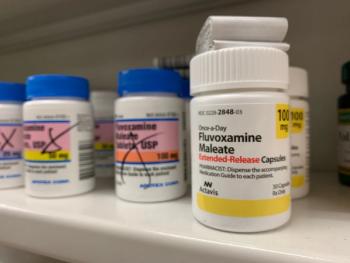
Study finds no benefit of fluvoxamine in shortening COVID-19 symptom duration among mild to moderate cases.

COVID-19 infections were associated with greater risk of hospitalization, complications, and mortality in patients with peripartum and hypertrophic cardiomyopathy.

Severity of a COVID-19 illness could be determined by examining autoantibodies in the nasal cavity, allowing more personalized treatment protocols.

A presentation at the National Community Pharmacists Association Annual Meeting and Exposition focused on the latest on COVID-19 vaccination.

In the current landscape of vaccine skepticism and misinformation, it is important to understand the full impact of long COVID on quality of life, especially among vulnerable populations.

The COVID-19 pandemic required an evolution of traditional nursing practices, but the unpredictability led to increased stress, burnout, and job dissatisfaction.

A study from the American Society of Hematology (ASH) Research Network reports positive antibody response and tolerability after mRNA vaccination in people with sickle cell disease.

Rising COVID-19 cases are attributed to travel, heatwaves, and new variants; an analysis highlights challenges in states not expanding Medicaid; the FDA notes health risks despite marketing authorization for popular e-cigarettes.
Over the course of the pandemic, the risk of developing long COVID after a COVID-19 infection decreased, largely due to vaccination.

Payer costs for COVID-19 ranged from a mean of $505 for asymptomatic cases to $126,094 for severe cases with post–COVID-19 condition.
Development and Validation of the COVID-19 Hospitalized Patient Deterioration Index
ByClaudia Nau, PhD,Rebecca K. Butler, ScM,Cheng-Wei Huang, MD,Vang Kou Khang, MD,Aiyu Chen, MPH,Beth Creekmur, MA,Benjamin Broder, MD, PhD,Christopher Subject, MD,Adam L. Sharp, MD, MSc,Luis M. Moreta-Sainz, MD,Joon S. Park, MD,Akshay J. Manek, MD,Robert M. Cooper, MD,Sergio M. Mendoza, MD,Gang Luo, PhD,Michael K. Gould, MD, MS
The authors developed and validated an accurate, well-calibrated, easy-to-implement COVID-19 hospitalized patient deterioration index to identify patients at high or low risk of clinical deterioration.
A difference-in-differences analysis of health care claims data evaluated excess health care costs in the 12 months following COVID-19 diagnosis among the general and older adult populations.

Monica Bertagnolli, MD, fielded questions on hot-button issues during the long-delayed Senate hearing on her nomination to head the National Institutes of Health; Pfizer announces the list price for a 5-day course of its COVID-19 antiviral, nirmatrelvir/ritonavir (Paxlovid); a federal initiative is distributing funds to programs aiming to prevent drug overdoses in pregnant women.
Medicare Part A and B premiums are set to increase by $9.80 next year; 20 experts from various specialties and institutions have developed updated brain death guidelines; many Black patients are strongly affected by multiple COVID-19 infections due to a lack of health insurance and health care access.
In this analysis of more than 97 million commercially insured individuals, investigators found that the COVID-19 pandemic induced a spending shock in 2020 and that health care spending did not recover to baseline until mid-2021.

A government shutdown could impact Medicaid and Medicare in important ways; new Medicare Advantage plans personalize offerings to special populations; nursing homes are still waiting for COVID-19 shots since the US government has stepped back.
FDA approves updated COVID-19 booster vaccines; low donor turnout and climate disasters result in a national blood shortage; minority patients discouraged by lack of doctor diversity.
CDC outlines new procedures for sepsis response; mask mandates resurface during COVID-19 increase; a recent study shows that technology can help support public health programs.

Researchers investigated methods for measuring prior exposure in patients with suspected, undocumented COVID-19 infection to give better access to care and counsel.
Patients and physicians are publicly shaming insurance companies on social media for the troublesome prior authorization process; HHS has awarded $1.4 billion in grants for the creation of new technologies and tools to prevent COVID-19 infection; Novo Nordisk has increased lobbying efforts to allow Medicare coverage of weight loss drugs.

In this multicenter cohort study, COVID-19 vaccination at any gestational stage improved antibody responses for pregnant individuals and their infants. Booster vaccine recipients demonstrated increased benefits in these effects at delivery.

Researchers using the Big Five Inventory-2 Short Form questionnaire in a large-scale survey have associated certain personality traits with the openness to accept or refuse the COVID-19 vaccine.
Patients with a specific gene are more likely to develop long COVID; senators send letters to the Internal Revenue Service, urging them to investigate the practices of nonpartisan hospitals; pregnant workers and workers with newborns could potentially gain job accommodations through a new proposal.

The body of research on nirmatrelvir-ritonavir demonstrates a plethora of benefits in the treatment of COVID-19, and authors of a recent study identified more advantages to administering the treatment to patients with COVID-19.

More symptoms, older age, and longer hospitalization time increased the risk of post–COVID-19 conditions, aka long COVID, in children.
Advertisement
Advertisement
Trending on AJMC
1
Merck, Moderna Cancer Vaccine Cuts Melanoma Recurrence Risk by 42%
2
Former USAID Health Chief Says Aid Cuts Are Costing Children's Lives
3
How ID, HIV Clinicians Can Influence Policy in an Election Year
4
It’s the Best of Times and Worst of Times for Cancer Care in Tampa
5