Video Series

Panelists discuss several promising new agents for idiopathic pulmonary fibrosis (IPF) and progressive pulmonary fibrosis (PPF), including an LPA1 receptor antagonist showing lung function preservation, integrin inhibitors targeting fibrotic pathways despite safety challenges, and inhaled prostaglandins being evaluated as a well-tolerated add-on therapy in ongoing trials.
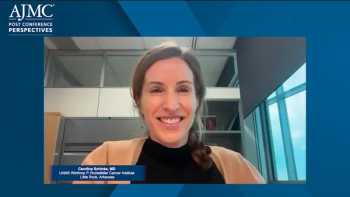

A panelist discusses the latest advancements presented at ASCO 2025, highlighting talquetamab’s pivotal trial in relapsed/refractory multiple myeloma that demonstrated high response rates and longer durability with biweekly dosing, including in patients previously treated with B-cell maturation antigen–targeted therapies, supporting sequencing and combination strategies to improve outcomes.

Panelists emphasize that patients with KMT2A-rearranged acute myeloid leukemia (AML) often face steep educational challenges at diagnosis, requiring clear communication about the subtype’s adverse-risk classification, biological complexity, and treatment implications—highlighting the need for accessible education, academic-community collaboration, and early referral to specialized care for optimal outcomes.

Panelists explain that KMT2A-rearranged acute myeloid leukemia (AML) is an aggressive, molecularly distinct leukemia subtype marked by menin-dependent transcriptional dysregulation, poor response to standard therapy, diagnostic challenges, and high relapse risk—underscoring the urgency of RNA-based diagnostics, early transplant consideration, and emerging menin-targeted treatments to improve outcomes.

Panelists discuss the critical role of psychosocial support in managing NF1-associated plexiform neurofibromas, emphasizing the need for psychotherapy, counseling, and social work interventions to address anxiety, depression, and social stigma while also highlighting challenges in accessing therapies like selumetinib due to cost, insurance barriers, and health care system disparities.

4 experts in this video

Panelists discuss how treatment strategies differ between transplant-eligible and transplant-ineligible multiple myeloma patients, with transplant eligibility determined by functional status rather than age alone, and how quadruple therapy regimens are increasingly used for transplant-eligible patients to achieve deep, durable responses.

4 experts in this video

Panelists discuss how autologous stem cell transplant remains essential in frontline multiple myeloma management despite improved quadruple therapy outcomes, emphasizing that current evidence still supports transplantation for eligible patients rather than deferring it.

Panelists discuss how the shift from intravenous (IV) to subcutaneous (SubQ) drug administration is transforming oncology care delivery, highlighting its lasting impact on patient experience, health care efficiency, and clinical workflows in light of recent FDA approvals and evolving pharmaceutical strategies.

Panelists discuss how effective management of idiopathic pulmonary fibrosis (IPF) and progressive pulmonary fibrosis (PPF) relies on early, accurate diagnosis and multidisciplinary collaboration, with a focus on personalized treatment strategies, proactive adverse effect management, and supportive interventions like pulmonary rehabilitation and nutrition to enhance quality of life and improve long-term outcomes.

Panelists discuss how managing idiopathic pulmonary fibrosis (IPF) and progressive pulmonary fibrosis (PPF) requires a comprehensive, patient-centered approach that addresses not only physiological decline but also the significant psychological, social, and functional burdens patients face—highlighting the need for early diagnosis, emotional support, and coordinated care to improve both quality of life and health care outcomes.

Brand Logo

259 Prospect Plains Rd, Bldg H
Cranbury, NJ 08512

609-716-7777

© 2025 MJH Life Sciences®

All rights reserved.

Secondary Brand Logo
Alt TextAlt Text