



Value-Based Care
Latest News

Advertisement
Latest Videos





Podcasts

CME Content


Advertisement
More News

Robert Andrews, CEO of the Health Transformation Alliance, addresses Medicaid rebates, cost-shifting concerns, and value-based pricing trends.

Patients with chronic kidney disease (CKD) stages 3b or 4 experienced slower decline in estimated glomerular filtration rate 20 months after enrollment in a value-based kidney care program.

Explore cutting-edge discussions on patient-centered oncology, value-based care, AI innovations, and survivorship strategies Thursday and Friday at PCOC 2025 in Nashville.

On July 9, 2025, experts from across Providence Health & Services gathered in Garden Grove, California, for in-depth discussions on patient-centered care for chronic diseases.

Community oncology leaders navigate challenges in value-based care under the Enhancing Oncology Model, facing performance payment uncertainties and evolving drug markets.

Matias Sanchez, MD, a hematologist-oncologist at University of Illinois Health, discussed the latest advancements in value-based multiple myeloma care, including minimal residual disease strategies and innovative targeted therapies.
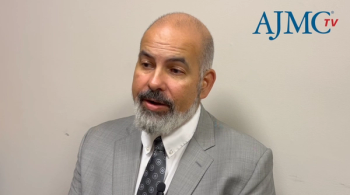
Jorge Nieva, MD, explores the challenges of translating biomarker testing into treatment decisions for non–small cell lung cancer (NSCLC), the role of repeat testing in detecting resistance mutations, and the importance of equitable access to molecular diagnostics in value-based care settings.


Explore how payers and providers collaborate to enhance value-based care, tackle rising costs, and improve patient outcomes in today's health care landscape.

Health systems must prepare for the growing impact of cell and gene therapies by addressing their high costs, complex care pathways, and payer collaboration needs to ensure timely and sustainable patient access.

Given the track record of good outcomes and savings, policy leaders must do more to promote growth of for-profit PACE programs, the author asserts.

More large employers with high-deductible health plans with health savings accounts offer preventive drug list benefits over time.

Clayton Irvine, PharmD, MBA, MS, discusses how pharmacists are essential to advancing payer–provider collaboration in value-based care by shaping formularies, standardizing drug reviews, leveraging real-world evidence, and leading pilot programs to optimize patient outcomes and cost-effectiveness.

Emilie Aschenbrenner, PharmD, BCOP, highlights how measurable residual disease (MRD) testing can support value-based care in multiple myeloma by guiding personalized treatment intensity, potentially reducing costs and improving outcomes.

Clayton Irvine, PharmD, MBA, MS, emphasized that optimizing value-based access to cell and gene therapies requires standardized care protocols, coordinated transitions between care settings, careful evaluation of prior authorization and financial assistance options, and formulary decisions that balance clinical outcomes with both direct and indirect costs to patients and institutions.

Emilie Aschenbrenner, PharmD, BCOP, discusses how integrating CD38-targeted therapies into first-line treatment for transplant-ineligible multiple myeloma requires balancing clinical benefit, cost, and insurance coverage.

In this second part of his interview with The American Journal of Managed Care®, Sanjay Doddamani, MD, MBA, a former senior advisor to CMMI and founder and CEO of Guidehealth, continues a dialogue on the future of value-based care and the promise—and limits—of AI-enabled innovation, reflecting on challenges like rising Medicare costs and patients’ growing financial burdens.

A meta-analysis showed that control group outcomes in psilocybin trials for depression were significantly weaker than those in selective serotonin reuptake inhibitor (SSRI) and esketamine trials, suggesting that psilocybin’s large observed treatment effects may be inflated by methodological factors such as functional unblinding and expectancy bias.

A significant number of patients with cancer, caregivers, and health care professionals face significant disparities in legal issues, with the most common needs revolving around health insurance, finances, employment, and disability insurance.
This study examined the impact of price transparency and prosocial messaging on patient engagement of price-protected consumers in seeking value-based care.

The new Blueprint for Patient-Centered Value Research offers a roadmap for embedding patient voices throughout every stage of the research journey to foster more equitable, transparent, and responsive health care systems.

Sanjay Doddamani, MD, MBA, a former senior advisor to the Center for Medicare and Medicaid Innovation, and internist and cardiologist by training, explains how the Wasteful and Inappropriate Service Reduction (WISeR) Model hopes to work, and addresses concerns about delays and denials from revamped prior authorization processes.

Robert Kratzke, MD, urged insurance providers to prioritize fast biomarker testing in non–small cell lung cancer, saying it’s both cost-effective and life-saving.

Tyler Sandahl, PharmD, a clinical pharmacist at Mayo Clinic, explains that sequencing novel multiple myeloma therapies with CAR T-cell therapy is generally prioritized first for eligible patients, while bispecific antibodies are reserved for later lines or for patients unable to tolerate CAR T.

To mark the 30th anniversary of The American Journal of Managed Care (AJMC), each issue in 2025 includes a special feature: reflections from a thought leader on what has changed—and what has not—over the past 3 decades and what’s next for managed care. The July issue features a conversation with David J. Shulkin, MD, a physician and former secretary of the US Department of Veterans Affairs.
Advertisement
Advertisement
Trending on AJMC
1
TrumpRx Launch Brings Savings—and Uncertainty
2
As Cencora Closes With OneOncology, Patton Says Terms Show “Trust”
3
Exploring Identity, Appearance Experiences Among Patients With Alopecia
4
5 Things to Know About the Oral GLP-1 Era
5