




Clinical
Latest News
Advertisement
Latest Videos


CME Content


Advertisement
More News

Older people with psoriasis had a roughly 50% higher risk of being diagnosed with a malignancy, investigators found.

The projected cost reductions held both for patients switching from a different extended-half-life product and for patients switching from a standard-half-life product.

Tolebrutinib is a Bruton tyrosine kinase (BTK) inhibitor that is being investigated for use in patients who have relapsing multiple sclerosis (MS); investigators presented safety data from a long-term extension study of the phase 2b dose-finding trial.

By better understanding the nature of atopic dermatitis and its varying comorbidities, providers might be able to better predict patient outcomes, said Raj Chovatiya, MD, PhD, assistant professor of dermatology, Northwestern University Feinberg School of Medicine.

Key opinion leaders navigate diagnostic challenges associated with atopic dermatitis.
Casey Butrus, PharmD, leads a panel of experts in a discussion surrounding atopic dermatitis.

These insights represent the first characterization of risk factors for respiratory failure–related hospitalization among patients with sarcoidosis‐associated pulmonary hypertension (SAPH).

Terminology and concepts relevant to the care of transgender and gender-diverse individuals and best practices for optimizing neurologic care in this patient population were covered in the session “Neurologic Conditions in Transgender Patients” on Sunday, April 23, at the American Academy of Neurology annual meeting.

Gene therapy has the promise of being one and done, but it isn’t always that way for all patients, which leaves questions about where these therapies fit in the commercial landscape, said Charles C. Wykoff, MD, PhD, of Retina Consultants of Texas and the Blanton Eye Institute at Houston Methodist Hospital.

These findings underscore the need for improved bleed protection and hemophilia care for those with all severities of the disease.

Subsequent testing revealed the presence of the variant in the patient’s siblings, also underscoring the importance of counseling family members who have pulmonary arterial hypertension (PAH).

Dr Lopes provides insights into payer considerations when navigating geographic atrophy treatment pathways.
Drs Lally and Khanani expand on key takeaways from the GATHER1 and GATHER2 studies.
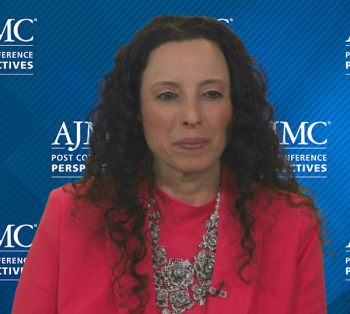
Dr Michos examines a controlled trial focusing on co-payment elimination and its effects on cardiovascular outcomes for low-income adults.

A study explored outcomes among patients living with newly diagnosed eosinophilic esophagitis (EoE) who demonstrated lack of histological response following proton pump inhibitor (PPI) treatment.

The use of active surveillance for indolent prostate cancer cases continues to rise in the United States, but rates of use are lower in minority groups, low-income groups, and patients in rural areas, a recent study found.

The data show how disease-modifying therapies are changing outcomes for children with spinal muscular atrophy (SMA), a rare neuromuscular disease.
In his closing thoughts, Dr Marshall shares final takeaways from the 2023 ASCO GI Cancers Symposium.

Lack of knowledge about how skin conditions present on lightly pigmented skin has resulted in diagnostic delays, underassessment, and an impact on quality of life for patients with skin of color.

The findings from this single-center cross-sectional study, say the researchers, suggest that IL-6 signaling may be a promising target for the treatment of patients with glutamic acid decarboxylase (GADA)–induced autoimmune epilepsy.

Using data from the PROVE-HF study, investigators conducted a subanalysis of outcomes among patients receiving sacubitril/valsartan who did and did not have ischemic heart disease.

A new case series highlights characteristics and challenges of this subgroup of patients with myasthenia gravis (MG).

Retinopathy of prematurity (ROP) that occurs in preterm babies can progress fast, which requires quick decisions early about treatment, explained Darius M. Moshfeghi, MD, chief, Retina Division, and professor at the Horngren Family Vitreoretinal Center, Byers Eye Institute, Department of Ophthalmology, Stanford University School of Medicine.

A review of cases involving Jehovah’s Witnesses found many modalities can be successfully deployed to treat thrombotic thrombocytopenic purpura (TTP).

More information is needed to better understand variations in how the drug affects individual patients.
Advertisement
Advertisement
Trending on AJMC
1
TrumpRx Launch Brings Savings—and Uncertainty
2
5 Things to Know About the Oral GLP-1 Era
3
Exploring Identity, Appearance Experiences Among Patients With Alopecia
4
As Cencora Closes With OneOncology, Patton Says Terms Show “Trust”
5