




Clinical
Latest News
Advertisement
Latest Videos









Advertisement
More News

The decision to perform an EGD is evaluated between academic and community health care perspectives.

Health officials said that at least 7 states reported high levels of illness, with cases also rising in other parts of the country; a group of Senate Democrats demanded answers about the shortage of nirsevimab, a new respiratory syncytial virus (RSV) drug; Pentagon officials told Congress that eliminating per- and polyfluorinated substances would undermine military readiness.

Researchers noted that it remains unclear whether cytomegalovirus (CMV) infection is a specific cause of worsened cancer-related cognitive impairment (CRCI), or if it is a biomarker for immune suppression.
Christian John Lillis, cofounder and executive director of the Peggy Lillis Foundation for C difficile Education & Advocacy, explained how FDA-approved microbiome-based therapeutics help to treat and prevent C difficile infection.

A study from investigators in Italy sheds further light on the relationship between physical activity and diabetic polyneuropathy risk in patients with type 1 diabetes.
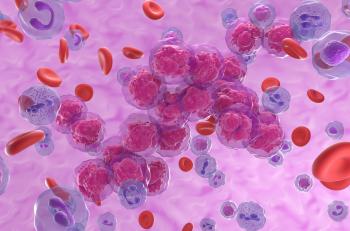
The use of base editing to generate universal, off-the-shelf CAR T cells is a promising approach for relapsed leukemia, with potential implications for the future of gene therapy.

A recent review aimed to characterize the relationship between tumor burden and clinical outcomes in patients treated with chimeric antigen receptor (CAR) T-cell therapy, highlighting the potential mechanisms of high tumor burden impacting CAR T-cell failure.

An expert perspective on the variety of MDS subtypes is provided.

This research highlights the close relationship between pollen-induced allergic rhinitis, sensitization, and asthma.
Ryan Haumschild, PharmD, MS, MBA, CPEL, opens the discussion by defining the MDS disease state.

Concluding thoughts on data presented at ESMO 2023, and innovations still needed for improved survival of NSCLC—provided by Patrick Forde, MBBCh.
Patrick Forde, MBBCh, discusses advances in EGFR Exon 20 insertion-mutated NSCLC.
An overview of data presented at ESMO 2023 on the LIBRETTO-431 trial of selpercatinib in RET+ NSCLC.
Governor Kathy Hochul proposed this week that New York become the first state to require health systems to implement cyber defenses; a new report from the World Health Organization and the CDC highlighted a staggering rise in measles cases and deaths in 2022; a study published this week claimed that more than a tenth of fecal immunochemical tests used for routine colorectal cancer screening could not be processed by labs.

Plasma ceramides and sphingomyelins with palmitic acid were linked to a 34% and 37% increased risk of sudden cardiac death (SCD) per higher SD of log sphingolipid levels, respectively.

The study findings provide the first in-depth look at the relationship between chromosomal changes in tumor cells and immune components of the tumor microenvironment.

Patients with multiple sclerosis (MS) showed cognitive improvements with frontal theta-transcranial alternating current stimulation (tACS), suggesting its potential as a tolerable and beneficial intervention.

A phase 3 trial in symptomatic and anemic patients with myelofibrosis (MF) met its primary end point, seeing a significant symptom reduction at 24 weeks with momelotinib vs danazol.

The reported neurofilament light elevation preceding confirmed disability worsening events highlighted the value of NfL as an early biomarker of disability worsening and points to the existence of different windows of dynamic central nervous system pathology.

The tool assesses the risk of heart attack, stroke, and, for the first time, heart failure, offering a more comprehensive perspective on cardiovascular health.

Repotrectinib achieved a high objective response rate and durable response in the pivotal TRIDENT-1 trial.
The CDC has published updated recommendations for the postexposure prevention and treatment of Bacillus anthracis (anthrax) infection; the FDA has granted marketing approval to an at-home chlamydia and gonorrhea test; lawmakers and Veterans Affairs officials acknowledge the potential for psychedelic drugs to treat veterans’ mental health conditions and prevent suicide.

According to researchers, the most prevalent risk factors in children with type 1 spinal muscular atrophy (SMA) are hypercalciuria and elevated urine specific gravity.

With improved survival becoming more common among individuals who have Duchenne muscular dystrophy (DMD), cardiomyopathy is also increasing in prevalence among this population.

Remibrutinib, an investigational, highly selective Bruton tyrosine kinase inhibitor, showed favorable results in the treatment of chronic spontaneous urticaria (CSU) in as early as 2 weeks in the phase 3 REMIX-1 and REMIX-2 studies.
Advertisement
Advertisement
Trending on AJMC
1
TrumpRx Launch Brings Savings—and Uncertainty
2
As Cencora Closes With OneOncology, Patton Says Terms Show “Trust”
3
Benefits, Tradeoffs of Medically Integrated Dispensing in Oncology Care: Katherine Tobon, PharmD, BCOP
4
Asundexian Reduces Risk of Stroke Recurrence in Phase 3 OCEANIC-STROKE Trial
5