Robert A. Gabbay, MD, PhD, the chief science and medical officer at the American Diabetes Association (ADA), previews sessions to be presented at the ADA's 81st Scientific Sessions.
Robert A. Gabbay, MD, PhD, the chief science and medical officer at the American Diabetes Association (ADA), previews sessions to be presented at the ADA's 81st Scientific Sessions.

Camille Hertzka, vice president and head of Oncology, US Medical, AstraZeneca, speaks about the real-world data collection of durvalumab to assess applicability in patients not involved in the PACIFIC trial, and the importance of diversity and inclusion in clinical trials moving forward.

Michael Thorpy, MD, director, Sleep-Wake Disorders Center, Montefiore Medical Center, and professor of neurology, Albert Einstein College of Medicine, speaks on the efficacy of solriamfetol observed in patients with excessive daytime sleepiness associated with narcolepsy, and which patient groups may best benefit from this therapy.

Real-world data confirmed the clinical effectiveness of Celltrion Healthcare’s rituximab biosimilar (Truxima, CT-P10) in patients with diffuse large B-cell lymphoma (DLBCL).

A roundup of technology-related research presented at SLEEP 2021.

Experts discuss their research on the impact of sex differences in alcohol use disorder (AUD)-related sleep health.

Results of a post-hoc analysis underscore the efficacy of the Idiopathic Hypersomnia Severity Scale to measure symptoms of idiopathic hypersomia.
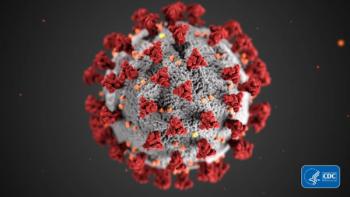
Several studies presented at SLEEP 2021 highlight the negative impact COVID-19 has had on youth sleep health.

Anne Marie Morse, DO, pediatric neurologist and sleep medicine specialist, Geisinger, discusses factors contributing to insufficient screening of obstructive sleep apnea (OSA) in patients with stroke and how a team-based approach fared in expediting diagnosis.
New studies into chimeric antigen receptor (CAR)–engineered natural killer (NK) cells has shown promising results, explained Ulrike Köhl, PhD, MD, professor of immune oncology and director of the Institute for Clinical Immunology at the University of Leipzig in Germany.

Research presented at SLEEP 2021 underscores the important role of sleep for firefighters, soldiers, and flight crew members.

Ibrutinib is currently a standard of care in relapsed/refractory chronic lymphocytic leukemia, but zanubrutinib is an effective second-line and second-generation option, said Peter Hillmen, PhD, MB ChB, professor at the University of Leeds.

Executives from Merck, Bellus Health, Bayer, and Shionogi highlighted their P2X3 data for chronic cough.

Rajasi Mills, MS, vice president, SleepIQ Health, Sleep Number, speaks on the practical use of Sleep Number 360 smart beds in measuring sleep metrics and leveraging data to identify symptoms characteristic of COVID-19 and other respiratory illnesses.

Bispecific T-cell engagers and chimeric antigen receptor T-cell therapies seem destined to move into earlier lines of therapy for multiple myeloma (MM), speakers at the European Hematology Association 2021 Virtual Congress said.

OTC cough medicines may have some temporary benefit, but they don't penetrate the nerves in the airways, which are believed to be the mechanism behind refractory chronic cough, says Jacky Smith, MB, ChB, FRCP, PhD, professor of respiratory medicine at the University of Manchester and an honorary consultant at Manchester University NHS Foundation Trust.

Behavioral cough suppression therapy can be used to help patients with chronic cough manage their cough, prevent a cough, and even trigger their cough less often, explained Laurie Slovarp, PhD, CCC-SLP, associate professor in the School of Speech, Language, Hearing, and Occupational Sciences at University of Montana.

Experts from around the world discussed how to best manage the clinical issues presented by patients with refractory chronic cough, who often spend years trying to find effective relief.

Isabelle Arnulf, MD, PhD, senior neurologist, and professor, Neurology, Sorbonne Universités, Pierre and Marie Curie University, discusses findings of significant improvement observed in patients with idiopathic hypersomnia undergoing lower-sodium oxybate treatment.
Katharine Simon, PhD, clinical pediatric psychologist, and postdoctoral researcher, Sleep and Cognition Lab, UC Irvine, explains the influence of the autonomic nervous system on body functions and recommendations for patients experiencing autonomic imbalance and sleep dysregulation.

New antitussive trials are challenged by large placebo effects and the risk of the trial being unblinded due to adverse effects, explained Ron Eccles, BSc, PhD, DSc, emeritus professor at Cardiff University.
The latest phase 2 MAGNOLIA results continue to show strong efficacy and tolerability for the Bruton tyrosine kinase inhibitor in marginal zone lymphoma.

In the frontline setting, daratumumab added to backbone combination therapies has resulted in high rates of minimal residual disease (MRD) negativity, said Ola Landgren, MD, PhD, of the University of Miami and Sylvester Comprehensive Cancer Center.

Using limited data from the ASPEN trial, investigators estimated survival probability and cost-effectiveness for zanubrutinib vs other agents in Waldenström macroglobulinemia.

A session presented at Virtual SLEEP 2021 highlights the social and environmental factors that impact sleep health.
Updated guidelines for adults and children highlight confusion over the name of the condition and the need for greater evidence.

Shalini Paruthi, MD, medical codirector, St. Luke’s Hospital, Sleep Medicine and Research Center, and cochair of SLEEP 2021, highlights discussion topics that will address best practices for evaluating, diagnosing, and treating common sleep disorders.
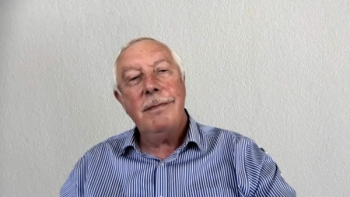
The placebo effect is a major problem in cough trials and can make it impossible to tell the true pharmacological effect of the medicine being studied, said Ron Eccles, BSc, PhD, DSc, emeritus professor at Cardiff University.
An interim analysis of the phase 3 ALPINE study demonstrated that zanubrutinib has a superior response rate, improved progressive-free survival, and lower rate of atrial fibrillation/flutter compared with ibrutinib in patients with relapsed/refractory chronic lymphocytic leukemia/ small lymphocytic leukemia (CLL/SLL).

Results from 2 studies presented at this year’s European Hematology Association meeting demonstrate the long-term tolerability and efficacy of the Bruton tyrosine kinase inhibitor.

259 Prospect Plains Rd, Bldg H
Cranbury, NJ 08512
© 2025 MJH Life Sciences®
All rights reserved.