
Constructive advice on improving the Enhancing Oncology Model (EOM) from our expert panel.
Constructive advice on improving the Enhancing Oncology Model (EOM) from our expert panel.
The Enhancing Oncology Model allows pooling of groups of practices for quality measurement, which was not permitted under the OCM.
Asking for help to prepare for the Enhancing Oncology Model (EOM) and 2-sided risk is advised, say panelists experienced with the Oncology Care Model (OCM).

As terms for Monthly Enhanced Oncology Services (MEOS) payments are set to change under the EOM, panelists worry that the barriers to entry to value-based care will be too high for practices that did not participate in the OCM.
Panelists see the 5-year period of the Enhancing Oncology Model as reasonable; they would like see some progress toward permanent value-based payment structures.
Addressing cancer patients' lack of housing or food insecurity affects care outcomes, but how can the Center for Medicare and Medicaid Innovation build this into a reward structure?
Cutting the amount of Monthly Enhanced Oncology Services payments and limiting qualifying tumor types will curtail revenue to practices. But after the financial results in the Oncology Care Model, that's by design.
Unlike the Oncology Care Model, the Enhancing Oncology Model will focus on 7 common cancer types, which experts say offers advantages and disadvantages for practices.
Coverage from the Community Oncology Alliance Payer Exchange Summit, held in Tyson's Corner, Virginia, October 24-25, 2022.
In a sign that value-based care is here to stay, some practices that did not participate in the Oncology Care Model (OCM) have applied for the Enhancing Oncology Model (EOM).
The Center for Medicare and Medicaid Innovation (CMMI) was a strong collaborator during the Oncology Care Mode (OCM), but the timing of the Enhancing Oncology Model came as a surprise.
Experts from US Oncology, Tennessee Oncology, AON, and COA dig into the details of implementing the Enhancing Oncology Model, set to take effect July 1, 2023.
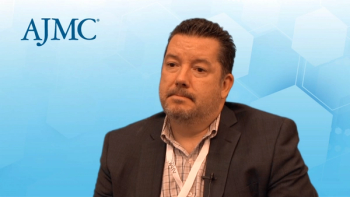
340B was developed with positive intentions, but has resulted in unintended consequences, said Edward J. Licitra, MD, PhD, chairman and chief executive officer, Astera Cancer Care.

"We need to get rid of all obstacles that are getting in the way of the patient getting their care," said Bo Gamble, director of strategic practice initiatives at Community Oncology Alliance (COA).

The 2023 Physician Fee Schedule final rule was released and swiftly drew condemnations from physician leaders because of a 4.5% cut to reimbursement.
The quest to deliver better cancer care—with better outcomes and patient experience—is not a one-size-fits-all journey, as seen in panels during the Community Oncology Alliance (COA) Payer Exchange Summit, held in Tyson’s Corner, Virginia.
Making value-based payment models work in cancer care requires close attention to the financial and quality measures and a commitment to culture change, said experts gathered October 25 at the Community Oncology Alliance Payer Exchange Summit.
Panelists who have reviewed the Enhancing Oncology Model (EOM) say it puts additional requirements on practices with reduced monthly payments, and its risk modeling could put a small practice out of business.
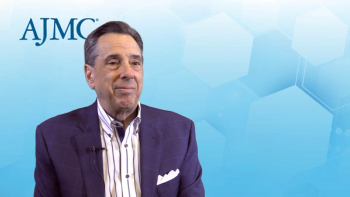
While the Community Oncology Alliance (COA) was involved in humanitarian work in Puerto Rico after Hurricane Maria, the crisis in Ukraine caused COA to set up a special committee to jump into action, said Ted Okon, MBA, executive director, COA.

The Institute for Value-Based Medicine series visits Texas Oncology in Austin.
Despite the Hospital Transparency Rule being in effect, the majority of 340B hospitals are not reporting their prices for top services and drugs, and those that have, reported on “egregious” markups, said Ted Okon, MBA, executive director, Community Oncology Alliance.
The ruling by the Supreme Court on 340B reimbursements was narrow, but it sets up a future reimbursement reduction by HHS that is even greater based on survey data, said Ted Okon, MBA, executive director, Community Oncology Alliance.
The involvement of pharmacy benefit managers (PBMs) in 340B is the “colliding of 2 worlds,” said Ted Okon, MBA, executive director, Community Oncology Alliance.
As part of the investigation into pharmacy benefit managers (PBMs), the Federal Trade Commission (FTC) should delve into how PBMs are impacting and fueling drug prices and set up guardrails to protect Americans, said Ted Okon, MBA, executive director, Community Oncology Alliance.
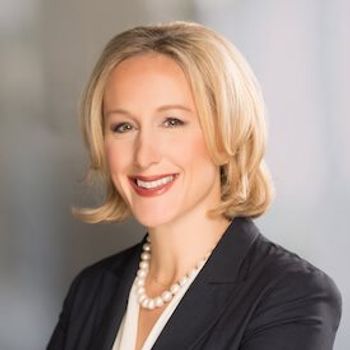

Today, CMS unveiled its plan for a successor to the Oncology Care Model (OCM), its ambitious foray into value-based care delivery that has been credited with changing the landscape for patients with cancer, even if it received mixed reviews on achieving savings in its early years.

The dysfunction with pharmacy benefit managers (PBMs) is so troublesome that the Federal Trade Commission (FTC) is currently investigating how they have driven up costs. Until May 25, the FTC is holding a public comment period on PBM practices.