

Understanding each patient's individual story is vital in the transition to patient-centered care. Additionally, matching patients with physicians of the same race and background can boost comfortability among patients.
Understanding each patient's individual story is vital in the transition to patient-centered care. Additionally, matching patients with physicians of the same race and background can boost comfortability among patients.

There is a push to diagnose multiple sclerosis (MS) earlier, which can lead to misdiagnosis if the diagnostic criteria aren’t used properly, explained Patricia K. Coyle, MD, director of the MS Comprehensive Care Center and professor of neurology at Stony Brook University Neurosciences Institute.

Providers need to focus on detecting and treating cardiovascular complications in at-risk patients, and not get lost in the fact they have COVID-19, said Manan Pareek, MD, PhD, FAHA, FESC, an internal medicine hospital resident at the Yale University School of Medicine.

If you change the narrative and package SGLT-2 inhibitors as a form of cardiovascular risk modulation, cardiologists may be more likely to get involved in diabetes management, said Javed Butler, MD, MPH, MBA, chairman for the Department of Medicine at the University of Mississippi.

During the surge of the pandemic in the Northeast, we saw about a 40% reduction in cardiovascular admissions, while there was a higher rate of mortality among patients who came in, said Deepak L. Bhatt, MD, MPH, of Brigham and Women’s Hospital Heart & Vascular Center and Harvard Medical School.

It is imperative individuals with cardiovascular diseases remain active despite COVID-19 lockdowns, said Antonio Pelliccia, MD, senior consultant and chief of cardiology at the Institute of Sports Medicine and Science, of the Italian National Olympic Committee.

Below are selected abstracts presented at the European Society of Cardiology 2020 Congress, which was held in a virtual format due to the coronavirus disease 2019 pandemic.
The first study of its kind reports that patients should keep taking well-known heart medications.

It's a great time to be a doctor treating patients with heart failure, given the development of 2 fantastic new treatments within the space of 5 years, said John McMurray, MD, FRCP, FESC, professor of medical cardiology in the Institute of Cardiovascular and Medical Sciences at the University of Glasgow.
The new guidelines can help cardiologists better advise patients with CVD on physical activity, said Antonio Pelliccia, MD, senior consultant and chief of cardiology at the Institute of Sports Medicine and Science, of the Italian National Olympic Committee.

A study finds that a partner's participation in a lifestyle change program can be a key to success, especially for weight loss.
It's interesting that we saw such a clear U-shaped mortality curve for serum bicarbonate levels in a patient population where we usually don't think about measuring bicarbonate, said Manan Pareek, MD, PhD, FAHA, FESC, an internal medicine hospital resident at the Yale University School of Medicine.
Having 2 trials that both show benefits of SGLT2 inhibitors in heart failure hospitalizations can only encourage the use of these drugs, said John McMurray, MD, FRCP, FESC, professor of medical cardiology in the Institute of Cardiovascular and Medical Sciences at the University of Glasgow.

Advances in imaging have made assessment of atherosclerosis non-invasive, while the EVAPORATE trial demonstrates how cardiac CT can assist in looking at a host of different therapies, said Matthew Budoff, MD, professor of medicine at the David Geffen School of Medicine at UCLA and investigator at The Lundquist Institute.

Results from the second major renal outcomes trial for an SGLT2 inhibitor affirm the role of the class in preventing renal decline and kidney failure.

The PARALLAX study points to potential benefits from sacubitril/valsartan in heart failure with preserved ejection fraction, which has no approved treatments.

It's very important to take the EMPEROR-Reduced and DAPA-HF trials together as being complementary, said Milton Packer, MD, of Baylor University Medical Center in Dallas and University of Texas Southwestern Medical School.
In this most recent analysis of REDUCE-IT, results show a consistent benefit favoring icosapent ethyl versus placebo irrespective of the actual statin type, said Deepak L. Bhatt, MD, MPH, of Brigham and Women’s Hospital Heart & Vascular Center and Harvard Medical School.

Early rhythm control was associated with a marked reduction in cardiovascular deaths among at-risk stroke patients, said Paulus Kirchhof, MD, director of the department of cardiology at the University Heart and Vascular Center UKE Hamburg, and professor of cardiovascular medicine at the Institute of Cardiovascular Sciences at the University of Birmingham.
When results from the EMPA-REG OUTCOME trial came out, nobody was expecting empagliflozin to have a particularly robust benefit on heart failure and several questions were raised as a result, said Javed Butler, MD, MPH, MBA, chairman for the Department of Medicine at the University of Mississippi.

Results from the phase 3 EXPLORER-HCM trial show mavacamten may finally offer a therapeutic solution for patients with hypertrophic cardiomyopathy.
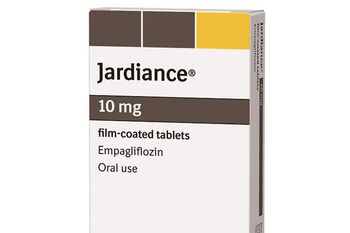
A new study shows that empagliflozin, the diabetes drug that set off a market frenzy 5 years ago, is on par with dapagliflozin for certain heart failure patients.
Through EVAPORATE, we've been able to show at 18 months that patients taking icosapent ethyl (Vascepa) have less plaque and that there is some atherosclerosis regression, marking mechanisms of benefit for these patients, said Matthew Budoff, MD, professor of medicine at the David Geffen School of Medicine at UCLA and investigator at The Lundquist Institute.

A new analysis from the REDUCE-IT trial finds that cardiovascular benefits of Vascepa are consistent no matter what type of statin a patient takes for cholesterol.

A study finds that too few of patients classified as very high risk under European criteria are meeting 2019 LDL cholesterol targets because they don't get enough medication.

According to the World Health Organization, self-care is “the ability of individuals, families, and communities to promote and maintain health, prevent disease, and cope with illness with or without the support of a health care provider.”
“We need to maintain our focus on key populations to ensure that we're focusing on each and every key population—from men who have sex with men to sex workers to people who inject drugs to our trans community—to make sure every single community has access to both prevention and treatment services and that we’re meeting each of the community members where they are to ensure that they can achieve viral suppression,” said Ambassador Deborah Birx, MD, on day 4 of AIDS 2020.
A panel of experts came together on day 3 of AIDS 2020 to discuss their experiences with telehealth during the first few months of the coronavirus disease 2019 (COVID-19) pandemic in attempting to not disrupt the continuum of care for their patients with HIV, those at risk for the virus, and their care teams, as well as to give advice moving forward in continuing to offer the service.
Individuals with severe mental illness are notoriously difficult to engage and retain in HIV care due to fragmented health care policies and systems that perpetuate stigma, according to an electronic poster presentation today at AIDS 2020.
“We find ourselves in a very unusual situation, and now is a good time for me to lay some common denominator principles that I think can be applicable to many, if not all, the countries beset with an HIV epidemic,” said Anthony Fauci, MD, director of the National Institute of Allergy and Infectious Diseases, in a special live session on day 2 of AIDS 2020.