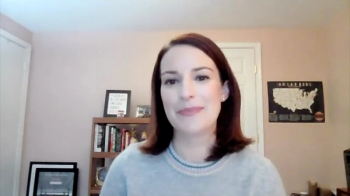
Natalie Dickson, MD, president and chief strategy officer of Tennessee Oncology, discusses challenges for Tennessee Oncology and community oncology in general.

Natalie Dickson, MD, president and chief strategy officer of Tennessee Oncology, discusses challenges for Tennessee Oncology and community oncology in general.

Robert A. Gabbay, MD, PhD, chief scientific and medical officer at the American Diabetes Association, shares his thoughts on long COVID-19 among those with type 2 diabetes and the rise of new-onset cases of type 1 diabetes throughout the pandemic.

Ted Mikuls, MD, MSPH, Stokes-Shackleford professor of rheumatology, vice chair for research, internal medicine at the University of Nebraska, explains how lower extremity amputation among US veterans with gout was independent of body mass index (BMI) and other risk factors.

Megan Olsen, MPH, principal at Avalere, explains how payers are attempting to get around cost concerns associated with expensive cell and gene therapies.

On this episode of Managed Care Cast, Amy Moy, the chief external affairs officer at Essential Access Health, outlines measures needed to address the sexually transmitted infection (STI) epidemic in the United States.

Anne Barmettler, MD, an associate professor of ophthalmology, visual sciences, and plastic surgery at Montefiore Medical Center, outlines adverse events patients taking teprotumumab for thyroid eye disease may experience.

Sunil Verma, MD, senior vice president and global head of oncology, medical at AstraZeneca, explains the background and results of the TOPAZ-1 study.

Sunil Verma, MD, senior vice president and global head of oncology, medical at AstraZeneca, summarizes the benefits and safety findings discovered in the HIMALAYA study.

Megan Olsen, MPH, principal at Avalere, explores the challenges that arise for Medicaid plans when providers choose to prescribe a cell or gene therapy.

Kathy Oubre, MS, chief operating officer of Pontchartrain Cancer Center, talks about how biosimilars have been able to help patients avoid financial toxicity related to oncology care costs.

Robert Gabbay, MD, PhD, of the American Diabetes Association (ADA), discusses the development process for the section of ADA guidelines that touches on chronic kidney disease (CKD) management in patients with diabetes.

Ted Mikuls, MD, MSPH, Stokes-Shackleford professor of rheumatology, vice chair for research, internal medicine at the University of Nebraska, discusses his study comparing rates of lower extremity amputations in US veterans with and without gout, using data from the national Veterans Health Administration.

Leon Herndon Jr, MD, a glaucoma specialist, ophthalmologist, and professor of ophthalmology at the Duke University Eye Center, explains how older patients with glaucoma may lose nerve fiber layer at a quicker rate than younger patients.

Robert A. Gabbay, MD, PhD, chief scientific and medical officer at the American Diabetes Association, discusses some of the challenges of treating pediatric patients with type 1 or type 2 diabetes.

Geoffrey Boyce, CEO of Array Behavioral Care, discusses Array AtHome’s telebehavioral health services, which are now available to approximately 5 million Humana Medicare Advantage members.

Edward W. Cowen, MD, MHSc, senior clinician and acting branch chief, Dermatology Branch, National Institutes of Health, discusses treatment considerations for patients with different types of pustular psoriasis.

Sunil Verma, MD, senior vice president and global head of oncology, medical at AstraZeneca, explains the design of the HIMALAYA study, including the dosing strategy used.

Megan Olsen, MPH, principal at Avalere, provides a comprehensive overlook into the many ways that the COVID-19 pandemic has impacted the cell and gene therapy space.

Aaron Lee, MD, an associate professor of ophthalmology at the University of Washington, discusses some limitations of artificial intelligence (AI) in the ophthalmology field.

Edward W. Cowen, MD, MHSc, senior clinician and acting branch chief, Dermatology Branch, National Institutes of Health, speaks on cytokines involved in the pathophysiology in pustular psoriasis and off-label therapy use.

On this episode of Managed Care Cast, we interview the lead author of a paper in the Health IT issue of The American Journal of Managed Care.

Stephen Schleicher, MD, MBA, and Natalie Dickson, MD, discuss their new roles as chief medical officer (CMO) and chief strategy officer (CSO), respectively, at Tennessee Oncology.

On this episode of Managed Care Cast, Mark Miller, PhD, the executive vice president of health care at Arnold Ventures, outlines what Americans can expect from the newly enacted No Surprises Act.

Victoria Ly, MD, MPH, explains potential next steps for her research on vision screening follow-up rate disparities among children in Arkansas.

Can daratumumab be taken safely as a maintenance therapy? Will quadruplet therapy become more common in the treatment of newly diagnosed multiple myeloma (NDMM)?

Robert Rifkin, MD, FACP, a medical oncologist and hematologist at Rocky Mountain Cancer Centers, outlines multiple myeloma research he hopes to see in the next 5 years.

Judith Lavrich, MD, and Jordan Hamburger outline next steps for their research on virtual learning and pediatric eye health.

For patients with multiple myeloma (MM) who are not eligible for transplant, should novel treatments be used right away? Or should clinicians save the best potential therapies for relapses, which are inevitable with this disease?

Steven Pergam, MD, MPH, director of infection prevention at Seattle Cancer Care Alliance and infectious disease physician at Fred Hutchinson Cancer Research Center, describes the shifts in COVID-19 recommendations for patients with cancer and those receiving CAR T-cell therapy.

Theresa Juday, RPh, director, Specialty Product Development, CVS Health, discusses the potential of cognitive behavioral therapy to address health disparities in underserved communities.

259 Prospect Plains Rd, Bldg H
Cranbury, NJ 08512
© 2025 MJH Life Sciences®
All rights reserved.