Individuals tend to be more affected by vitiligo if it is visible on their face or hands, said David Rosmarin, MD, vice chair of research and education, Department of Dermatology, Tufts Medical Center.
Individuals tend to be more affected by vitiligo if it is visible on their face or hands, said David Rosmarin, MD, vice chair of research and education, Department of Dermatology, Tufts Medical Center.
Frist Cressey Ventures' main mission is to learn how it can partner with entrepreneurs to improve health care, said Chris Booker, partner with Frist Cressey Ventures.
Digital health care has been a key initiative at Texas Oncology, because it ensure patients can receive better care at their home, explained Debra Patt, MD, PhD, MBA, executive vice president of Texas Oncology.
Zahra Mahmoudjafari, PharmD, BCOP, clinical pharmacy manager at the University of Kansas Health System, explains some of the strategies that payers can use to improve cost management and increase patient access related to chimeric antigen receptor T-cell (CAR T) therapies.

While prevalence of restless leg syndrome (RLS) increases with age, some kids may have it while presenting symptoms of growing pains, explained John Winkelman, MD, PhD, medical director, sleep disorders clinical research program, Massachusetts General Hospital.
Elaine Siegfried, MD, professor of pediatrics and dermatology, Saint Louis University Health Sciences Center, addresses the comorbidity profile associated with atopic dermatitis and the utility of disease-modifying drugs to reduce risk of comorbid conditions.
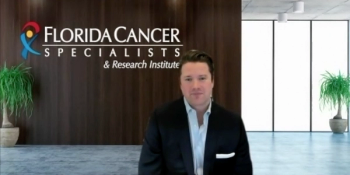
In the second of 2 parts, Nathan H. Walcker, MBA, CEO of Florida Cancer Specialists & Research Institute (FCS), discusses what he’d like value-based care to look like going forward. CMS ended the Oncology Care Model (OCM) yesterday after 6 years and has invited practices to apply for a successor model, the Enhancing Oncology Model.
Will Nutland, DrPH, is cofounder of PrEPster, honorary assistant professor at the London School of Hygiene and Tropical Medicine, and an activist.
In the first of 2 parts, Nathan H. Walcker, MBA, CEO of Florida Cancer Specialists & Research Institute (FCS), discusses the future of value-based care for the practice as the Oncology Care Model comes to an end today. This week, CMS announced it will launch a successor model.
Jonathan Kentley, MBBS, MSc, research fellow at Memorial Sloan Kettering Cancer Center, talks about how dermatologists are working with artificial intelligence (AI) while still making sure patient voices are heard.

At the end of September 2021, Freda Pyles, a resident of rural Pennsylvania, began an antibiotic for a dental infection. That set off a 6-month battle with Clostridioides difficile, which was misdiagnosed a few times before she was treated at Yale-New Haven Hospital. Here, she describes how she contracted the infection and what happened afterwards.

Preethi Venkat, MD, second-year internal medicine resident at the University of California, San Diego, discusses differences in hospitalizations for patients with irritable bowel disease (IBD) and Clostridioides difficile (C diff) infection vs those with IBD hospitalized for other reasons.
Although the Oncology Care Model (OCM) is ending June 30, 2022, it does not mean practices can turn back the clock and revert to how they provided care prior to the OCM, explained Debra Patt, MD, PhD, MBA, executive vice president of Texas Oncology.
Christopher Thompson, MD, MSc, FASGE, FACG, AGAF, FJGES, director of endoscopy and codirector of the Center for Weight Management and Wellness at Brigham & Women’s Hospital, professor of medicine at Harvard Medical School, discusses a session on gastrointestinal (GI) invention at the recent conference, Digestive Disease Week, held May 21-24 in San Diego, California.
Debra Patt, MD, PhD, MBA, executive vice president of Texas Oncology, discusses the path of telemedicine reimbursement during the pandemic and possible ways it will change after the pandemic.
Snoring affects not only the person who is snoring, but their partners as well, said Michael Johnson, CEO of Rhinomed.
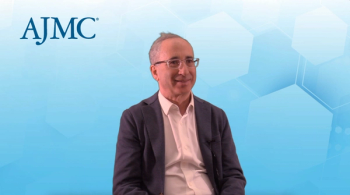
We need more educational or clinical projects that have a real-world impact on reducing disparities in dermatology, said Art Papier, MD, dermatologist, CEO, VisualDx.
Zahra Mahmoudjafari, PharmD, BCOP, clinical pharmacy manager at the University of Kansas Health System, catalogues the chimeric antigen receptor T-cell (CAR T) therapies that are coming down the pipeline.
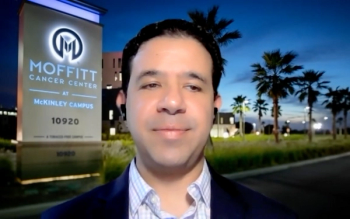
It is important that we learn how to exploit DNA damage repair deficiencies to treat cancer help patients in control their disease. explained Hatem Soliman, MD, medical director, Clinical Trials Office, Moffitt Cancer Center.

Bruce House in Ottawa, Ontario, Canada, has been serving individuals living with HIV and AIDS for 34-plus years. Here we speak with Patrick Morley, office and communications coordinator.
Debra Patt, MD, PhD, MBA, executive vice president of Texas Oncology, discusses how enhancements to telemedicine precipitated by the COVID-19 pandemic have made lasting and meaningful changes to oncology care, including that these care improvements will persist post pandemic.
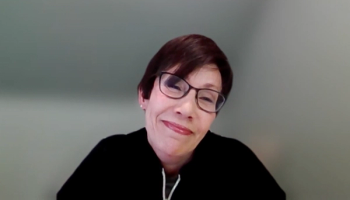
There needs to be an emphasis on how to reduce the cost and burden of real-world evidence studies, said Patricia Deverka, MD, MS, senior researcher and deputy director at the Center for Translational and Policy Research and Precision Medicine, University of California San Francisco.
Elaine Siegfried, MD, professor of pediatrics and dermatology, Saint Louis University Health Sciences Center, discusses therapeutic management considerations for dermatologists in consulting with diverse patients with atopic dermatitis.
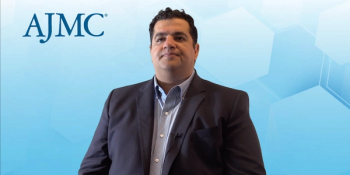
Increased diversity in clinical trials remains an unmet need, and in the new SEQUOIA trial, the majority of patients being White males meant researchers could not do a subgroup analysis looking at outcomes for specific races, age groups or genders, said Mazyar Shadman, MD, MPH, of Fred Hutchinson Cancer Research Center.
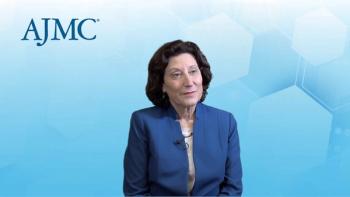
Hope S. Rugo, MD, FASCO, is professor of medicine and the director of the Breast Oncology and Clinical Trials Education program at the University of California San Francisco Helen Diller Family Comprehensive Cancer Center. She discusses her experience with palbociclib and letrozole in advanced breast cancer.
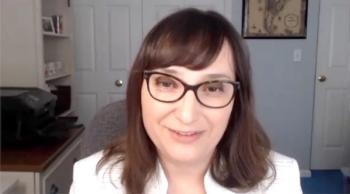
Roxana Siles, MD, FAAAAI, staff in the Department of Allergy and Immunology at Cleveland Clinic and codirector of the Asthma Center at Cleveland Clinic, address the impact of effective treatments of chronic cough on patient quality of life (QOL).
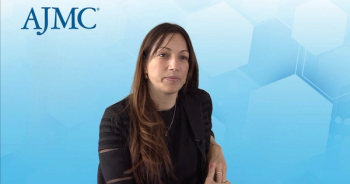
Elli Papaemmanuil, PhD, assistant professor in computational oncology, Memorial Sloan Kettering Cancer Center, spoke on current methods of classification and stratification for myelodysplastic syndromes (MDS) and the applicability of a novel scoring system, presented during her plenary session at EHA2022, that aims to improve and refine MDS risk estimation.
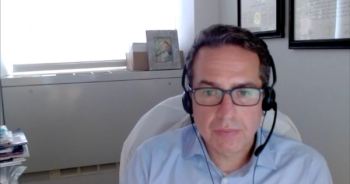
John Mascarenhas, MD, director of the Adult Leukemia Program at The Tisch Cancer Institute at Mount Sinai, spoke on preliminary data findings of the phase 2 MANIFEST study investigating the efficacy and safety profile of pelabresib, ruxolitinib combination therapy in JAK inhibitor-naive patients with myelofibrosis and those with suboptimal response to ruxolitinib monotherapy.
Mandy Lauw, MD, PhD, physician scientist and chair of the YoungEHA committee, discussed the content presented at the YoungEHA Research Meeting at the 2022 European Hematology Association (EHA) Congress and core themes of the session she cochaired on the ethics of artificial intelligence (AI) and science in hematology.

259 Prospect Plains Rd, Bldg H
Cranbury, NJ 08512
© 2025 MJH Life Sciences®
All rights reserved.