



Hematology
Latest News
Advertisement
Latest Videos

Advertisement
More News

Helping patients find a clinician who is experienced with sickle cell disease can have many positive benefits, a new study noted.
Clinicians use the presence or absence of minimal residual disease as a metric by which to judge the efficacy of therapy in patients with hematological malignancies. A new review article interrogates whether that approach aligns with patient-centered outcomes.

New advances in therapy have led to better long-term survival rates in patients with hematologic malignancies, but there are some caveats to the good news.
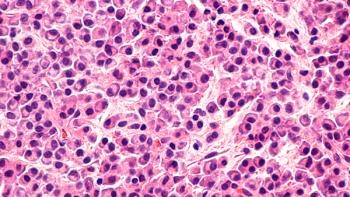
It’s rare for a patient to be diagnosed with both acute myeloid leukemia and multiple myeloma at the same time, but a new case study suggests there are options to treat both diseases at the same time in such cases.
A new study based on interviews with families and patients undergoing chronic transfusion therapy for sickle cell disease finds that the therapy affects the families in ways that extend beyond health.
New data suggests white patients who are deficient in vitamin D have lower rates of survival when diagnosed with multiple myeloma. The phenomenon was not seen, however, in African American patients.

New research suggests disparities in incidence and survival rates in multiple myeloma may have a lot to do with healthcare quality and access to care.

Outcomes were worse for patients with multiple myeloma (MM) and extramedullary disease, and the authors said their findings indicate that evaluation of extramedullary response using imaging is needed in this group.

Recent study results show that patients with cancer who develop coronavirus disease 2019 (COVID-19) are far more likely to die than those who develop COVID-10 but do not have cancer. Patients being treated with immunotherapy appear to be at particularly high risk.

A new article outlining the experience of a patient with a history of multiple myeloma (MM) who contracted coronavirus disease 2019 (COVID-19) shows the interleukin-6 receptor inhibitor tocilizumab was an effective therapy.
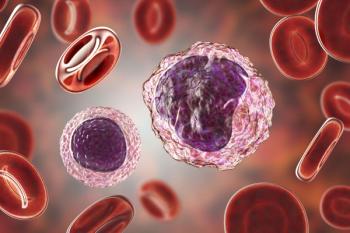
Chimeric antigen receptor (CAR) T-cell therapy has been shown to improve health-related quality of life in patients with relapsed/refractory diffuse large B-cell lymphoma (LBCL). Currently, CAR T-cell therapies are primarily administered in inpatient settings. In a study published in JAMA Network Open, researchers found CAR T-cell therapy administered to patients with relapsed or refractory LBCL in outpatient settings was associated with lower estimated overall costs.

A new poll conducted by the Kaiser Family Foundation shows a majority of Americans fear the worst of the coronavirus disease 2019 (COVID-19) pandemic is yet to come; reports of blood clots in patients with COVID-19 raise concerns; Veterans' Affairs medical facilities are struggling to cope with the pandemic.
Dr Elisabet Manasanch: Identifying Patients With Smoldering Multiple Myeloma Remains an Unmet Need
By
Identifying patients with smoldering multiple myeloma is difficult as they often do not have any symptoms, but we could still do a much better job than what we are currently implementing, said Elisabet Manasanch, MD, assistant professor in the Department of Lymphoma/Myeloma and Division of Cancer Medicine at The University of Texas MD Anderson Cancer Center.
New research evaluates bortezomib and carfilzomib in an attempt to understand the causes of neurotoxicity in the former. They found the mitochondrial pathway is likely not the problem.

The FDA has announced a relaxing of its restrictions on gay men being allowed to donate blood, in light of the coronavirus disease 2019 pandemic. Instead of 1 year, if a male has had sex with another male, he need only wait 3 months to donate blood.
Patients with high-risk multiple myeloma tend to have significantly worse prognoses compared to those in the standard-risk category. A new study offers a potential solution.

I am type O negative. There are only 7% of us in the United States. My blood is red gold, if you will. I am a universal donor, which means that my blood can go to anyone.
Newly diagnosed patients with multiple myeloma (MM) who are transplant-ineligible sometimes plan fixed-duration therapy to improve their quality of life. A new study examines the impact of that approach.
Some patients with cancer are more vulnerable than others, said Jeffrey Patton, MD, acting chief executive officer and president of physician services of OneOncology, as well as chief executive office of Tennessee Oncology, which is down to its last 14-day supply of personal protective equipment.
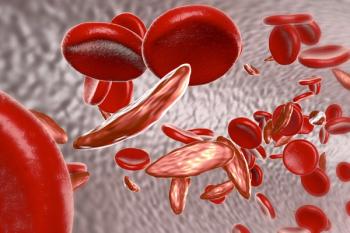
In adolescent patients with sickle cell disease, hydroxycarbamide therapy was associated with improvements in neurocognition variables such as working memory, verbal memory, and nonverbal IQ, according to study findings.
There are studies exhibiting progression within treatment for smoldering multiple myeloma, but nothing has been FDA approved yet, said Elisabet Manasanch, MD, assistant professor in the Department of Lymphoma/Myeloma and Division of Cancer Medicine at The University of Texas MD Anderson Cancer Center.
When patients present to the emergency department (ED) with sickle cell disease (SCD)–related pain, they often have been experiencing that pain for days, said C. Patrick Carroll, MD, director of psychiatric services, Sickle Cell Center for Adults, associate professor of psychiatry, Johns Hopkins Medicine.
In children and adolescents with sickle cell disease, those who lacked ample vitamin D were hospitalized more often, had longer hospital stays, and made more frequent visits to the emergency department, according to study findings.

A year after being only the second person to be cured of HIV, the “London Patient” revealed his identity; BMS announced today that its combination therapy for multiple myeloma—elotuzumab, lenalidomide, and dexamethasone—failed its primary endpoint of progression-free survival in its phase 3 ELOQUENT-1 trial; Biocon and Mylan N.V. announced that the FDA accepted their biologics license application (BLA) for MYL-14020, a proposed biosimilar to bevacizumab (Avastin), for review.
Isatuximab-irfc, sold as Sarclisa, in combination with pomalidomide and dexamethasone, was approved this week by the FDA for the treatment of adults with relapsed refractory multiple myeloma who have received at least 2 prior therapies.
Advertisement
Advertisement
Trending on AJMC
1
Medicare Cap Eases Patient Costs as Negotiation Squeezes Practices
2
Access and Innovation in North Carolina’s Research Triangle
3
An Odyssey of Symptoms, Setbacks, Treatments, and a Cure With CAR T-Cell Therapy
4
PBM Satisfaction Stalls as Net Promoter Score Turns Negative
5