

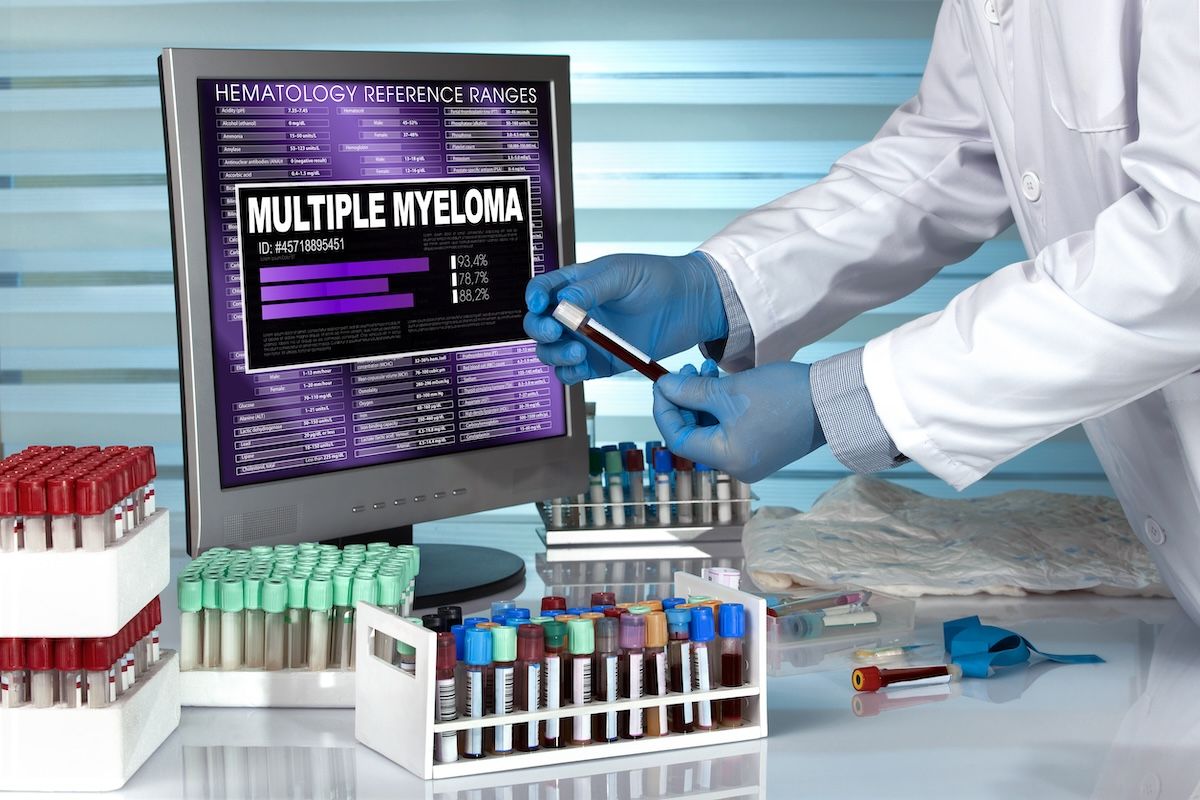



Hematology
Latest News
Advertisement
Expanding Horizons: The Present and Future of Bispecific Antibodies Across Oncology
Experts explore the latest bispecific antibody approvals and clinical applications, discuss barriers in community oncology, address management of cytokine release syndrome, and consider how these therapies can expand patient access to care.

Latest Videos








Advertisement
More News

Key End Points for Providers to Consider With New Multiple Myeloma Therapies: Hearn Jay Cho, MD, PhD
As novel multiple myeloma therapies enter the relapsed and refractory treatment landscape, safety is a key consideration, says Hearn Jay Cho, MD, PhD.

Research challenges age cut-offs in AML treatment, advocating for flexible, individualized approaches based on continuous age assessment.

The FDA approved daratumumab and hyaluronidase-fihj (Darzalex Faspro), offering a new treatment for high-risk smoldering multiple myeloma.

Marcus Flores, PharmD, BCPS, BCOP, discusses the vital role of pharmacists in multidisciplinary cancer care, exploring collaboration, patient-centered strategies, and AI.

Despite improved selectivity, real-world data point to persistent cardiovascular challenges even with next-generation BTKi therapies.

Experts at AMCP Nexus 2025 highlighted how real-world data can improve CAR T-cell therapy access and outcomes.
A new analysis suggests links between ZRSR2 loss and JAK2 V617R disease progression are indirect and complex.
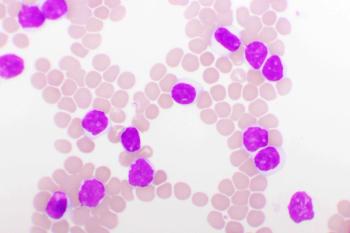
Cardiac adverse events were lower among patients taking zanubrutinib compared with ibrutinib in the real-world setting.

Myeloproliferative neoplasms–unclassifiable (MPN-U), show distinct genetic and clinical patterns that differentiate them from essential thrombocythemia.

Serum biochemical fingerprints can stratify chronic lymphocytic leukemia (CLL) outcomes and uncover heterogeneity within molecularly defined low-risk disease.
The FDA approved revumenib for relapsed/refractory (R/R) acute myeloid leukemia, offering a new targeted therapy option for patients with NPM1 mutations.

The FDA has approved belantamab mafodotin for third-line or later multiple myeloma based on DREAMM-7 trial data.

A novel combination therapy enhances the effectiveness of proteasome inhibitors against acute myeloid leukemia (AML), improving survival rates in preclinical models.

Venetoclax plus bortezomib and dexamethasone improved PFS in relapsed/refractory multiple myeloma, especially in patients with BCL2high disease.

Nanopore sequencing of chronic lymphocytic leukemia (CLL) may be a particularly good fit in under-resourced areas due to its lower cost and smaller laboratory footprint.

Patients with immunoglobulin M-type monoclonal gammopathy did not experience a survival benefit from targeted therapies, a study found.
Findings suggest bispecific CD3xCD20 therapy may offer an option for patients with Richter syndrome who are ineligible for transplant or CAR T-cell Therapy.

Patients with essential thrombocythemia live with a risk of developing serious bleeding complications, a new study explains.

A case series suggests using minimal residual disease to trigger anti-CD20 therapy for chronic lymphocytic leukemia (CLL) can add years to some patients’ lives.

Teclistamab shows promising real-world effectiveness and safety in older adults with relapsed/refractory multiple myeloma (R/R MM), matching clinical trial outcomes.

Four autophagy-related variants in CDKN2A and BCL2 may increase susceptibility to chronic lymphocytic leukemia (CLL).
As oncology continues to move more toward precision medicine, tools like EVOFLUx may offer a more personalized roadmap from diagnosis to treatment.

Patients with acute myeloid leukemia (AML) in remission for over 3 years experience survival rates comparable with a matched cohort from the general population.
Positive topline data from the phase 3 BRUIN CLL-313 showed pirtobrutinib's efficacy in the frontline setting.
Drug interactions with ibrutinib may not shorten survival when managed carefully, though the significant increase in infection-related hospitalizations tied to CYP3A inhibitors signals an urgent need for closer monitoring, dose adjustment, and proactive infection prevention strategies.
Advertisement
Advertisement
Trending on AJMC
1
TrumpRx Launch Brings Savings—and Uncertainty
2
As Cencora Closes With OneOncology, Patton Says Terms Show “Trust”
3
Benefits, Tradeoffs of Medically Integrated Dispensing in Oncology Care: Katherine Tobon, PharmD, BCOP
4
Asundexian Reduces Risk of Stroke Recurrence in Phase 3 OCEANIC-STROKE Trial
5