






Hematology
Latest News
Advertisement
Latest Videos







Shorts

1:00
The Changing Treatment Landscape in Myeloma: Swarup Kumar, MD
11 days ago
by
Swarup Kumar, MD(+1 more)

0:53
The Hidden Biases in Clinical Trial Criteria: Karilyn Larkin, MD
18 days ago
by
Karilyn Larkin, MD(+1 more)

1:22
Expanding Treatment Access Via Academic-Community Ties: Amandeep Godara, MBBS
19 days ago
by
Brooke McCormick(+1 more)

0:43
Stopping the Exodus of Women Physicians: Bhavana Bhatnagar, DO
a month ago
by
Bhavana (Tina) Bhatnagar, DO(+1 more)

1:13
Rethinking When and How to Use CAR T in ALL: Nitin Jain, MD
2 months ago
by
Maggie L. Shaw(+1 more)

0:55
CD19, a Smart Target With a Trade-Off: Martin Schrappe, MD, PhD
2 months ago
by
Maggie L. Shaw(+1 more)

0:32
Paving the Way to a Myeloma Cure: Ajay K. Nooka, MD, PhD
2 months ago
by
Maggie L. Shaw(+1 more)

0:58
INCA033989 Marks a Potential Turning Point in Mutant Calreticulin–Positive Myelofibrosis: Claire Harrison, MD
2 months ago
by
Brooke McCormick(+1 more)

0:55
Long-Term Follow-Up Needed to Assess Axatilimab’s Bone Health Effects in Chronic GVHD: Amandeep Salhotra, MD
3 months ago
by
Brooke McCormick(+1 more)

0:57
The Future of Cell Therapy: Beyond Current Limitations: Muhammad Bilal Abid, MD
3 months ago
by
Muhammad Bilal Abid, MD(+1 more)
Podcasts


Advertisement
More News

Despite positive data, the study authors call for prospective validation before PRO burden is incorporated into broader risk-stratification approaches.

Community oncologists are steadily adopting bispecific antibodies for myeloma, but advance planning and tocilizumab remain key to safe access.

Amandeep Godara, MBBS, explained that rural patients with multiple myeloma face various barriers to immunotherapies that may delay treatment.

Whether these findings will translate into a change in treatment guidelines remains to be seen.

Ropeginterferon alfa-2b-njft is expected to be available immediately.
Amandeep Godara, MBBS, discusses how patient factors, disease burden, and logistics guide treatment decisions in relapsed/refractory multiple myeloma.

Data show most older adults with newly diagnosed AML expect stable or improving physical function, while oncologists anticipate decline.

Selinexor, an oral XPO1 inhibitor, delivers modest spleen volume reduction in ruxolitinib-refractory MF with minimal myelosuppression in ESSENTIAL trial news.

FDA approves rusfertide, a first-in-class hepcidin-mimetic for polycythemia vera, cutting phlebotomies and improving hematocrit control and QOL.

Lymphomas arise from immune system cells and can create an environment less hospitable to CAR T-cell expansion, explained Kerry Rogers, MD.

The findings reinforce monitoring and managing thrombotic risk across the PV population rather than focusing on traditionally defined high-risk patients.

The study authors indicated that future investigations could further facilitate clinical decision-making regarding these regimens’ effectiveness.

For Xavier Leleu, MD, PhD, there is opportunity to ensure that therapeutic advances are accompanied by advances in how those therapies are delivered.

Institutions need to think more creatively about how they identify and elevate talent, explains Bhavana Bhatnagar, DO.

Lab abnormalities can emerge between visits, and pharmacists may be able to catch uncontrolled hematocrit, adherence issues, or access barriers early.
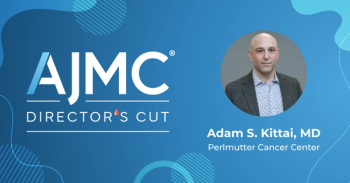
Drugs that form the backbone of CLL therapy are also used across lymphoma subtypes, explains Adam S. Kittai, MD.

Swarup Kumar, MD, of UConn Health, says iberdomide plus dara-dex fills a niche for relapsed disease in patients who lack access to CAR T or bispecifics.

Previous research shows that in newly diagnosed AML, CR and composite remission rates were higher for shortened regimens of venetoclax.

Cell therapy and targeted agents are transforming blood cancer outcomes, but infrastructure, funding, and workforce gaps are limiting who can access them.

The increasingly complex CLL treatment landscape will require continued real-world study to guide sequencing decisions.

This meta-analysis encompassed 18 studies published through December 31, 2025.

She frames the IberDd approval as more than the addition of 1 more regimen to a crowded relapsed/refractory myeloma armamentarium.

The cereblon E3 ligase modulator, or CELMoD, also received a breakthrough therapy designation from the FDA.

CAR T remains Madhav Seshadri, MD's top pick for eligible relapsed/refractory DLBCL, though bispecific antibody regimens are viable alternatives.

The disparity in outcomes between pediatric and young adult patients with ALL is multifactorial, explained Emily K. Curran, MD.
Advertisement
Advertisement
Trending on AJMC
1
NCCN Journal Publishes Guidelines Update in Mantle Cell Lymphoma
2
Peptide Regulation Debate Intensifies After FDA Advisory Panel's Controversial Vote
3
Switching to Subcutaneous Ocrelizumab for MS Could Free 883 Chair Hours in a Year
4
Health System Pharmacies Keep Patients on GLP-1 Therapy
5