
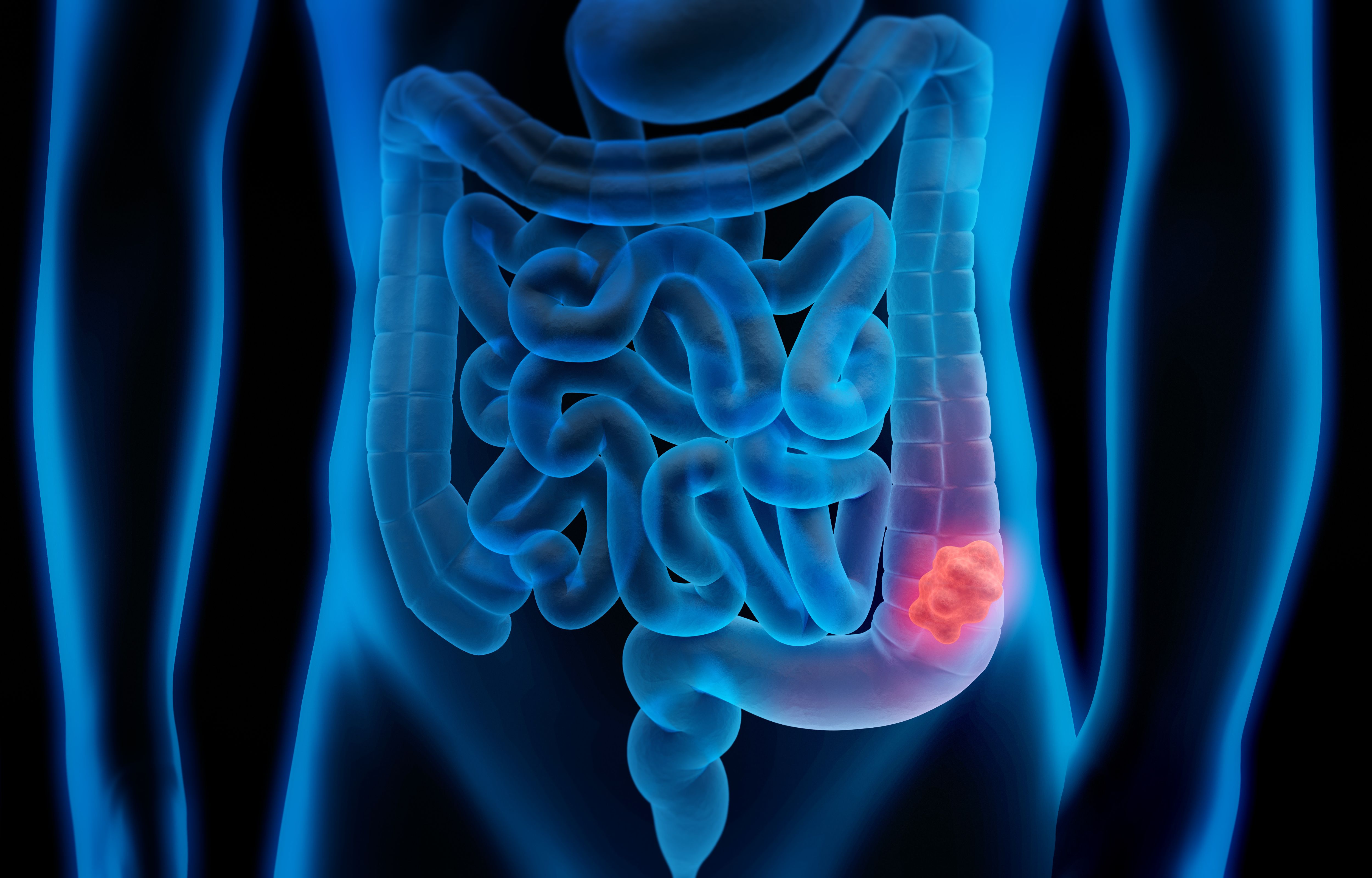





Patients with colorectal cancer (CRC) and spousal caregivers were found to benefit from a couple-based posttraumatic growth intervention visits in a randomized controlled study.
Patients with colorectal cancer (CRC) and spousal caregivers were found to benefit from a couple-based posttraumatic growth intervention visits in a randomized controlled study.

A blood-based test using cell-free DNA had high sensitivity for colorectal cancer, high specificity for advanced neoplasia, and some sensitivity for advanced precancerous lesions.

Patients with stage IV colorectal cancer (CRC) had lower overall and disease-free survival if they had a pelvic exenteration (PE) or cytoreductive surgery and hyperthermic intraperitoneal chemotherapy (CRS/HIPEC).

A prediction model using age, body mass index, lifestyle, waist circumference, and family history had high accuracy when used to predict colorectal cancer (CRC) in China.

Patients who had surgery for colorectal cancer (CRC) were able to avoid anastomotic or rectal stump leaks by using a Heald anal stent.

Patients with colorectal cancer (CRC) who were also frail were found to have worse survival when compared with patients who weren’t frail.
Intensive surveillance after resection on patients with colorectal cancer (CRC) was less cost-effective in stage I but most cost-effective in stage II and III disease.

Combining interventions to encourage screenings for colorectal cancer (CRC) and social determinants of health (SDOH) was found to improve screening rates in CRC without decreasing rates of screenings for SDOH.

Emergent colorectal cancer (CRC) resection was found to be more prevalent in patients who identified as non-White.
Several risk factors put patients with colorectal cancer at increased risk of anastomotic leakage after elective surgery.
Patients with colorectal cancer (CRC) could participate in telehealth and e-health interventions to promote their sexual health, although efficacy of these interventions needs to be further studied.

Obesity related to metabolic syndrome was found to have a causal relationship with colorectal cancer (CRC), although this causal relationship did not exist in the opposite direction.

Incidence of colorectal cancer is expected to rise in both male and female patients aged 50 years and younger.

Mortality and morbidity in patients with colorectal cancer (CRC) cannot be accurately predicted using the Physiological and Operative Severity Score for the enumeration of Mortality and Morbidity (POSSUM) in the present day.
Patients with chronic kidney disease are at a higher risk of developing any stage of colorectal cancer.

Patients with colorectal cancer (CRC) undergoing operations were able to prevent postoperative infections and shorten hospital stays by taking probiotics beforehand.
Tumor grading via least differentiation analysis was found to be a way to measure the risk of lymph node metastasis (LNM) in patients with submucosal invasive colorectal cancer (CRC).

The topics included clinical staging of colorectal cancer, FDA approvals, and a study published in the print version of the American Journal of Managed Care®.
Patients with colorectal cancer (CRC) had reduced readmissions when treatment focused on preventing prolonged ileus, increasing the use of minimally invasive surgery, and preventing anastomotic leaks.
Patients aged 80 years and older with colorectal cancer (CRC) could have an improved prognosis at the completion of adjuvant chemotherapy.

Skeletal muscle proved to be significant in calculating chemotherapy toxicities in nonmetastatic colorectal cancer (CRC).

Patients with metastatic colorectal cancer (CRC) who experience colon perforation may have similar survival times to those without perforation.
Predicting clinical outcomes in patients with colorectal cancer (CRC) could be done using the novel comprehensive blood indicator PSI.

Although the incidence of colorectal cancer (CRC) decreased in individuals older than 50 years, incidence of CRC increased in male individuals younger than 50 years.

A Mendelian randomization found that a potential link between constipation and colorectal cancer, with support for constipation as a cause of colorectal cancer.

259 Prospect Plains Rd, Bldg H
Cranbury, NJ 08512
© 2025 MJH Life Sciences®
All rights reserved.