
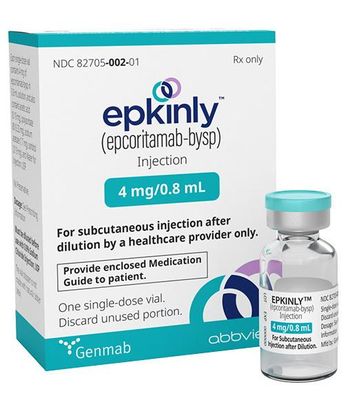
Epcoritamab delivers lasting 3-year remissions in relapsed large B-cell lymphoma, with over half of complete responders staying progression-free.
Epcoritamab delivers lasting 3-year remissions in relapsed large B-cell lymphoma, with over half of complete responders staying progression-free.

Jordan Karlitz, MD, explains the rise in CRC-related deaths in younger adults, stressing the need for earlier screening and symptom awareness.

Biagio Ricciuti, MD, discusses how access challenges and toxicity concerns slow the rollout of new T-cell engager therapies from academic centers into community oncology.

CBT for insomnia, especially digital CBT, often saves costs vs no treatment or drugs, while the cost-effectiveness evidence for hypersomnia remains absent.

New stroke breakthroughs spotlight faster treatment, factor XI prevention, better recovery, and the push to deliver care equitably with smart wearables.

Vishal A. Patel, MD, shares skin cancer prevention tips, highlighting sun-smart habits, risk-based screening, and at-home early detection.

Anasuya Gunturi, MD, PhD, explains how academic–community partnerships help deliver complex oncology services closer to home.

The FDA approved Optune Pax, a first-of-its-kind portable device delivering tumor-treating fields for locally advanced pancreatic cancer treatment at home.

Findings highlight strong overall performance but reveal variability among disaggregated Asian ethnic groups.

New bipartisan legislation would ban parent companies from owning insurers or PBMs and providers or management services organizations simultaneously.

As more oral cancer therapies become available, medically integrated dispensing models are increasingly vital, says Kenneth Komorny, PharmD, BCPS.

As pharmaceutical R&D policies evolve, the authors argue it is crucial to embed American patient values in reimbursement deliberations and frameworks.

OCEANIC-STROKE trial data show asundexian cuts ischemic stroke across subtypes with no rise in major bleeding, which could reshape antithrombotic choices.

Many older HFpEF patients appear to have CKD from aging and obesity; visceral adiposity drives kidney risk more than intrinsic damage or low eGFR.

A stronger effect on neovascular age-related macular degeneration (nAMD) was found with faricimab vs aflibercept.

Andrew Yee, MD, explains how academic centers can share practical oncology best practices that community hospitals can implement sustainably.

The Orphan Drug Act has boosted treatments, but Kristi Martin, MPA, MA, urges modernizing incentives and pricing to sustain future innovation

Susan Vadaparampil, PhD, MPH, explains that aligning clinical trials with community needs can improve enrollment diversity.

Community-academic collaboration can reduce access burdens and strengthen continuity of care, says Anasuya Gunturi, MD, PhD.

The trial also showed significant reductions in non-HDL cholesterol, apolipoprotein B, and lipoprotein(a), with no apparent differences in adverse events between groups.

The Consolidated Appropriations Act of 2026 gives CMS more leverage to intercept when pharmacy benefit managers are driving up prices in Medicare Part D, explains Jesse Dresser, Esq.

Low-sodium oxybate (Xywav) reduces excessive sleep and daytime naps in idiopathic hypersomnia, with placebo withdrawal worsening sleep duration and symptoms.

The test was more likely to have a positive response in patients with a decrement after nerve stimulation.

Poland’s senior prescription subsidies cut drug costs and catastrophic pharmacy spending for adults aged 75 or older.

A Commonwealth Fund analysis finds employer health premiums and deductibles exceed 10% of income in 19 states, worsening affordability gaps.

A review updates MASH diagnosis and prognosis guidelines, highlighting noninvasive scores, imaging, and emerging therapies, plus lifestyle strategies to improve outcomes.

PBM reforms, Medicare Advantage trends, TrumpRx launch, and Express Scripts settlement highlight key shifts in drug pricing, coverage, and patient access.

A survey found many patients with long-term conditions prefer remote visits for results and refills, but some trade continuity for faster care.
Vishal A. Patel, MD, explains that delayed skin cancer diagnoses contribute to more advanced disease and poorer outcomes in patients with darker skin.

MicroRNAs are central regulators of DLBCL biology and show strong potential as minimally invasive biomarkers to improve disease classification, prognosis, and treatment personalization.