
Cardiac output and stroke volume as measured by impedance cardiography may hold potential to predict clinical deterioration from pulmonary arterial hypertension (PAH).

Maggie is a senior editor for The American Journal of Managed Care® (AJMC®) and produces written, video, and podcast content covering several disease states. She joined AJMC® in 2019, and has been with AJMC®’s parent company, MJH Life Sciences®, since 2014, when she started as a copy editor.
She has a BA in English from Penn State University. You can connect with Maggie on LinkedIn.
Cardiac output and stroke volume as measured by impedance cardiography may hold potential to predict clinical deterioration from pulmonary arterial hypertension (PAH).

Future research into non-Hodgkin lymphoma treatments needs to explore long-term outcomes and a better understanding of the biologic rationale for various treatments, explained ECHELON-3 principal investigator Craig A. Portell, MD, of UVA Health.

"The newer medications that are coming out, and a lot of them are approved, are much more focused on the problem," explains Jonathan Strober, MD, pediatric neurologist with UCSF Benioff Children's Hospital.

Proposed Medicaid cuts in the Republican budget proposal hold significant implications for health care access and coverage.

The 18-meter walk test (18MWT) effectively evaluates disease severity and predicts clinical outcomes in pulmonary arterial hypertension (PAH), enhancing traditional assessment methods.

The 2025 Community Oncology Conference empowered attendees with insights on advocacy, innovation, and practical strategies for enhancing community cancer care.
An executive order signed on Tuesday, March 15, necessitated a change in plans for this panel discussion from the 2025 Community Oncology Conference, with the assembled experts, moderated by Ted Okon, MBA, executive director of the Community Oncology Alliance, speaking to how the order would reverberate across the community oncology space.

Experts at the Community Oncology Conference discuss innovative patient navigation programs, emphasizing technology's role and the importance of human connection in cancer care.

Experts emphasize the need for enhanced clinical trial infrastructure in community oncology to ensure equitable access to innovative therapies for all patients.
Oncology leaders from Alliance Cancer Specialists, American Oncology Network, CHI St. Vincent, Memorial Sloan Kettering Cancer Center, and New York Cancer & Blood Specialists discussed the power of collaboration in cancer care, highlighting partnerships that enhance patient outcomes and resource sharing in community practices.

Disparities in prescribing semaglutide and tirzepatide for obesity reveal social factors affecting access and highlight the need for equitable treatment strategies.

Smoking prevalence is projected to decline by 2035, yet health consequences persist due to slower reductions among older adults.

Andrew Kuykendall, MD, is an investigator on the phase 3 VERIFY trial (NCT05210790), findings from which demonstrate the safety, reliability, and effectiveness of rusfertide to treat polycythemia vera.

New research explores the complex relationship between female infertility and gynecological cancers, revealing minimal links and emphasizing the need for further studies.

Richard J. Nowak, MD, MS, Yale School of Medicine, explains what some early myasthenia gravis symptoms are and their impact on research efforts.

Jaime Almandoz, MD, MBA, of UT Southwestern Medical Center, speaks on results of a study that investigated tirzepatide uptake trends in commercial claims data.

For this analysis, outcomes were compared between individuals who had pulmonary arterial hypertension (PAH) and healthy controls by using Fitbit-derived data over 12 weeks and then at a 1-year follow-up.

In part 4 of an interview with The American Journal of Managed Care®, Frederick L. Locke, MD, provides insight on the design of the ALPHA and ALPHA2 trials, which are investigating the chimeric antigen receptor T-cell therapy (CAR T) cemacabtagene ansegedleucel (cema-cel) in relapsed/refractory large B-cell lymphoma.
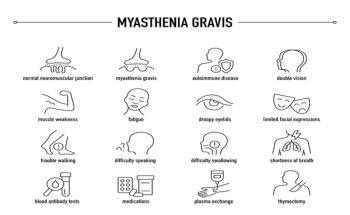
Research presented at the recent annual meeting of the Academy of Managed Care Pharmacy highlights outcomes among patients who have anti-acetylcholine receptor antibody-positive myasthenia gravis that include reduced exacerbations and need for immunoglobulin.

A majority of cases of diffuse large B-cell lymphoma (DLBCL), the most common type of non-Hodgkin lymphoma globally, are diagnosed in patients 65 years and older; these patients are a heterogeneous group, and few studies have investigated how their outcomes are influenced by patient characteristics and care management regimens.

Marla Black Morgan, MD, with Phoebe Neurology Associates, presented findings on a study into the diagnostic journey of patients with neuromuscular conditions who have rare diseases at the 2025 American Academy of Neurology annual meeting.
Using commercial insurance claims data and the US launch of tirzepatide as their dividing point, John Ostrominski, MD, Harvard Medical School, and his team studied trends in the use of both glucose-lowering and weight-lowering medications, comparing outcomes between adults with and without type 2 diabetes.

Tirzepatide is approved for 3 indications in the US: type 2 diabetes, chronic weight management, and obstructive sleep apnea.

Cathy Eng, MD, FACP, FASCO, participated on the panel discussion, “Health Equity in Cancer Care Delivery,” during the January Institute for Value-Based Medicine® event, “Elevating Value in Cancer Care: Nashville.”

Interventions that target enhancing health care equity among communities disproportionately affected by the COVID-19 pandemic can be improved by including comprehensive needs assessments at the patient, provider, and health system levels.

Lynae Darbes, PhD, discusses what her research results mean when it comes to implementation of self-testing and counselling for couples vulnerable for HIV.

Coverage from the Nashville Regional meeting of the Institute for Value-Based Medicine.

Richard Lafayette, MD, FACP, Stanford University Medical Center, explains the significance of this second approval in a month for proteinuria reduction.
ECHELON-3 (NCT04404283) principal investigator Craig A. Portell, MD, speaks to the significance of this triplet approval from February as an alternative to more complex and time-consuming regimens in the setting of relapsed/refractory large B-cell lymphoma (R/R LBCL).
In this fourth part of a discussion with The American Journal of Managed Care®, Andrew Kuykendall, MD, clinical researcher at Moffitt Cancer Center and VERIFY investigator, speaks to the impressive patient-reported outcomes seen thus far.

259 Prospect Plains Rd, Bldg H
Cranbury, NJ 08512
© 2025 MJH Life Sciences®
All rights reserved.