




Technology
Latest News
Advertisement
Finding the Best Path Forward for Adoption of Prescription Digital Therapeutics
Delve into the current state of prescription digital therapeutics (PDTs) adoption and uncover strategies for increasing payer approval and achieving widespread coverage of PDTs.

Latest Videos







Advertisement
More News

Benjamin Scirica, MD, MPH, director of quality initiatives at Brigham and Women’s Hospital’s Cardiovascular Division, discussed the importance of team-based care and gaps in technology to manage patients at risk of cardiovascular disease (CVD).

The 21st annual meeting of the International Myeloma Society (IMS) takes place September 25-28, 2024, in Rio de Janeiro, Brazil.

Demonstration projects to show accurate use of artificial intelligence (AI) in cancer care are important to prevent a loss of credibility in the technology, explained Glenn Balasky, executive director, Rocky Mountain Cancer Centers.

Joseph Alvarnas, MD, of City of Hope, recaps yesterday's Institute for Value-Based Medicine® (IVBM) event on value-based oncology care, emphasizing patient-centered approaches and how attendees can apply these insights in their daily practice.
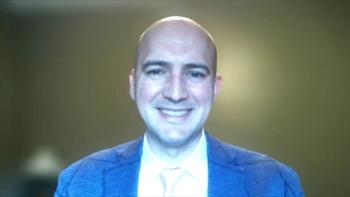
The principal goal of therapies for multiple myeloma, which remains incurable, is to extend progression-free survival, but challenges remain bringing chimeric antigen receptor T-cell therapy to the world, explains Leland Metheny, MD, lead investigator for the phase 1 BAFF CAR T clinical trial, University Hospitals Seidman Cancer Center.

This web-based cross-sectional study indicated that health care professionals in China had poor knowledge, positive attitudes, and proactive practices in regard to ChatGPT.

Here we conclude our discussion with David P. Carbone, MD, PhD, The Ohio State University, by addressing the importance of both advocacy for and education on biomarker testing in the lung cancer space.

Experiences from a large, integrated, value-based health system suggest that telehealth can be an effective care delivery approach. Public policies can improve telehealth access and care.

This article explores how payers can enhance their medication adherence initiatives to reduce costs and improve member health outcomes by leveraging predictive analytics through machine learning.

The evolving landscape of artificial intelligence (AI) use in cancer care requires evaluation of algorithms before implementation and continual monitoring after, explained Amy Abernethy, MD, cofounder of Highlander Health and former FDA official.

During ESMO Congress 2024, sessions will focus on hot topics in therapeutic areas, such as antibody-drug conjugates; the latest trial data; health policy; and advances in technology.

A new proof-of-concept method reliably engineered a hotspot mutation of SF3B1, a gene-splicing gene, into diverse cancer cell lines, outperforming other contemporary editing approaches.

If integrated into clinical practice, the approach could fill a need for more optimal diagnostic approaches for myasthenia gravis (MG), explained the researchers.

This interview accompanies the first podcast in our National Recovery Month series with Michael Lynch, MD, attending emergency physician and medical toxicologist at the University of Pittsburgh Medical Center.

Using artificial intelligence (AI) in breast cancer screenings in the United Kingdom could be cost-effective and improve health outcomes after identifying more cancers.

According to some reports, the draft rule imposes strict limitations on telehealth prescriptions even as advocates push for extension of current flexibilities.

The final report unveils actionable steps for integrating equity into health technology assessment.

The COVID-19 pandemic accelerated the adoption of telehealth nationwide, revealing significant benefits while also exposing ongoing challenges.
In part 1 of our interview with Leland Metheny, MD, he explained how a new triple-target chimeric antigen receptor (CAR) T-cell therapy works in multiple myeloma.

Alex Jahangir, MD, MMHC, of Vanderbilt University Medical Center, discusses innovative technologies to combat burnout and improve specialty care.

Kristen Whitney, DO, FAAD, dermatologist within the Allegheny Health Network, discusses advancements in dermoscopy, predicting that emerging technologies and artificial intelligence (AI) will improve dermatologists' efficiency in monitoring and diagnosing skin conditions.

PfizerForAll aims to help improve health care by offering telehealth services, prescription services, vaccination scheduling, and savings programs.

Fahad Tahir, MAS, MBA, FACHE, of Ascension St Thomas, discusses health system innovation and entrepreneurship, highlighting specialty care advancements and leadership strategies for fostering innovation.

The expanded approval for the Omnipod 5 system now allows automated insulin delivery (AID) for adults with type 2 diabetes, offering a new option for better glucose management without daily injections.
Leland Metheny, MD, is lead investigator for the Phase 1 BAFF CAR T clinical trial, which is evaluating the safety and effectiveness of a novel approach to chimeric antigen receptor (CAR) T-cell therapy in multiple myeloma (MM) that targets 3 receptors on cancer cells and uses electroporation vs the typical lentiviral vector delivery.
Advertisement
Advertisement
Trending on AJMC
1
TrumpRx Launch Brings Savings—and Uncertainty
2
As Cencora Closes With OneOncology, Patton Says Terms Show “Trust”
3
Benefits, Tradeoffs of Medically Integrated Dispensing in Oncology Care: Katherine Tobon, PharmD, BCOP
4
Asundexian Reduces Risk of Stroke Recurrence in Phase 3 OCEANIC-STROKE Trial
5