



HIV
Latest News
Advertisement
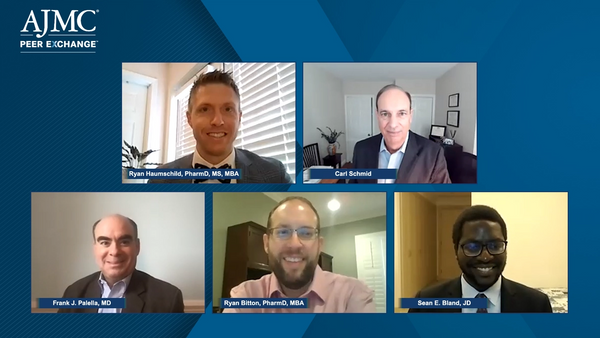
Clarifying USPSTF Recommendations for HIV Pre-Exposure Prophylaxis (PrEP)
This discussion focuses on how to address barriers and disparities as obstacles to using PrEP, with a focus on USPSTF PrEP guidelines and ACA Part 47 for payers and providers.
Latest Videos








CME Content

Advertisement
More News

Men who had sex with men had increased HIV testing after participating in an intervention.
Patients with HIV who started highly active antiretroviral therapy (ART) for 6 months had an improved immunohematological profile by the end of the study.
Patients living with HIV had an interest in future use of telehealth due to high satisfaction in the care provided.

Individuals aged up to 24 years living with HIV were likely to be satisfied with and would recommend telehealth services to their friends, a recent study found.
People who inject drugs tended to have quicker COVID-19 vaccination uptake if they had HIV infection and viral suppression.
Patient comorbidities should be considered when prescribing antiretroviral therapy (ART) to treat HIV to avoid comedication drug toxicities.

Americans with college degrees live longer than those without; pre-exposure prophylaxis (PrEP) accessibility is low for Black women; new COVID-19 vaccine access is proving difficult for some Americans, as the COVID-19 vaccine card is being phased out.
Prevalence of hepatitis B virus (HBV) decreased in people living with HIV in Germany when vaccination coverage increased due to general recommendations and catch-up vaccination efforts.
Among Latino men who have sex with men (MSM), access to and use of pre-exposure prophylaxis (PrEP) remain at suboptimal levels, despite this population of individuals having disproportionately high rates of diagnosed HIV in the United States.

ViiV Healthcare is developing a self-injectable HIV drug similar to Cabenuva; HHS met with insurance companies to resolve COVID-19 vaccine coverage issues; the FDA has greenlit drugmaker Novo Nordisk to add reports of ileus, or intestinal blockage, to its Ozempic label.

Patients with limited English proficiency need their mobile health (mHealth) interventions tailored more closely to their needs to improve equity of access for patients with HIV.

Transmasculine individuals found mobile apps such as Transpire to be beneficial in increasing their access to information on sexual health.
The World Health Organization 2022 Africa regional report underestimated the incidence rate of tuberculosis in sub-Saharan African individuals living with HIV, according to a recent analysis.
Applying novel and effective approaches based on behavioral economics for pre-exposure prophylaxis (PrEP) dissemination programs could help to tailor the programs to the populations and settings of areas with high HIV burden.
An intervention for Black women living with HIV was shown to have improved perceived outcomes when incorporating a support network and when the program structure emphasized trust.

Women living with HIV reported their experiences living with the disease, highlighting discrimination in their social lives.

Patients with HIV were able to maintain care and achieve viral suppression with differentiated service delivery models with comparable effectiveness to the standard of care.
Access to HIV testing and pre-exposure prophylaxis could benefit from being tailored to the type of exchange sex.

Interventions should be tailored to local factors when aiming to reduce the risk of HIV in rural residents who use drugs.
The US Preventive Services Task Force (USPSTF) has recommended that clinicians prescribe pre-exposure prophylaxis (PrEP) to decrease the risk of acquiring HIV.
Men who have sex with men living with HIV were found to have diagnosis rates of sexually transmitted infections (STIs) that were stable throughout the COVID-19 pandemic.
The overall burden of aging-related comorbidities was higher in women compared with men, especially in people living with HIV.
A global assessment found that there was a high prevalence of chronic pain in women living with HIV.
Female sex workers were found to have tested for HIV less in 2020 than had been reported in 2015.
New research found that women in Somalia relied on television and radio to learn about HIV/AIDS.
Advertisement
Advertisement
Trending on AJMC
1
As Cencora Closes With OneOncology, Patton Says Terms Show “Trust”
2
TrumpRx Launch Brings Savings—and Uncertainty
3
Exploring Identity, Appearance Experiences Among Patients With Alopecia
4
5 Things to Know About the Oral GLP-1 Era
5