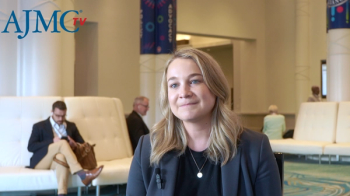
Kate Baker, MD, MMHC, medical director of value-based care at Tennessee Oncology, talks about innovations in cancer care highlighted at the Community Oncology Conference.
Kate Baker, MD, MMHC, medical director of value-based care at Tennessee Oncology, talks about innovations in cancer care highlighted at the Community Oncology Conference.
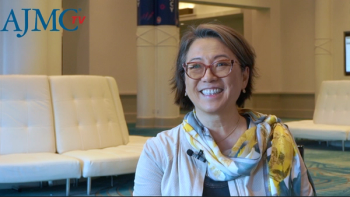
At the 2025 Community Oncology Conference, Nini Wu, MD, Navista, shares how AI can transform community oncology.

Mike Fazio, director of value-based care at Navista, Cardinal Health, discusses a trending topic at the 2025 Community Oncology Conference: optimizing oncology care with technology.

The findings highlight important differences between therapies in managing blood glucose, blood pressure, lipids, and adverse effects in this high-risk patient population.

As the Affordable Care Act passed its 15th anniversary this year, Supreme Court Justices continue to deliberate the fate of its preventive services mandate in Kennedy v Braidwood.

Following the Trump Administration’s mandate to cut $2.6 billion in NIH contracts, the Women’s Health Initiative shares HHS will close its regional centers in September.

Emergency departments (ED) struggle to screen for social determinants of health, inhibiting quality care and impacting health disparities among vulnerable populations.

An analysis of an interdisciplinary care model for managing chronic kidney disease (CKD) shows hospital admissions dropped by 26% and emergency department (ED) visits decreased by 30% after clinic initiation.
This week, the Center on Health Equity & Access covered artificial intelligence, diabetes clinical trials, racial disparities in cancer antigen thresholds, and more.

Initiating chronic kidney disease (CKD) screening at age 55 yielded substantial reductions in kidney failure incidence and improvements in life expectancy across all groups.

As drug denials increase, experts discuss the importance of optimizing data to keep up with these changes and implementing artificial intelligence (AI) to reduce the burden on providers and ensure patient access to care and treatment.

Abstracts featured at the National Kidney Foundation Spring Clinical Meeting highlighted the renoprotective benefits of SGLT2 inhibitors in heart failure and diabetic kidney disease while emphasizing the need for strategies to increase their uptake in primary care.
From the potential impact of tariffs to the World Health Organization's year-long campaign launch focused on improving maternal and newborn health and addressing preventable deaths, here's the latest from the Center on Health Equity & Access.

A series of new studies from the National Kidney Foundation Spring Clinical Meeting exhibit the association between impaired kidney function and prolonged hospital stays, higher charges, and greater resource utilization.

A report published today by Shatterproof and The Bowman Family Foundation underscores the potential of the collaborative care model to lower suicide risk across diverse patient populations and health systems.

New data from the National Comprehensive Cancer Network (NCCN) reveal that socially vulnerable and minority patients with metastatic pancreatic cancer are less likely to receive recommended treatments and achieve longer survival.

The analysis supports the integration of sodium-glucose cotransporter 2 (SGLT2) inhibitors into treatment paradigms for patients with chronic kidney disease (CKD) not only for their established benefits but also for addressing anemia.
The Center on Health Equity & Access delves into the latest policy shifts, research, and expert perspectives on advancing equity and improving access to care.

Experts highlight groundbreaking research presented at the American College of Cardiology Annual Scientific Session (ACC.25), which emphasized a shift toward more personalized, evidence-based treatment strategies.

Findings presented at the American College of Cardiology Annual Scientific Session indicate that finerenone's efficacy in reducing cardiovascular death did not significantly differ across baseline bilirubin tertiles.

A bipartisan letter from lawmakers questions the legality of Robert F. Kennedy Jr's HHS changes and the lack of clear communication regarding their potential impact on American health.

Anna Mueller, MD, Mount Sinai, presented the findings at the American College of Cardiology 2025 Annual Scientific Session and explained that broader adoption of imaging assessments will depend on further research.

Another study testing sotatercept as an early intervention for pulmonary arterial hypertension (PAH) is anticipated to determine the effect on outcomes, Marc Humbert, MD, PhD, University Paris-Saclay, explains in an interview.

At the American College of Cardiology 2025 Annual Scientific Session, John W. Ostrominski, MD, of Brigham and Women’s Hospital, dives into the nuanced safety profile of finerenone for high-risk patients with heart failure.

Findings from the American College of Cardiology 2025 Annual Scientific Session show oral semaglutide reduces the risk of heart attack, stroke, and cardiovascular death by 14% in patients with type 2 diabetes and atherosclerotic cardiovascular disease or chronic kidney disease.

STRIDE investigator Marc Bonaca, MD, MPH, University of Colorado School of Medicine, highlights how the data could provide insight into peripheral artery disease and type 2 diabetes treatment options.

Christian T. Ruff, MD, MPH, of Brigham and Women's Hospital, discusses new data comparing abelacimab with rivaroxaban in patients with atrial fibrillation presented at the American College of Cardiology 2025 Annual Scientific Session.

Data from the ATLAS research comprises a series of trials that have yielded years of long-term, comprehensive data on the safety and efficacy of fitusiran (Qfitlia; Sanofi).

While the overall effectiveness of collaborative care has been well established, this study aimed to determine which specific components had the most impact.

Joshua Kaufman, MD, of CDPHP, discusses the significance of long-acting injectables (LAIs) in improving adherence, reducing the risk of relapse, and preventing hospitalizations.

259 Prospect Plains Rd, Bldg H
Cranbury, NJ 08512
© 2025 MJH Life Sciences®
All rights reserved.