
Clinical
Latest News
Advertisement
Latest Videos




CME Content


Advertisement
More News

Investigators say their data show the importance of vaccination and antibiotic stewardship programs.

Dr Haumschild leads a discussion surrounding patient and provider collaboration to avoid clinical inertia in MS treatment pathways.
Frontline treatment options and the benefits of early intervention of MS are illustrated.

Gene therapy is only one exciting area of treatments in the pipeline to potentially treat inherited retinal disease, said Byron L. Lam, MD, professor of ophthalmology, University of Miami Miller School of Medicine's Bascom Palmer Eye Institute.

Latina women at risk of hereditary breast and ovarian cancer are less likely to be referred for genetic counseling and testing.

A new review outlines strategies that may help reduce the risk of severe cytokine release syndrome (CRS) for patients treated with immunotherapy.

The study was conducted to provide insight into real-world Bruton tyrosine kinase (BTK) inhibitor treatment patterns in mantle cell lymphoma, as current data are limited.

A recent review highlighted a selection of emerging therapies and advances in sickle cell disease (SCD) that focus on renal manifestations.

Researchers discovered that exercise helps to alleviate various symptoms for patients with chronic obstructive pulmonary disease, bronchial asthma, bronchiectasis, interstitial lung disease, and lung cancer.
Researchers noted that despite the promising findings, more novel treatments are needed to overcome the disease’s resistance.

Researchers found that those with both type 2 diabetes and chronic obstructive pulmonary disease (COPD) had lower all-cause and respiratory-cause mortality survival probabilities than those without COPD.

Medical experts discuss the significance of pill burden in the HIV treatment pathway.
The role of and indication for long-acting injectables is highlighted as a treatment approach for HIV.
Experts discuss the financial needs for RSV vaccines through a payer lens.

Financial burden associated with RSV treatment is explored by a medical expert.
Experts highlight the potential obstacles for RSV vaccines.
Key opinion leaders highlight the MS treatment landscape.
An expert panel discusses cost burden associated with the treatment of MS.
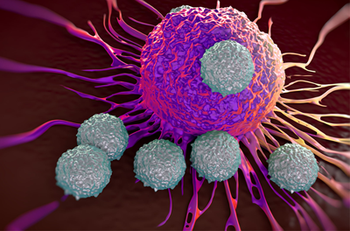
The findings, which suggest that axicabtagene ciloleucel (axi-cel) may be a good option for a patient group often deemed ineligible for other curative-intent therapy, come from a planned subgroup analysis from the ZUMA-7 trial.

Scientists have found a new therapy for the severe inflammatory skin disorder.

At a median follow-up of 10.7 months, the overall response rate was 63.1%.

Future myasthenia gravis therapies have different mechanisms of action than current treatments, said James F. Howard Jr, MD, professor of neurology at the University of North Carolina at Chapel Hill.

There was no difference in second primary cancer risk among older adult male patients treated with intensity-modulated radiotherapy (IMRT) vs 3-dimensional conformal radiation therapy for prostate cancer.

Glofitamab is the first bispecific antibody with a fixed-duration treatment for adults with relapsed or refractory diffuse large B-cell lymphoma (DLBCL).

The treatment landscape for multiple myeloma has shifted since European Organisation for Research and Treatment of Cancer Quality of Life Multiple Myeloma Questionnaire (EORTC QLQ-MY20) was first developed in 1996.
Advertisement
Advertisement