

Regular use of chemical disinfectants among female nurses was found to be a potential risk factor for the development of chronic obstructive pulmonary disease (COPD), according to study findings.
Regular use of chemical disinfectants among female nurses was found to be a potential risk factor for the development of chronic obstructive pulmonary disease (COPD), according to study findings.

The Committee for a Responsible Federal Budget released a detailed report on potential finance options for implementing "Medicare for All"; employers beginning to lessen dependence on high-deductible health plans; Juul to cut nearly 500 jobs by end of 2019.

Access and quality are inseparable, so providers prioritizing population health goals can find success by starting from a solid foundation of patient access. So how can providers streamline access to care and directly influence population health? The answer lies with sophisticated patient engagement technology.

The idea that obesity is linked to mood disorders has been posited since at least 2004.

Quadruple therapy for newly diagnosed patients with multiple myeloma (MM) led to significantly longer progression-free survival (PFS), according to an abstract presented at the 17th International Myeloma Workshop 2019 in Boston, Massachusetts, last month.

The National Institutes of Health (NIH) has announced plans to invest at least $100 million over the next 4 years to develop gene-based therapies for 2 diseases: HIV and sickle cell disease. The Bill and Melinda Gates Foundation will also contribute $100 million to the goal of advancing these potential cures, with an aim toward providing affordable, globally available treatment that will be accessible to patients in low-resource settings.

States move to encourage work for Medicaid; the Trump administration imposes restrictions on immigrants using reciept of government benefits when applying for citizenship; FDA advises against cannabis use for pregnant women.

In 2017, an estimated 5.5 million Americans were diagnosed with Alzheimer disease (AD) and 200,000 under 65 years of age are described as having early-onset AD. Even more striking is the finding that 47 million Americans are presymptomatic with stage I AD. These dire statistics beg the question about the merits of getting tested for AD since lifestyle changes can help people at risk, but they are less likely to improve the conditions of those already experiencing cognitive impairment or dementia.

Unlike many other cancer rates that have been on the decline, liver cancer rates for new liver and intrahepatic bile duct cancer cases have been rising. This October, which is Liver Cancer Awareness Month, Global Liver Institute is joining with more than 30 other leading health and medical organizations, to issue a global call-to-action to increase the 5-year survival rates for patients with liver cancer from 18% to 36% by 2030.
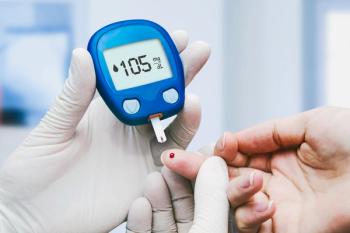
The results suggested that very accurate short-term prediction can be achieved by only monitoring interstitial glucose data over a very short time period and by using a low sampling frequency.

A new study says most healthcare students are uninformed about migraine treatments and may not be prepared to advise patients.

Performance on a manual dexterity test can act as an objective behavior marker that can aid in detecting the prodromal stage of patients with Parkinson disease.

As HIV infection becomes a chronic illness, assessing psychosocial status regularly and implementing effective interventions aimed at related problems as they arise may be particularly important for people living with HIV to improve their health-related quality of life, a study suggests.

Patients with severe chronic obstructive pulmonary disorder (COPD) and chronic bronchial infection due to Pseudomonas aeruginosa may benefit from combination therapy with nebulized colistin and continuous cyclic azithromycin for reducing the number of COPD exacerbations.

Childhood conditions can have a long-lasting impact on the health of those individuals into their adulthood.

Parkinson disease significantly impacts an individual’s quality of life (QoL); however, many spouses and family’s QoL and finances are also affected through increased healthcare and privately borne costs as the condition progresses, according to a recent study.

Cleveland Clinic announced the top 10 medical innovations for 2020, which details the medical advancements that have the potential power in transforming healthcare in the next year, at a multimedia presentation during the 2019 Medical Innovation Summit.

Coverage of our peer-reviewed research and news reporting in the healthcare and mainstream press.

Less than half of Medicare patients newly diagnosed with blood cancer are receiving treatment for their cancer shortly after diagnosis, which may be attributed to the high cost burden they face, according to a new report from Milliman commissioned by The Leukemia & Lymphoma Society.

A CDC report said that, overall, fentanyl continues to drive drug overdose deaths, but in almost half of the country, methamphetamine is the leading killer; backers of Medicaid expansion in Oklahoma said they submitted more than enough signatures to get the measure on the ballot in 2020; the Federal Trade Commission is suing publishers of "The Doctor's Guide to Reversing Diabetes in 28 Days" on the grounds that they are falsely promising a cure without dietary changes or exercise and stating that those changes will make diabetes worse.

This week, the top managed care news included the average Affordable Care Act premiums falling 4%; the FDA approving a triple combination treatment for cystic fibrosis; House Republicans releasing part 1 of their healthcare plan.

Insufficient sleep among 2 adolescent groups aged 6-12 and 13-17 was linked with decreased childhood flourishing, a measurement of behavioral and social well-being that affects school performance, as well as, physical and mental health, according to a study to be presented at the American Academy of Pediatrics 2019 National Conference & Exhibition in New Orleans, Louisiana.

Two employers, Candace Shaffer from Purdue University and Natalie Roberts from Monarch Beverage Company, discuss in a fall webinar series how they have used the RAND Transparency findings to drive referrals.
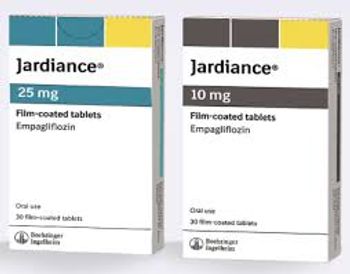
The advantage of empagliflozin, and the sodium glucose cotransporter 2 class generally, is that its unique mechanism expels excess glucose through the urine, thus offering the possibility of reducing glucose variability—eliminating the “roller coaster” effect that many with type 1 diabetes experience that can cause long-term microvascular damage.

A recent study identified the pretransplant characteristics contributing to delayed engraftment (DE) following autologous hematopoietic cell transplantation (AHCT).

The FDA proposed new warnings on breast implants, requiring manufacturers to detail complications; Arizona suspends implementation of Medicaid work requirements; Amgen will lower the list price of evolocumab by 60%.

With increasing awareness of genetic testing and advancements in precision medicine, more patients are seeking counsel from clinicians about what steps they should take if mutations are found. This requires physicians to become more informed, and a recent article discusses the hypothetical case of an Ashkenazi Jewish woman with breast cancer.

Serum neurofilament light chain is associated with brain atrophy and disability worsening, which means it can be used as an objective surrogate of ongoing disease activity in multiple sclerosis (MS), according to research published in JAMA Neurology.

While freestanding emergency departments (EDs) can reduce wait times and reduce the burden on overcrowded EDs, they increase utilization of emergency care and local market spending.

Republicans in the House of Representatives released their healthcare plan aimed at replacing the Affordable Care Act; Johnson & Johnson’s chief executive officer said in a deposition earlier this month that the company’s baby powder was free of asbestos 13 days before the FDA announced it had discovered the carcinogen in a container of the product; the House Ways and Means Committee will discuss a bill to to tax vape products at the same rate as cigarettes.