
AI, patient voice in pathways, and caregiver support are shaping community oncology, AON leaders said at Patient-Centered Oncology Care.
AI, patient voice in pathways, and caregiver support are shaping community oncology, AON leaders said at Patient-Centered Oncology Care.
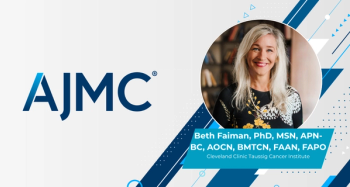
Cleveland Clinic's Beth Faiman, PhD, MSN, discusses advanced practitioners' reimbursement and how outpatient trispecific antibodies could increase access.
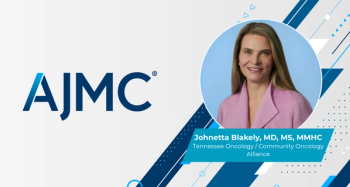
Tennessee Oncology’s Johnetta Blakely, MD, MS, explains why physicians must review high-stakes AI-assisted orders and how patients view AI in oncology.
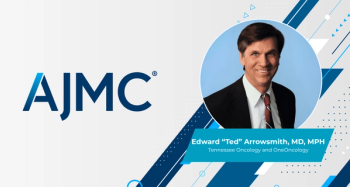
OneOncology's Edward "Ted" Arrowsmith, MD, MPH, explains why cost stays out of its pathway process and how point-of-care ordering puts pathways to work.
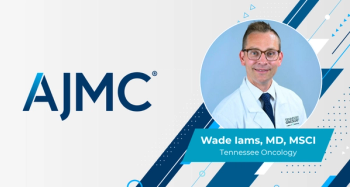
Tennessee Oncology's Wade Iams, MD, MSCI, discusses insured patients' out-of-pocket costs, platinum shortages, and access to CAR T and BiTE therapies.
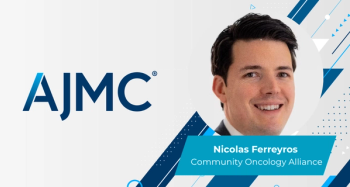
Nicolas Ferreyros, of COA, warns IRA drug price negotiation threatens community oncology payments and urges Part B, 340B, and insurer reforms.
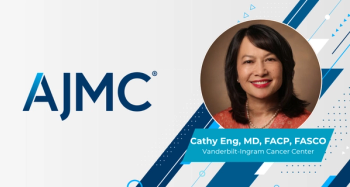
Cathy Eng, MD, says flat funding for NCI-sponsored trials discourages site participation and slows data, despite their importance.
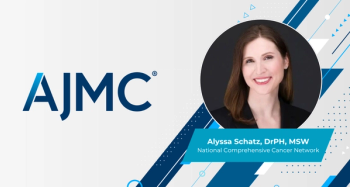
Alyssa Schatz, DrPH, MSW, of NCCN, explains how insurance shifts and drug shortages threaten access to cancer care.
OneOncology's Larry Bilbrey discusses why unstructured data limits artificial intelligence and how practices can weigh AI purchases by their payoff.
COA's Nicolas Ferreyros discusses real-world survival data for community oncology, health system consolidation, and barriers to CAR T-cell access.
Cathy Eng, MD, discusses a BREAKWATER post hoc analysis showing poorer survival in early-onset BRAF V600E colorectal cancer.
Cleveland Clinic's Beth Faiman, PhD, MSN, discusses AP-led clinics, managing talquetamab taste changes, and infection prophylaxis with bispecifics.
OneOncology's Edward "Ted" Arrowsmith, MD, MPH, explains how patient-reported outcomes and national disease groups can make cancer pathways more dynamic.

Panelists ask whether cancer care will shift toward home-administered infusions as payers push for change. Other topics in this forward-looking session include new delivery tech and practice-led solutions.
Mitchell Blewett, PharmD, MS, of Cleveland Clinic, explains why formulary approval is only the midpoint before a new oncology drug reaches patients.
Cathy Eng, MD, explains how young adults with cancer face career, fertility, and body image concerns as well as where to find support.
AI, patient voice in pathways, and caregiver support are shaping community oncology, AON leaders said at Patient-Centered Oncology Care.
Cathy Eng, MD, FACP, FASCO, says young patients with colorectal cancer often look healthy and present at stage IV, making symptom awareness critical.

Panelists say drug price negotiation, Medicaid changes, prior authorization, and 340B reform strain community oncology.
Mayo Clinic's Scott Soefje, PharmD, MBA, explains how logistics, contracts, and cost shape access to new cancer drugs and high-cost drug reviews.

Payers cover novel cancer drugs but not the staffing, training, and monitoring to deliver them, leaving practices to absorb costs.
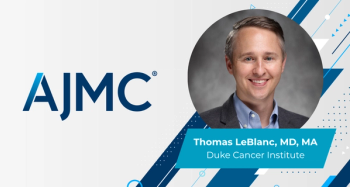
Caregiver shortages limit access to transplant, CAR T, and bispecific therapies, and no system offers replacement support, says Duke's Thomas LeBlanc, MD, MA.

The IRA's Medicare out-of-pocket cap is easing costs for patients with cancer, but community oncology leaders warn price cuts are straining practices.
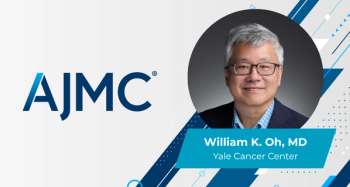
Even top academic centers struggle to keep pace with precision medicine, says William K. Oh, MD, who is prioritizing clinician education at Yale.
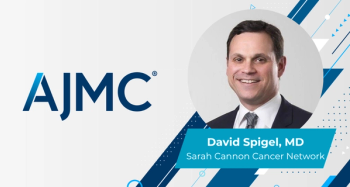
AI could ease oncology's drug development "traffic jam," while biomarker subsetting drives more personalized cancer care, David Spigel, MD, says.

Community oncologists cited prior authorization as a care barrier, even as AI adoption doubled in 2026, according to the Oncology Care Index.
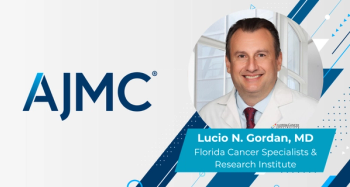
Community oncology faces high costs and staffing hurdles for trials; Lucio N. Gordan, MD, urges pragmatic designs matching real-world patients.

Payers say NCCN guideline concordance sets a baseline for cancer coverage, but cost and formulary variation may still limit access.
Liquid biopsy and at-home phlebotomy are closing precision medicine access gaps nationwide, though tissue remains the gold standard.

Accelerated approvals, surrogate end points, and high drug costs are reshaping cancer center formulary decisions, explained panelists at PCOC.